Choosing the right water system in 2026 starts with a practical question: where does the water come from, and what must happen before it reaches the tap? Common options include municipal connections, private wells, rainwater harvesting, and decentralized systems serving individual buildings or communities. Filtration and disinfection are treatment choices, not water sources. That distinction matters.
The need is substantial. WHO and UNICEF’s Joint Monitoring Programme reported that 2.2 billion people lacked safely managed drinking-water services in 2022. The United Nations World Water Development Report 2024 says global water use has risen by roughly 1% per year over the past four decades. Water-policy expert Peter Gleick has described the global water crisis as “a crisis of governance, not one of scarcity.” His point is relevant: infrastructure, maintenance, and fair management can matter as much as supply.
A neat ranking can mislead. A municipal connection may offer reliable service where networks are well maintained; a well can suit rural properties but requires regular testing. Rainwater systems can supplement supply, yet storage tanks need careful upkeep. Decentralized treatment can serve remote sites, though operating costs and trained maintenance matter. No single option wins everywhere. Local water tests, climate, household demand, and operating budgets should shape the choice. This guide compares the leading system types by source, treatment, reliability, and upkeep—while noting where the evidence has limits. Even a promising system can disappoint when its maintenance plan is only an afterthought.
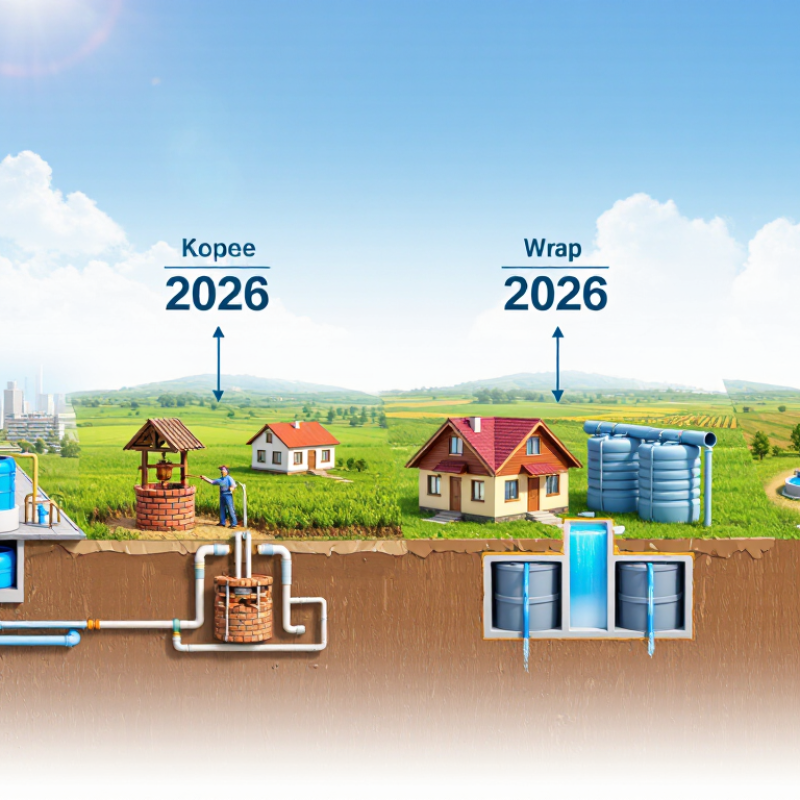
A water system is a connected set of sources, equipment, and practices that collects, treats, stores, or moves water. In 2026, useful classifications describe how a system works, not simply what it is called. A municipal system typically draws from surface water or groundwater, treats it centrally, then sends it through pipes to many buildings. A private well serves a smaller property and depends on local groundwater conditions. Different scale, different demands.
Systems can also be classified by water quality and intended use. Potable systems provide water for drinking and cooking; non-potable systems may supply irrigation, cooling, or toilet flushing. Rainwater harvesting captures roof runoff in tanks, while reuse systems treat wastewater for approved secondary uses. Treatment may include screens, filters, disinfection, or several steps together. The right combination depends on source quality and regular testing. Small details matter: sediment in a storage tank or a poorly maintained filter can affect performance. Categories overlap, and a chart may make them seem tidier than they are. Operators still need to check local water conditions and monitor the system over time.
Municipal water systems move water from rivers, lakes, or underground aquifers to household taps. The chosen source depends on local geology, rainfall, demand, and available infrastructure. Surface water can change quickly after storms, carrying sediment or organic matter. Groundwater is often clearer, but may contain naturally occurring minerals that require treatment. Conditions vary by season.
Treatment is a series of barriers, not one magic step. Many plants use coagulation and settling to remove particles, followed by filtration and disinfection. Some also adjust pH or reduce specific contaminants, depending on source-water testing. Operators sample water throughout treatment and check process readings regularly. A clear glass is reassuring, but appearance alone cannot confirm safety.
After treatment, pumps and storage tanks maintain pressure as water travels through a network of pipes. Utilities monitor disinfectant levels and collect samples at different points, including areas far from the plant. Older pipes can complicate this work, and a system’s performance may vary across neighborhoods. Public water reports offer useful local details, though technical tables can be difficult to interpret. That is worth improving.
Private well and groundwater systems can give a household direct access to water, but the source needs regular attention. A well pump draws water from an underground aquifer, then pressure equipment moves it through the home. The setup may include a storage tank and treatment devices, depending on local water conditions. No two wells are exactly alike. Well depth, soil, nearby land use, and seasonal changes can affect both supply and quality.
Tips: Test well water at least once a year through a qualified laboratory, and retest after flooding, repairs, or a noticeable change in taste, color, or odor. Keep the well cap secure and maintain clear space around it. Keep records. They help reveal changes over time.
A clear glass of water is not proof that it is safe; some contaminants have no smell or visible sign. Ask a local health department or water professional which tests fit your area, such as checks for bacteria, nitrate, or naturally occurring minerals. Treatment should match the test results, not guesswork. It can be tempting to install equipment for every possible concern, but that may add cost without solving the actual problem. Even a well-maintained system needs occasional review, and remembering every service date is harder than it sounds.
EPA public-water maximum contaminant levels commonly used as reference points when evaluating private-well water.
Private wells are not regulated under the federal Safe Drinking Water Act, so these public-water limits are comparison benchmarks—not private-well requirements. Test well water to determine whether treatment is needed. Nitrate is reported as nitrogen; values are converted to micrograms per liter for comparison.
What Are the Top Water System Types in 2026?
Rainwater harvesting, water reuse, and decentralized systems are gaining attention as communities look for practical ways to manage local supplies. A rooftop system can collect rain through gutters, a leaf screen, and a first-flush diverter. Water then enters a covered storage tank. Simple details matter: an opaque tank limits light, while a secure lid helps keep debris and insects out. It sounds straightforward. Yet rainfall is seasonal, and a tank sized for a dry spell may be expensive or underused in wetter months. The best design depends on roof area, local rainfall, intended use, and regular maintenance. Collected water should be tested and treated appropriately before use.
Water reuse systems can redirect treated shower or laundry water toward uses such as landscape irrigation or toilet flushing. Kitchen wastewater is often harder to manage because grease and food particles complicate treatment. Decentralized systems treat water closer to where it is used, such as at a building or neighborhood scale. They can reduce reliance on long pipes, but they still need trained oversight, reliable monitoring, and backup plans for equipment failures. A compact treatment unit is not maintenance-free. In 2026, these approaches are not interchangeable solutions; their value depends on water quality goals, climate, user habits, and the capacity to maintain them over time.
What Are the Top Water System Types in 2026?
How to Compare Water Systems by Use, Cost, and Reliability
The right system depends on what needs fixing. Activated-carbon filters can improve taste and reduce certain contaminants at the tap. Reverse-osmosis units target a broader range, but need filter changes and may send some water to drain. UV systems disinfect water, yet do not remove chemicals or sediment. Water softeners address hardness, not unsafe microbes. No single system does everything.
Compare full costs, not just the purchase price: installation, replacement cartridges, servicing, and water use all matter. Reliability also starts with testing. A lab test can identify local contaminants and help match treatment to a real need. Check that a system’s certification covers the contaminant you want reduced; NSF/ANSI 53, for example, addresses specific health effects. EPA’s 2023 Drinking Water Infrastructure Needs Survey estimated $625 billion in U.S. drinking-water infrastructure needs over 20 years. That’s a reminder that public supply systems require ongoing investment, too—not proof that every tap is unsafe. I’d be cautious about choosing treatment based on taste alone.
Tips: Test first. Match the result to a certified treatment claim, then check maintenance intervals and replacement-part costs. Keep the report; retest if the source changes.
The estimates below are general U.S. residential ranges in 2026, not quotes. Actual costs depend on water quality, home size, local labor, equipment capacity, and installation requirements. Supply systems and treatment systems serve different purposes.
| System type | Best suited for | What it does | Typical cost | Reliability and upkeep | Key limitation |
|---|---|---|---|---|---|
| Municipal water supply | Homes connected to a public water utility | Provides treated water through a public distribution network; utilities generally monitor water quality under applicable regulations. | Monthly bill varies by location and usage; new service connection costs are location-specific. | Usually dependable, with utility operation and maintenance. Check the local water quality report and household plumbing condition. | Water quality can change in distribution or premise plumbing; outages and local advisories are possible. |
| Private well system | Rural or off-grid properties without public water service | Uses a well, pump, pressure tank, and plumbing to draw groundwater for household use. | Well installation often costs several thousand to tens of thousands of dollars, depending heavily on depth, geology, and location; pump replacement is an additional expense. | Can provide a dependable supply when properly built and maintained. The owner is responsible for routine testing, pump upkeep, and repairs. | Water quality and yield are site-specific; testing is important for contaminants such as bacteria, nitrate, and arsenic. |
| Whole-house activated carbon filter | Homes seeking treatment at multiple taps, especially for chlorine taste or odor | Reduces certain chemicals and taste- or odor-causing compounds when the media is selected and sized for the target contaminant. | About $500–$2,500 installed; replacement media may cost roughly $100–$500 or more per year. | Generally reliable with proper sizing and timely media replacement; performance depends on flow rate and contact time. | Does not remove every contaminant. Verify the specific reduction claim and replace media on schedule. |
| Water softener | Homes with hard water that causes scale or soap inefficiency | Typically uses ion exchange to reduce calcium and magnesium hardness. | About $500–$2,000 installed; salt and maintenance commonly add roughly $50–$200 or more per year. | Well-established technology; requires salt replenishment for many models and occasional service. | Addresses hardness, not general disinfection or all chemical contaminants; regeneration uses water and produces brine. |
| Under-sink reverse osmosis (RO) | Drinking and cooking water at one dedicated tap | A membrane system that can reduce many dissolved substances; exact performance varies by model and certification. | About $150–$600 installed for common residential systems; filters and membrane often cost roughly $50–$200 or more per year. | Can provide consistent point-of-use treatment when filters are changed and the system is maintained as directed. | Treats only connected taps, needs periodic filter changes, and sends some feed water to drain. |
| Ultraviolet (UV) disinfection | Wells or other supplies where microbial inactivation is needed | Uses UV light to inactivate susceptible microorganisms as water passes through the treatment chamber. | About $500–$1,500 installed; lamp replacement and servicing may cost roughly $50–$150 or more per year. | Effective when correctly sized, powered, and maintained. Lamp condition and water flow must be monitored. | Does not remove chemicals or particles; sediment or cloudy water can reduce effectiveness, so prefiltration may be needed. |
| Sediment filtration | Water containing visible particles, sand, or rust; often used as pretreatment | Physically traps particles above the filter’s rated size and can protect downstream equipment. | About $20–$300 for common residential housings or systems, plus replacement cartridges and installation where needed. | Simple and generally dependable; cartridge life depends on incoming sediment levels and water use. | Does not by itself disinfect water or remove dissolved chemicals, hardness, or salts. |
Before choosing treatment, identify the water source and test for the specific problem. Compare systems by certified contaminant-reduction claims, flow capacity, replacement-part cost, and maintenance requirements—not by broad claims such as “purifies everything.”