How to Choose a Water Treatment System in 2026?
Choosing a water treatment system in 2026 requires more than comparing prices and filter claims. Water quality varies between homes, buildings, wells, and municipal supplies. A practical decision begins with a recent laboratory report, not a colorful product brochure. Test for hardness, chlorine, lead, nitrates, bacteria, and other region-specific concerns. Measure first.
The right water treat system should match the contaminant, daily demand, installation space, and maintenance skills of the user. A compact under-sink unit may suit a couple seeking better drinking water. A larger whole-house system may be necessary for hard water, unpleasant odors, or visible staining. However, “whole-house” does not automatically mean complete protection. This point is often misunderstood.
Reliable guidance should come from certified laboratories, qualified water professionals, and manufacturers who publish performance data. Look for independently verified claims, clear replacement schedules, realistic flow rates, and accessible service support. Certification standards, such as NSF/ANSI requirements, can help compare products, but they do not replace local testing. Installation quality matters too. Poorly fitted tubing can cause leaks, pressure loss, or contamination risks.
This guide examines the main treatment technologies available in 2026, including carbon filtration, reverse osmosis, ultraviolet disinfection, softening, and emerging smart monitoring tools. It also considers energy use, wastewater, filter costs, and long-term reliability. Some systems appear efficient but become expensive after several replacement cycles. That deserves honest attention. The best choice is not always the newest model. It is the system that consistently delivers suitable water, verified performance, and manageable care.
Define Your Water Quality and Treatment Goals
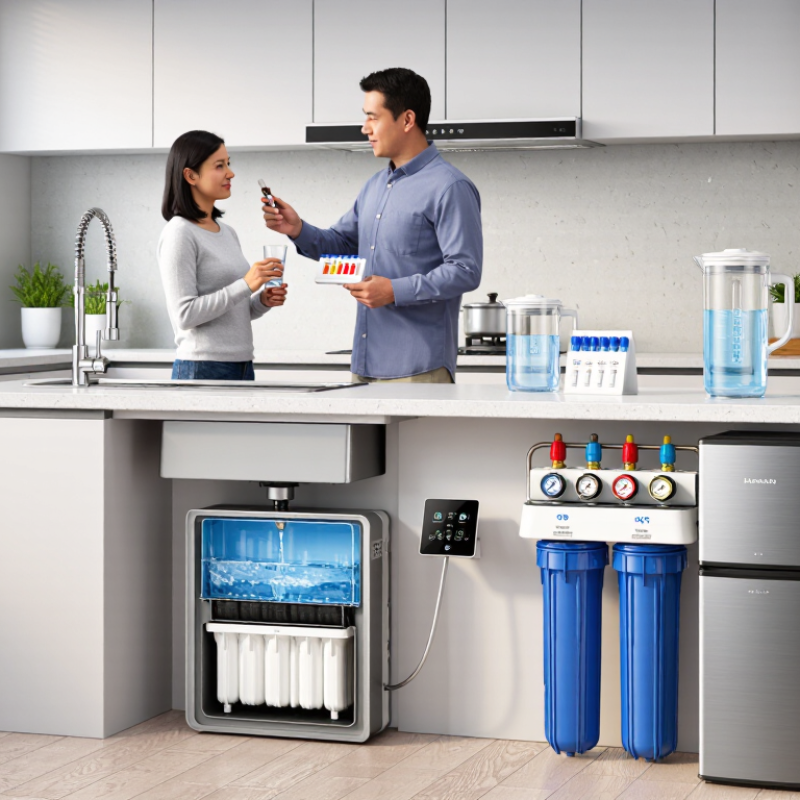
Choosing a water treatment system in 2026 should begin with a clear water-quality question, not a shopping list. Test the source water before comparing equipment. A certified laboratory can measure hardness, turbidity, pH, nitrate, lead, bacteria, and other relevant contaminants. Private wells usually need broader testing than treated municipal supplies. A recent report helps, but it is not permanent.
Define what success means in your home. Do you need safer drinking water, fewer mineral stains, better taste, or appliance protection? These goals require different treatments. A sediment filter may address visible particles, while activated carbon can reduce certain tastes and odors. Reverse osmosis can target several dissolved substances, but it produces wastewater and needs regular filter changes. Disinfection addresses microorganisms, not hardness. Match every claim to a measured problem. Not every test tells the whole story.
Record daily water use, peak flow, household size, and available installation space. An undersized system may reduce pressure during a shower. An oversized system can waste money and encourage neglected maintenance. Ask for performance data, replacement schedules, testing methods, and independent certification. I would also check what happens during a power outage or missed service visit. This detail is easy to overlook. Your goals may change after testing. Reassess them annually, especially after plumbing work, flooding, or changes to a private well.
How to Choose a Water Treatment System in 2026? - Define Your Water Quality and Treatment Goals
Use laboratory results, applicable drinking-water standards, and the intended use of the water to select treatment technologies.
| Water Quality Concern | Reference Value or Goal | Common Signs or Sources | Suitable Treatment Options | Important Selection Criteria | How to Verify Results |
|---|---|---|---|---|---|
| Microorganisms | E. coli: none detected in a 100 mL drinking-water sample | Private wells, surface-water influence, flooding, damaged wells, or inadequate disinfection | Ultraviolet disinfection, chlorination, ozonation, or microbiological filtration | UV requires low turbidity and regular lamp maintenance; disinfection does not remove dissolved chemicals | Accredited laboratory testing for total coliforms and E. coli before and after treatment |
| Lead | Action level: 0.015 mg/L (15 µg/L) at the tap | Lead service lines, old plumbing, brass fixtures, or corrosive water | Certified point-of-use filtration, reverse osmosis, or corrosion-control treatment | Choose a system specifically tested for lead reduction; replace or isolate lead-containing plumbing where possible | Use first-draw and flushed samples analyzed by an accredited laboratory |
| Arsenic | Maximum contaminant level: 0.010 mg/L (10 µg/L) | Naturally occurring minerals, especially in some groundwater regions | Reverse osmosis, adsorption media, or anion exchange | Treatment performance depends on arsenic species, pH, competing ions, flow rate, and media capacity | Laboratory analysis for total arsenic and periodic treated-water testing |
| Nitrate and nitrite | Nitrate: 10 mg/L as nitrogen; nitrite: 1 mg/L as nitrogen | Fertilizer, septic systems, animal waste, or agricultural runoff | Reverse osmosis, anion exchange, or biological treatment | Boiling does not remove nitrate and may increase its concentration through evaporation | Test source and treated water; retest after filter replacement or resin regeneration |
| Fluoride | Maximum contaminant level: 4.0 mg/L; secondary standard: 2.0 mg/L | Naturally occurring minerals or adjusted public-water supplies | Reverse osmosis, activated alumina, or distillation | Select treatment based on pH, flow, fluoride concentration, and desired treated-water volume | Laboratory fluoride testing before and after installation |
| Hardness | No U.S. federal health limit; approximately 120–180 mg/L as CaCO₃ is commonly classified as hard to very hard | Scale on fixtures, reduced soap lather, and deposits in heaters or appliances | Cation-exchange water softener, template-assisted crystallization, or whole-house scale control | Consider salt use, regeneration water, wastewater discharge, and sodium or potassium addition | Measure hardness before and after treatment; inspect for scale over time |
| Turbidity and suspended solids | Public-water treatment goal is typically very low turbidity; a household goal is clear water with no visible particles | Sediment, construction activity, well disturbance, runoff, or corroded piping | Sediment cartridge, spin-down filter, multimedia filtration, or ultrafiltration | Select micron rating, flow capacity, pressure loss, and automatic or manual cleaning requirements | Measure turbidity and monitor pressure drop across the filter |
| Chlorine taste and odor | Secondary maximum contaminant level: 4.0 mg/L for residual chlorine | Disinfected public water or elevated disinfectant residual | Granular activated carbon or catalytic carbon | Carbon capacity, contact time, flow rate, and timely cartridge replacement are critical | Measure free chlorine or chloramine as appropriate and conduct taste-and-odor checks |
| Total dissolved solids | Secondary standard: 500 mg/L | High mineral content, seawater influence, water softener discharge, or geological conditions | Reverse osmosis, distillation, or demineralization | Evaluate recovery rate, reject-water volume, remineralization, and storage-tank hygiene | Use conductivity or TDS measurements together with laboratory ion analysis when needed |
| pH and corrosivity | Secondary pH range: 6.5–8.5 | Corrosion, metallic taste, blue-green staining, or interaction with plumbing materials | Neutralizing filter, chemical feed, corrosion-control treatment, or blending | pH alone is insufficient; alkalinity, hardness, temperature, and lead or copper results should also be considered | Test pH, alkalinity, hardness, lead, and copper through an accredited laboratory |
| Iron and manganese | Secondary standards: iron 0.3 mg/L; manganese 0.05 mg/L | Orange or black staining, metallic taste, clogged fixtures, or naturally mineralized groundwater | Oxidation and filtration, greensand-type media, catalytic filtration, or aeration | Treatment depends on dissolved versus particulate form, pH, hydrogen sulfide, and required flow rate | Laboratory testing for iron, manganese, pH, and related water chemistry |
Related Posts
-
10 Best Water Treatment Systems for Global Buyers
-
2026 Top Water Purification Solutions for Global Buyers
-
10 Tips for Choosing Water Systems for Hard Water
-
2026 Best Water Purification Solutions for Global Buyers
-
What Are the 2026 Top Water Purification Solutions?
-
How to Choose the Best Water Purification Solution?