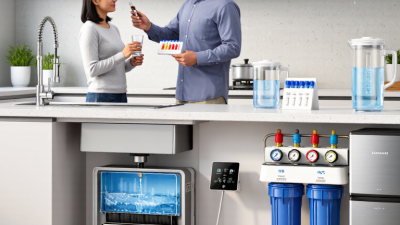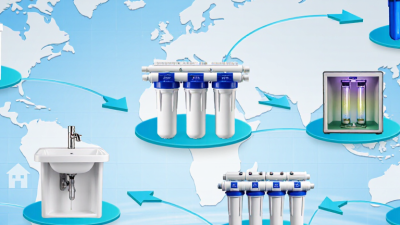
Choosing a water refining system supplier in China is not just a price comparison. Buyers must match treatment capacity, feedwater quality, and operating conditions to the actual site. A plant facing brackish groundwater needs different pretreatment from a factory polishing municipal water. Small design details matter.
The need is substantial. The WHO/UNICEF Joint Monitoring Programme reported that 2.2 billion people lacked safely managed drinking water services in 2022, in its 2023 progress report. That global figure is not a measure of China’s equipment market. It does, however, underline why dependable treatment, monitoring, and maintenance deserve careful attention. For industrial buyers, performance claims should be checked against flow rates, recovery ratios, energy use, and documented water-quality results—not brochure language alone.
This guide examines leading Chinese suppliers through practical criteria: engineering experience, manufacturing capability, system customization, component traceability, commissioning support, and after-sales service. Buyers should also request project references with comparable source water and capacity. A polished factory tour helps, but it cannot replace operating records. Supplier rankings can vary with application and evidence quality. Some details remain hard to verify from public information. That deserves scrutiny. A reliable shortlist should make those gaps visible, rather than treating every claim as proven.
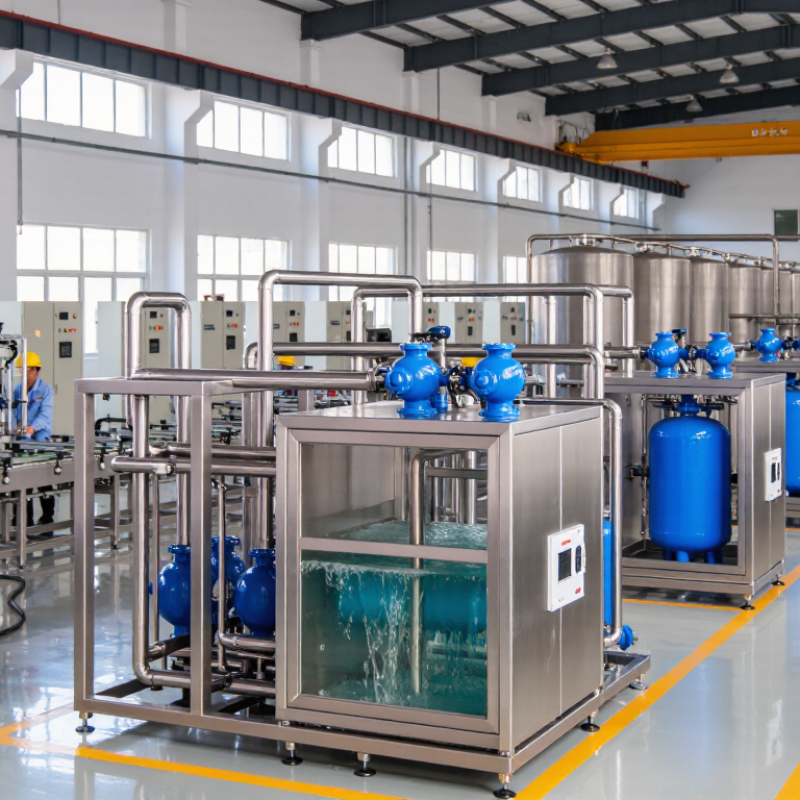
A water refining system turns raw water into water suited to a defined use. The treatment train depends on what enters the plant. A clear well-water sample may still contain dissolved minerals, while surface water can carry sediment and organic matter. Testing comes first. Without it, equipment selection is partly guesswork.
Typical systems combine several stages. Screens or sediment filters catch larger particles. Carbon media can reduce chlorine, taste, and some organic compounds. Reverse osmosis membranes remove many dissolved substances, but they also create a concentrated reject stream that needs proper handling. Ultraviolet treatment can inactivate microorganisms when the water is clear enough; it does not remove particles or dissolved chemicals. Not every system needs every stage.
Controls and instruments matter too. Pressure gauges, flow meters, and conductivity readings help operators spot changes before water quality drifts. Small details count. A clogged prefilter can reduce membrane output, and neglected disinfection equipment may offer less protection than expected. Suppliers should explain design assumptions, maintenance intervals, and which tests verify performance. A neat equipment list is not proof of suitability. I would also question any proposal that promises one fixed solution for every source water; real water is less tidy than a brochure.
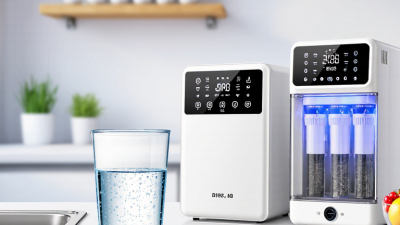
Chinese water refining systems commonly combine pretreatment, membrane filtration, and disinfection. Coagulation and multimedia filters reduce suspended solids before ultrafiltration or reverse osmosis. Operators can track pressure, flow, and conductivity on control screens, helping detect fouling or changing feedwater quality. Small readings matter. The World Health Organization and UNICEF’s 2023 Joint Monitoring Programme estimated that 2.2 billion people lacked safely managed drinking water in 2022. That need makes dependable treatment important, but equipment must match the source water—not just a catalogue specification.
Reverse osmosis removes many dissolved salts, while ultraviolet treatment can provide a final microbial barrier. Some installations add activated carbon or advanced oxidation to address particular organic compounds. Chinese suppliers may integrate these stages with sensors and automated dosing, yet automation cannot fix poor sampling or neglected maintenance. UNESCO’s 2024 World Water Development Report says agriculture accounts for about 70% of global freshwater withdrawals, underscoring the value of efficient treatment and reuse. Still, RO produces concentrated reject water and consumes energy. A design review should examine recovery rate, cleaning intervals, and reject-water handling. The awkward part is that these trade-offs are often underestimated. Seasonal turbidity shifts can also change filter performance, so commissioning data deserves more attention.
China’s notable water refining system suppliers are best assessed by engineering depth, not catalogue size. A capable supplier should ask for a source-water analysis before recommending filtration stages. Look for clear design details: feed-water limits, expected flow rate, recovery ratio, and finished-water targets. For example, a proposal might specify sediment filtration, membrane treatment, and a final polishing stage, with each component tied to a measured water condition. Details matter.
Experienced suppliers can explain how their systems handle changing feed quality and routine maintenance. Ask for commissioning records, operating manuals, spare-parts availability, and references from projects with similar water conditions. A polished brochure is not proof. Request test results and confirm how samples were collected and measured. Suppliers in China vary in manufacturing scope; some produce core equipment, while others integrate systems from multiple sources. That distinction can affect service response and replacement-part compatibility.
Compare quotations on the same technical basis, including installation, training, and after-sales support. Verify certifications and performance claims independently where possible. Water chemistry can shift, and a design that works on paper may need adjustment onsite. This is easy to underestimate. A careful supplier will identify assumptions, explain limits, and leave room for monitoring rather than promising perfect results.
The entries below describe common supplier categories in China’s water-treatment market, rather than named companies. System configuration and performance depend on the source water, design, and operating conditions.
| Supplier category | Common system technologies | Typical applications | Key items to verify | Relevant reference |
|---|---|---|---|---|
| Municipal and commercial drinking-water system integrators | Media filtration, activated carbon, membrane filtration, disinfection | Community facilities, commercial buildings, and small centralized water stations | Raw-water analysis, treatment-flow diagram, disinfection method, and finished-water testing plan | GB 5749-2022, Standards for Drinking Water Quality |
| Reverse-osmosis equipment manufacturers | Pretreatment, high-pressure pumping, reverse-osmosis membranes, and post-treatment | Process water, food and beverage production, and desalination applications | Feed-water limits, rated operating conditions, recovery assumptions, and membrane replacement requirements | GB/T 19249-2017, Reverse Osmosis Water Treatment Equipment |
| Ultrafiltration and membrane-system suppliers | Ultrafiltration membranes, backwashing, and optional chemical cleaning | Pretreatment, surface-water treatment, and suspended-solids reduction | Membrane material, design flux, cleaning procedure, and integrity-testing method | Project-specific raw-water testing and acceptance criteria |
| Industrial process-water engineering suppliers | Filtration, softening or demineralization, reverse osmosis, and polishing stages | Manufacturing, laboratories, boilers, and other process-water uses | Required water quality at the point of use, design basis, controls, and commissioning tests | Application-specific process and end-user requirements |
| Containerized and packaged treatment-system suppliers | Pre-engineered combinations of filtration, membranes, pumps, and disinfection | Remote sites, temporary facilities, and projects requiring modular installation | Site utilities, climate and corrosion protection, transport dimensions, and service access | Site-specific engineering review and performance acceptance testing |
Procurement note: Request a water analysis, process design, equipment specifications, operating-cost assumptions, commissioning records, and a written performance guarantee before comparing quotations.
Chinese water refining system suppliers serve a wide range of industries, but each sector needs different water quality. Electronics plants may require low-conductivity water for rinsing components. Pharmaceutical facilities often need carefully controlled purification and documented monitoring. Food and beverage factories use treated water in recipes, equipment cleaning, and boiler systems. A small change in source-water chemistry can affect taste or production consistency.
Power stations and chemical manufacturers also rely on refined water for boilers, cooling loops, and process operations. Depending on feed-water conditions, systems may combine filtration, reverse osmosis, and polishing stages such as electrodeionization. Not every facility needs every stage. That detail matters. Experienced project teams should review laboratory results, daily demand, peak flow, and discharge limits before proposing equipment. A catalog-sized system can look adequate on paper, yet struggle during seasonal changes or production shifts. Site testing and clear commissioning records help reveal those gaps. Still, specifications do not replace routine checks; operators need practical training and accessible maintenance plans.
Global freshwater withdrawals by broad end-use sector provide context for common water-treatment applications. Agriculture accounts for approximately 70%, industry 19%, and municipal/domestic use 11%. These figures are sector-level context, not supplier market shares.
Source: FAO AQUASTAT; widely cited approximate global freshwater-withdrawal shares. Treatment needs vary by application and location.
When comparing water refining system suppliers in China, look beyond equipment price and rated output. Ask how the quoted capacity was tested, and whether it matches your source water and daily demand. A clear proposal should identify pretreatment stages, membrane or filter specifications, expected water quality, and operating limits. Request sample test reports and a process diagram. Check each certification’s issuer, validity, covered facility, and product scope; a certificate may not apply to every system. Paperwork matters. It is easy to overvalue a polished presentation, so verify details independently.
After-sales support can determine whether a system runs reliably months after installation. Confirm who handles commissioning, operator training, routine maintenance, and urgent troubleshooting. Ask for realistic response times, local service coverage, and a written list of recommended spare parts. For example, clarify how quickly common items such as filter cartridges, seals, or sensors can be supplied. Response times matter. Also ask what the warranty excludes and whether remote support requires extra fees. A supplier’s answer should be specific, not simply “full support.” Even careful comparisons leave some uncertainty; a site assessment and a reference installation can reveal practical issues that a quotation cannot.