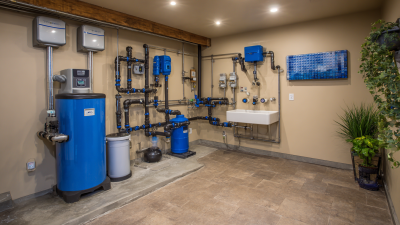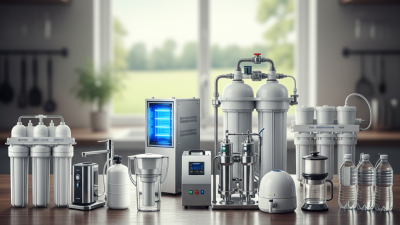
The 2026 Best Water Purification Solutions for Global Buyers guide examines how industries, municipalities, and households can choose safer, more practical treatment systems. Water quality varies sharply between regions. So do budgets, infrastructure, energy access, and maintenance skills. A solution that performs well in Singapore may struggle in a remote rural community. Context matters.
Catarina de Albuquerque, former United Nations Special Rapporteur on the human right to safe drinking water and sanitation, has stated, “Water and sanitation are human rights.” Her observation keeps purchasing decisions grounded in public health, not marketing promises. Effective solutions for water purification should address contaminants through verified testing, suitable filtration stages, transparent performance data, and dependable after-sales support. Buyers should examine membrane quality, activated carbon capacity, ultraviolet dosage, chemical requirements, replacement intervals, and total ownership costs. Certification helps, but it does not replace local water analysis.
Some systems still look impressive on paper. Reality can be less generous. A compact reverse-osmosis unit may waste water or require skilled servicing. Ultraviolet treatment may lose effectiveness when water becomes cloudy. Even an excellent filter fails when cartridges are neglected. These weaknesses deserve honest attention. The strongest purchasing process combines laboratory evidence, field experience, supplier accountability, and realistic maintenance planning. It also considers climate resilience, electricity reliability, waste handling, and operator training. Global buyers need more than a product list. They need evidence that a system can protect people consistently, affordably, and responsibly in its intended setting.
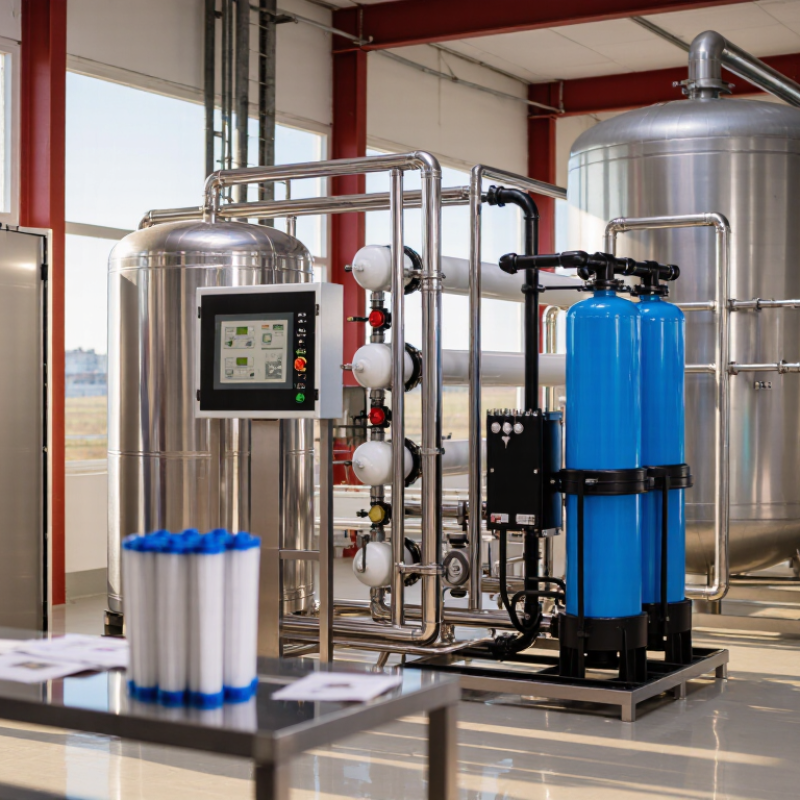
Global buyers rarely need the same water purification system. A coastal hotel may face brackish water, while a rural clinic may receive muddy surface water. Start with a recent laboratory test, not a supplier assumption. Measure bacteria, turbidity, hardness, salts, metals, and seasonal changes. Local health rules also matter. Treatment should match the intended use, whether drinking, food processing, or handwashing. Clean is not a technical specification.
Buying decisions should examine performance, operating cost, and serviceability together. Ask for validated removal data under comparable flow rates and water conditions. Check electricity demand, replacement intervals, reject-water volume, noise, and footprint. A system that works in a showroom may struggle with unstable voltage or dusty rooms. Request clear manuals, spare-part lists, operator training, and maintenance response times. Independent testing strengthens confidence, but certificates still need scope verification.
Plan for the full lifecycle, not only the invoice. Calculate water waste, consumables, labor, transport, and safe disposal requirements in local currency. Regional technicians can reduce downtime, although availability claims should be confirmed in writing. Pilot testing is worthwhile when feedwater changes across seasons. No checklist is perfect. Even careful buyers can misjudge cleaning frequency at high-sediment sites. That mistake can damage both schedules and budgets. Leave room for monitoring, adjustment, and human error.
Water purification choices should begin with the source, not the equipment catalogue. The WHO Guidelines for Drinking-water Quality identify microbial contamination as a major health risk, while the WHO/UNICEF Joint Monitoring Programme reported that 2.2 billion people lacked safely managed drinking water in 2022. Context matters. Surface water often needs coagulation, sedimentation, filtration, and disinfection. Groundwater may require iron, manganese, arsenic, or hardness removal.
Reverse osmosis suits saline water, high dissolved solids, and many industrial processes. However, it consumes energy and produces a concentrated reject stream. The International Desalination Association reports that modern seawater reverse osmosis commonly operates near 3–4 kWh per cubic metre, depending on intake and system design. Ultrafiltration can remove suspended solids and many microorganisms, but it does not reliably remove dissolved salts. Activated carbon is useful for taste, odor, and selected organic compounds. Ultraviolet treatment adds microbial control without chemical residuals, yet water must remain clear.
Application decides the best combination. A rural clinic may need protected storage, prefiltration, and validated disinfection. A food-processing plant may require membrane treatment, hygienic piping, and continuous monitoring. Agriculture remains a different case; FAO reports that farming accounts for about 70% of global freshwater withdrawals. Treatment should therefore consider reuse, not only purity. Maintenance decides. A technically excellent system can underperform when membranes foul, lamps age, or operators lack testing tools. The difficult part is often not selecting technology, but proving performance every day.
Look for independent test reports linked to specific contaminants, test conditions, flow rates, and replacement intervals. Standards such as NSF/ANSI 42, 53, and 58 can support comparison, but certification must match the claimed function. WHO’s Guidelines for Drinking-water Quality also emphasize health-based targets, microbial safety, and chemical control. Ask whether testing used realistic water temperatures and dirty filters. Laboratory results can look impressive.
Reliability is measurable in daily use. Check rated capacity, pressure loss, power needs, spare-part access, alarm accuracy, and maintenance records. A unit stopping after a blackout is not reliable for a rural clinic. The 2024 UN World Water Development Report links water insecurity with climate pressure and uneven infrastructure, making serviceability important. I would also inspect installation training and cleaning procedures. Datasheets rarely show operator mistakes. That gap deserves attention. A lower-cost system may become expensive when filters arrive late, seals fail, or monitoring is ignored. Compare total ownership cost over three to five years, not only the purchase price.
Reliable water purification begins with certification, not attractive specifications. Buyers should match each system with local drinking-water rules, installation codes, and import requirements. Check certificates directly with the issuing organization. Confirm the product model, production site, testing scope, and expiry date. A certificate for one filter may not cover the complete system. This detail is often missed.
Experienced procurement teams also request recent laboratory reports, material declarations, and quality-control records. Test results should identify contaminants, test methods, sample dates, and operating conditions. Ask whether the report reflects real water pressure and temperature. A supplier’s factory audit can reveal practical weaknesses, such as dusty assembly areas, unclear batch labels, or poorly stored membranes. Those details matter.
Tips: Build a comparison sheet before negotiating. Record certification status, warranty terms, spare-part availability, lead time, and service coverage. Request a pilot unit when water quality varies by region. Test its flow rate, taste, noise, and maintenance needs. Do not rely on brochures alone. An incomplete document is not automatically a failure, but it deserves questions. Compliance requirements also change, and older approvals may need review before shipment.
2026 Best Water Purification Solutions for Global Buyers
Installation, Maintenance, Costs, and Long-Term Value Assessment
A reliable purification system begins with a site assessment, not a product brochure. Test the source water for hardness, sediments, microbes, and chemical contaminants. Confirm pressure, temperature, drainage, and available electrical capacity before installation. Local technicians should follow national plumbing and safety requirements. Incorrect pipe sizing can reduce flow and increase energy use. It is a small detail with expensive consequences.
Maintenance determines whether the investment remains dependable. Replace filters according to water quality, not only calendar dates. Inspect seals, pumps, storage tanks, and ultraviolet components during scheduled service. Keep written records of testing, replacement parts, labor, and unexpected repairs. Purchase cost is only one part of ownership. A cheaper unit may require scarce filters or frequent specialist visits. A higher initial cost can provide better efficiency and longer service life, but this is not guaranteed. Real operating conditions may challenge the original estimate.
Tips: Request a three-year cost forecast before buying. Include installation, consumables, electricity, water waste, transport, and technician fees. Ask for independent performance data and local service availability. Leave space around the equipment for maintenance access. Do not ignore unusual taste, noise, pressure loss, or cloudy water. These signs may indicate a deeper problem. Recheck the system after six months, because early assumptions are often incomplete.