Who Are the Best Wastewater Systems Suppliers in China?

Choosing among China’s wastewater systems suppliers requires more than comparing prices or glossy project photos. Buyers need evidence that equipment can handle their actual wastewater, operating conditions, and discharge targets. A food-processing plant, for example, may need reliable grease removal and biological treatment, while a residential development may prioritize compact design and steady performance. The details matter.

Professor George Tchobanoglous, a leading wastewater engineering scholar and co-author of Wastewater Engineering: Treatment and Resource Recovery, offers a useful lens. In paraphrase, his engineering approach emphasizes matching treatment processes to water-quality objectives and real operating conditions. That is more practical than choosing a supplier by headline capacity alone. A direct quotation should be checked against its original source before publication.

This guide examines Chinese suppliers through that lens. It considers process expertise, equipment quality, automation, installation support, spare-parts access, and documented project experience. Look for specifics: influent test data, treatment-flow diagrams, commissioning records, and clear maintenance plans. Ask how the system performs when loads fluctuate, not only under ideal conditions. Small omissions can become expensive.

No supplier is best for every project. Some companies excel at packaged plants; others focus on membranes, pumps, or engineering services. Supplier claims also need independent verification. This comparison is a starting point, not a substitute for site testing or technical review. Real systems are messy. That deserves a closer look.
Who Are the Best Wastewater Systems Suppliers in China?

Supplier Categories: EPC Integrators, Operators, and Equipment Makers

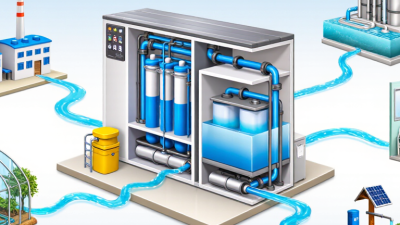
China’s wastewater suppliers generally fit three categories: EPC integrators, plant operators, and equipment makers. EPC integrators coordinate design, construction, process equipment, and commissioning. They may suit projects needing one accountable delivery team. Ask how they handle site changes, startup delays, and performance testing. A clear process-flow diagram helps reveal what is included.

Operators focus on daily treatment performance, maintenance, and reporting. Their experience can show whether a design remains practical after handover. Equipment makers supply items such as screens, pumps, aeration systems, and membranes. Confirm materials, operating limits, spare-part availability, and service response times. Compare references from facilities treating similar wastewater, not just similar-sized plants. A polished proposal can still overlook sludge handling or seasonal flow changes. That is worth checking twice.

Tips: Match the supplier type to your role and project stage. Request sample maintenance schedules and energy-use assumptions. Check who responds when a pump fails at night. Small details matter. No single category is automatically best; sometimes the handoffs between suppliers need closer review.

Who Are the Best Wastewater Systems Suppliers in China?

Supplier categories: EPC integrators, operators, and equipment makers

This qualitative scope index (0 = limited involvement; 5 = core responsibility) compares typical roles in wastewater projects, not supplier rankings, market share, or audited company data. EPC integrators typically lead design and construction; operators focus on plant operations and compliance; equipment makers supply treatment systems and technical support. Actual scopes vary by contract.

China’s 98.2% Urban Wastewater Treatment Rate in 2023 (MOHURD)

China’s urban wastewater treatment rate reached 98.2% in 2023, according to the Ministry of Housing and Urban-Rural Development’s 2023 urban construction statistics. This figure is a major benchmark, but it does not mean every district receives equally reliable treatment. A plant can meet its daily target while struggling with wet-weather inflows, aging pipes, or sudden changes in wastewater composition. The number matters. So does what it hides.

For buyers comparing wastewater systems suppliers, the rate points to a practical need: equipment that performs steadily, not just on paper. MOHURD and the National Development and Reform Commission’s 2021–2025 wastewater plan called for 80,000 kilometres of new or upgraded collection networks and 20 million cubic metres per day of additional treatment capacity. Those targets make pump reliability, process control, energy use, and maintenance access important evaluation criteria. Ask for operating data from comparable facilities, including effluent consistency and downtime—not only design capacity. A supplier’s quoted efficiency may also depend on local influent conditions. That caveat is easy to overlook.

GB 18918-2002 Grade 1A Limits: COD 50, BOD₅ 10 mg/L

For wastewater systems suppliers in China, “best” depends on whether a plant can reliably meet GB 18918-2002 Grade 1A limits: COD at or below 50 mg/L and BOD₅ at or below 10 mg/L. These are treated-effluent limits, not equipment guarantees. Ask suppliers for operating data from comparable plants, including influent variation, flow peaks, sampling methods, and results across seasons. A clear process diagram and maintenance plan matter as much as a polished performance claim.

UN-Water’s 2024 Progress on Wastewater Treatment report estimates that 42% of household wastewater worldwide was not safely treated in 2022. That figure underscores why verified treatment performance matters. For a Chinese project, compare suppliers using independently verifiable monitoring records and commissioning results against the applicable standard. Check how the design handles low temperatures, sludge management, and sensor calibration. I would still question any promise based only on a short, ideal-condition test.

Tips: Request paired influent and effluent results, with dates and laboratory methods. Confirm whether reported COD and BOD₅ values are averages or individual samples. Visit a comparable operating site if possible. Small details count: a clogged sampling line can distort a result, and an overlooked maintenance task can erode performance.

Profiles of BEWG, China Everbright Water, and OriginWater

China’s wastewater market includes large operators with different strengths. One supplier profile centers on municipal water infrastructure, including treatment plants and long-term operating services. Buyers should examine how its projects handle changing inflows, sludge removal, and equipment maintenance. A plant can look impressive on opening day. Daily performance matters more. Ask for operating data across several seasons, not only design capacity.

A second profile combines wastewater treatment with broader water-environment services. Its potential advantage is coordinating plant operations with surrounding systems, such as collection networks and reclaimed-water use. A third profile is associated with membrane-based treatment technology, which can support compact plants and tighter effluent targets. Membranes need careful cleaning and replacement planning. That cost is easy to underestimate. In practice, the best fit depends on local water quality, discharge requirements, operator skills, and the availability of spare parts. Request comparable project references, verified performance records, and clear service terms. I would not choose on technology claims alone; tender documents rarely show every operational headache. Ask who responds when a pump fails at night.

Who Are the Best Wastewater Systems Suppliers in China? - Profiles of BEWG, China Everbright Water, and OriginWater

Comparison Dimension Supplier Profile 1 Supplier Profile 2 Supplier Profile 3
Core business profile Large-scale water and environmental services, including wastewater treatment, water supply, reclaimed water, and related infrastructure operations. Integrated water-environment management, with activities spanning wastewater treatment, water-resource reuse, and river-basin or ecological restoration projects. Water-treatment technology and engineering, with a particular focus on membrane-based processes, wastewater treatment, and water reuse.
Technology emphasis Plant development and operation supported by conventional biological treatment, upgrades, and resource-recovery solutions selected for project needs. Combination of treatment facilities and broader water-environment services; process design depends on local discharge, reuse, and watershed requirements. Membrane technologies, including membrane bioreactor applications, alongside process engineering and treatment-system integration.
Typical project scope Municipal wastewater plants, water-supply systems, reclaimed-water facilities, and long-term infrastructure operation. Municipal wastewater projects and more comprehensive water-environment programs, which may include treatment, reuse, and water-body restoration. Wastewater and reuse systems where membrane separation, compact plant layouts, or higher-quality effluent are important design considerations.
Common strengths Broad utility-service scope and experience with large infrastructure projects and ongoing facility operations. Ability to address connected water-environment needs beyond an individual treatment plant, subject to project location and contract scope. Established expertise in membrane-oriented treatment and the integration of process technology into engineered systems.
Potential procurement fit Suitable for buyers evaluating large municipal projects, operating partnerships, or combined water and wastewater service requirements. Suitable for buyers seeking a coordinated approach to wastewater infrastructure and wider water-environment improvement. Suitable for buyers prioritizing membrane-based treatment, water reuse, or technology-led system design.
Key evaluation points Confirm plant-level operating records, treatment capacity, discharge compliance, lifecycle costs, and responsibilities under the proposed contract. Check the scope and measurable outcomes of each project, including treatment performance, ecological targets, and long-term operating obligations. Verify membrane performance under site conditions, energy and cleaning requirements, replacement costs, and the supplier’s commissioning support.
Information to verify before selection Current project references, applicable permits, service boundaries, performance guarantees, and the division of construction and operating risks. Local project references, technical targets, monitoring arrangements, financing and delivery structure, and post-completion maintenance provisions. Process guarantees, membrane specifications, consumables availability, pilot or reference data, and compatibility with local influent characteristics.

Profiles are anonymized and summarize broad areas of business and technology specialization. Project capabilities, treatment results, and contract terms vary by facility; verify current details directly through project references and procurement documentation.

How to Compare Suppliers by Capacity, Compliance, Cost, and O&M

Compare wastewater suppliers using the same design flow and influent data. Ask for average and peak capacity, seasonal performance, and recent operating records from comparable sites. A large nameplate figure proves little if equipment cannot handle stormwater peaks or changing pollution loads. Request actual outlet-test results.

Compliance should be checked against the project’s discharge permit and applicable Chinese standards, including GB 18918-2002 where relevant. The UN-Water report Progress on Wastewater Treatment 2024 estimates that 42% of household wastewater worldwide was not safely treated in 2022. That gap matters. Ask suppliers to state their guaranteed effluent limits, sampling method, and commissioning conditions—not just say “compliant.”

Compare total operating costs, not just construction bids. Include electricity, chemicals, sludge handling, spare parts, staffing, and planned shutdowns. Request an itemized five- to ten-year estimate and check its assumptions against local power and labor costs. Then examine O&M: spare-part lead times, operator training, response times, and maintenance logs from reference plants. A spreadsheet can still flatter the cheapest bid. I would verify the assumptions with site operators; supplier figures alone are not enough.

Skip to content