What Are Water Solutions for Global Buyers?
Global buyers need more than equipment with impressive specifications. They need water solutions that work in real communities, factories, farms, and commercial facilities. A system may promise high recovery rates, yet local power limits, seasonal demand, or poor maintenance can change its performance. That assumption can be wrong.
Reliable evaluation begins with the water itself. Buyers should examine salinity, turbidity, hardness, microbial risks, and expected daily volume. Laboratory testing and pilot trials can reveal problems before a major purchase. A clear technical report should explain treatment stages, energy use, replacement parts, monitoring methods, and wastewater handling. Numbers matter.
Experienced suppliers also understand the operating environment. A remote facility may need simple controls and locally available components. A coastal plant may require corrosion-resistant materials. A hospital or food producer may need stricter hygiene procedures and documented validation. These details influence total cost more than the initial quotation.
Trust develops through evidence. Global buyers should review project records, service capacity, warranty terms, certifications, and independent test results. They should also confirm whether the proposed design follows applicable national and international requirements. Compliance is not a decorative label.
Water solutions should support long-term resilience, not only immediate output. Digital monitoring can identify pressure changes, leaks, and declining membrane performance. However, technology cannot replace trained operators or regular maintenance. That is easy to overlook.
This guide explores practical water solutions for global buyers, including purification, desalination, wastewater reuse, and decentralized treatment. It considers performance, safety, sustainability, and lifecycle value. Some recommendations may require adjustment after field testing. That is acceptable. Good procurement leaves room for evidence, correction, and better decisions.
Definition and Scope of Water Solutions for Global Buyers
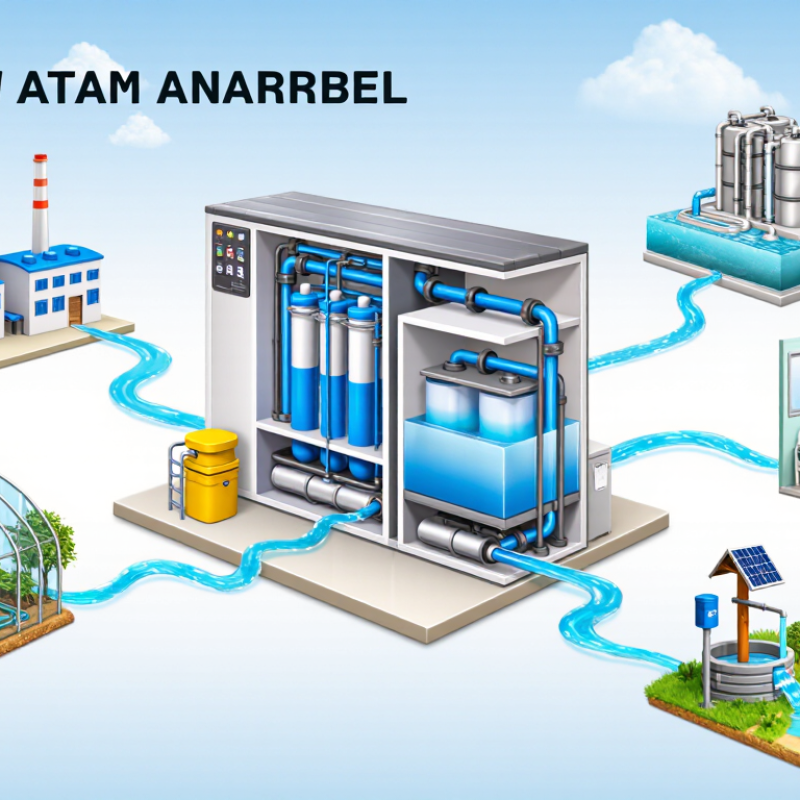
For global buyers, water solutions are integrated methods for managing water safely, efficiently, and responsibly. They may include treatment equipment, distribution systems, testing services, monitoring tools, and maintenance support. The scope covers drinking water, wastewater, process water, rainwater, and water reuse. A pump or filter alone is not always a complete solution. It must fit the site, water quality, operating capacity, and local requirements. That matters.
In practice, buyers compare performance, installation needs, energy use, operating costs, and service availability. Key questions include removal targets, expected flow, maintenance intervals, and replacement parts. Reliable suppliers should provide test data, operating instructions, risk information, and clear performance limits. Independent testing can strengthen confidence, especially when water chemistry changes seasonally. Local conditions matter. Soil, temperature, electricity access, and workforce skills can affect results. Procurement teams also need transparent delivery schedules and lifecycle cost estimates.
Experience shows that a design successful in one region may fail elsewhere. A system built for low-salinity water may struggle with heavy mineral content. Remote monitoring can identify pressure changes early, but it cannot replace every physical inspection. Human inspection remains important. Some projects focus heavily on equipment and overlook training, drainage, or safe storage. That gap is easy to underestimate. A practical water solution connects technical performance with reliable operation, documented evidence, and realistic local support.
What Are Water Solutions for Global Buyers? - Definition and Scope of Water Solutions for Global Buyers
| Solution Category | Typical Water Source | Main Treatment Objective | Common Technologies | Indicative Technical Data | Typical End Use | Key Buyer Considerations |
|---|---|---|---|---|---|---|
| Municipal Drinking Water Treatment | Rivers, reservoirs, lakes, and groundwater | Remove suspended solids, pathogens, natural organic matter, and selected chemical contaminants | Coagulation, flocculation, sedimentation, filtration, activated carbon, and disinfection | Finished-water turbidity is commonly designed at or below 1 NTU; disinfection performance depends on pathogen risk, contact time, and water quality | Public drinking-water networks, schools, hospitals, and communities | Local drinking-water regulations, seasonal source changes, chemical consumption, operator skills, and expansion capacity |
| Seawater Desalination | Open seawater or seawater intake wells | Reduce salinity, dissolved solids, microorganisms, and selected trace contaminants | Intake screening, pretreatment, cartridge filtration, reverse osmosis, remineralization, and disinfection | Typical seawater reverse-osmosis recovery is approximately 35–50%; product-water conductivity depends on membrane performance and post-treatment | Municipal supply, resorts, islands, coastal industry, and emergency water production | Energy consumption, concentrate disposal, intake permits, corrosion control, pretreatment reliability, and lifecycle cost |
| Brackish Water Treatment | Brackish groundwater, estuaries, and saline inland wells | Lower total dissolved solids and remove hardness, dissolved ions, and contaminants | Pretreatment, cartridge filtration, reverse osmosis, ion exchange, and remineralization | Typical brackish reverse-osmosis recovery is approximately 50–85%, depending on feed-water chemistry and scaling limits | Rural water supply, food processing, agriculture, and industrial utilities | Feed-water analysis, scaling potential, boron and nitrate requirements, concentrate management, and membrane replacement intervals |
| Ultrafiltration and Microfiltration | Surface water, groundwater, and treated wastewater | Remove particles, colloids, bacteria, and larger microorganisms | Hollow-fiber or flat-sheet membrane filtration with backwashing and chemical cleaning | Microfiltration pores are commonly about 0.1–1 micrometre; ultrafiltration pores are commonly about 0.01–0.1 micrometre | Drinking-water pretreatment, wastewater reuse, and industrial process-water clarification | Membrane fouling, feed turbidity, cleaning frequency, pretreatment requirements, flux, and backwash-water handling |
| Industrial Process Water | Municipal supply, groundwater, surface water, and recycled process water | Meet process-specific requirements for hardness, silica, conductivity, organics, and microorganisms | Water softening, reverse osmosis, deionization, electrodeionization, filtration, and ultraviolet treatment | High-purity applications may require conductivity below 1 µS/cm; exact specifications depend on the production process | Boiler feedwater, electronics, pharmaceuticals, food and beverage, and general manufacturing | Required water quality, continuous operation, validation, automation, maintenance access, and wastewater discharge limits |
| Wastewater Treatment and Reuse | Municipal sewage, commercial wastewater, and industrial effluent | Reduce organic matter, suspended solids, nutrients, pathogens, and priority contaminants | Biological treatment, secondary clarification, membrane bioreactors, tertiary filtration, and disinfection | Common monitoring parameters include BOD, COD, TSS, total nitrogen, total phosphorus, turbidity, and Escherichia coli | Toilet flushing, irrigation, cooling systems, industrial processes, and environmental discharge | Reuse category, public-health controls, nutrient limits, odor management, sludge handling, and regulatory approval |
| Rainwater Harvesting | Building roofs, paved areas, and dedicated collection surfaces | Capture, store, and treat precipitation for non-potable applications | First-flush diversion, screening, sediment filtration, storage tanks, activated carbon, and disinfection | Annual collection potential is estimated from rainfall depth × catchment area × runoff coefficient; storage must account for dry periods | Landscape irrigation, toilet flushing, cleaning, and selected industrial uses | Local rainfall patterns, roof materials, tank sizing, mosquito control, cross-connection prevention, and backup supply |
| Point-of-Use and Point-of-Entry Systems | Incoming building supply or locally collected water | Improve water quality at a specific tap, building, or small facility | Sediment filters, activated carbon, ultraviolet treatment, ultrafiltration, and reverse osmosis | Treatment capacity is commonly specified in litres per minute or litres per day; filter replacement depends on water quality and volume | Homes, offices, clinics, hospitality facilities, and remote installations | Target contaminant, certified performance, service intervals, power availability, spare parts, and user maintenance |
| Water Distribution and Monitoring | Treated water within municipal, commercial, or industrial networks | Maintain water quality, pressure, continuity, and asset reliability throughout the network | Pumping, storage, pressure management, leak detection, flow metering, online sensors, and control systems | Typical monitored parameters include flow, pressure, turbidity, conductivity, pH, temperature, and disinfectant residual | Water utilities, industrial parks, campuses, hotels, and large facilities | Non-revenue water, data security, sensor calibration, energy efficiency, pipe condition, and emergency response |
| Sludge and Concentrate Management | Residuals from water treatment, wastewater treatment, and desalination | Reduce volume, stabilize residuals, recover resources, and control environmental impact | Thickening, dewatering, drying, digestion, evaporation, beneficial reuse, and controlled discharge | Design depends on solids concentration, salinity, hazardous constituents, moisture content, and receiving-environment limits | Municipal plants, industrial sites, and desalination facilities | Land availability, transport costs, disposal permits, energy use, odor, salinity, and opportunities for resource recovery |
Note: Technical values are indicative planning ranges or commonly monitored parameters. Final specifications should be confirmed through site-specific water analysis, applicable regulations, and the intended end use.
Related Posts
-
What Are the Best Water Treatment Solutions from China?
-
2025 How to Choose the Best Water Treatment System for Your Home
-

How to Choose the Best System Water Solutions in 2026?
-

Transform Your Life with the Ultimate Water System: Discover Healthier Hydration Today!
-

Top 10 Water Refining Systems for Global Buyers Today?
-
10 Essential Tips for Choosing the Right Water Conditioning Systems