China Top 10 Water System Solutions Manufacturers

Water security is becoming a practical engineering challenge, not a distant policy concern. The WHO/UNICEF Joint Monitoring Programme’s 2023 report estimated that 2.2 billion people lacked safely managed drinking water in 2022. The UN World Water Development Report 2024 also noted that agriculture accounts for roughly 70% of global freshwater withdrawals. These figures explain growing demand for dependable water system solutions, from municipal treatment and industrial reuse to filtration, pumping, and monitoring.

China’s manufacturers serve a wide range of these needs. Their capabilities differ: one company may specialize in membrane systems, while another focuses on pumps, packaged treatment plants, or integrated engineering. As water-policy scholar Asit K. Biswas is often quoted as saying, “Water is not a scarce resource. It is a badly managed resource.” That perspective makes system design, operation, and maintenance as important as equipment selection.

This overview of China’s top 10 water system solutions manufacturers is intended as a starting point, not a universal ranking. It considers product range, project experience, technical support, certifications, and international service capacity. Buyers should confirm current specifications and references directly with each supplier. A polished brochure is not proof of field performance. Needs also vary by water source, local standards, operating skills, and budget. No list can capture every project’s constraints, and that limitation deserves attention.
China Top 10 Water System Solutions Manufacturers

What Water System Solutions Manufacturers Do

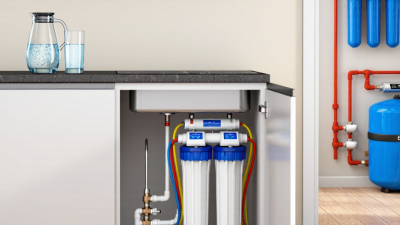
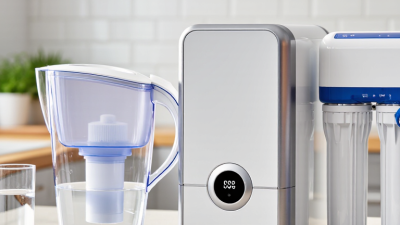
Water system solutions manufacturers turn water requirements into working equipment and operating plans. They assess source-water quality, daily demand, peak flow, and the intended use. A small hotel may need compact filtration and storage, while a factory may require separate process-water lines. The system can include pumps, filters, membranes, disinfection units, tanks, sensors, and control panels. Each part must match the others. A powerful pump cannot fix an undersized pipe.

Manufacturers typically prepare layouts, select components, assemble equipment, and test performance before delivery. They may also install systems, train operators, and provide maintenance guidance. Useful checks include flow rate, pressure, leakage, and water quality at key points. Clear operating instructions matter. A plan can look complete on paper yet overlook awkward access to a filter housing or drain. That is worth reconsidering. Equipment alone does not guarantee reliable water; regular sampling and timely part replacement still matter. Good suppliers explain what their systems can and cannot handle, rather than promising one design will suit every site.

How China’s Water Systems Industry Is Organized

China’s water systems industry is organized around connected roles, not one simple production line. Equipment manufacturers supply pumps, valves, pipes, membranes, sensors, and control cabinets. Some focus on a single component; others combine several into treatment packages. The boundaries blur. Engineering firms design systems for municipal plants, factories, and rural water networks. Contractors then install them, while operations teams handle testing, maintenance, and performance checks.

Tips: Match the supplier’s experience to the actual water source and use. Ask for drawings, material specifications, test records, and clear maintenance requirements. A tidy brochure is not enough.

For buyers comparing China’s water system solutions manufacturers, it helps to identify which part of the project each company controls. A component maker may not manage system integration, and an installer may not manufacture the core equipment. Check how suppliers coordinate with engineering and service partners, especially for replacement parts and local support. Site conditions matter: a compact urban plant has different space and flow constraints from an industrial facility. Water quality also changes what treatment stages are needed. These distinctions are easy to overlook, and supplier categories can overlap. Even a well-designed system may need adjustment after real operating data comes in.

Criteria for Evaluating Chinese Water Systems Manufacturers

For buyers comparing Chinese water-system manufacturers, price is only the visible part of the offer. Check the design against the actual source water: seasonal turbidity, hardness, salinity, and daily flow. Ask for pilot results, component specifications, and independent test reports—not just a stated removal rate. The WHO and UNICEF Joint Monitoring Programme reported that 2.2 billion people lacked safely managed drinking water in 2022. That figure underscores why treatment performance must be verified under realistic operating conditions.

Evaluate production quality and serviceability together. Request documented quality-control procedures, batch traceability, spare-parts lists, and clear commissioning plans. Ask how the system responds when filters clog or feed-water quality changes. The World Health Organization’s Guidelines for Drinking-water Quality emphasize risk management from source to consumer, so a good evaluation should cover the complete treatment chain. Look for operating data such as energy use, water recovery, and maintenance intervals. Numbers matter. But insist on the test conditions behind them.

Check whether the manufacturer can support installation, operator training, and repairs in your region, and verify response times in writing. Review references for projects with similar capacity and water conditions. Factory visits can help, though a polished showroom proves little about long-term reliability. I would also compare bids using lifecycle costs, not equipment price alone. This is imperfect: projected maintenance costs are often uncertain, and buyers should challenge optimistic assumptions.

Profiles of China’s Top 10 Water System Solutions Manufacturers

Profiles of China’s Top 10 Water System Solutions Manufacturers

A useful profile starts with the work a manufacturer can demonstrate, not a broad claim of expertise. This overview compares ten common capability areas, rather than presenting a verified ranking.

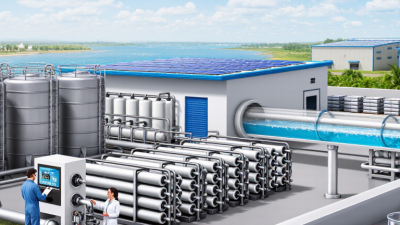
Municipal treatment providers design processes for drinking water and wastewater plants. Membrane specialists focus on filtration, reverse osmosis, and replacement planning. Industrial wastewater firms handle complex flows from factories, where water quality can vary by shift. Packaged-system makers offer compact units for smaller sites. Pump and control integrators coordinate valves, sensors, and equipment.

Rural-system providers build decentralized treatment with simpler maintenance needs. Water-reuse specialists design systems that return treated water to cooling or cleaning. Desalination providers address high-salinity sources and energy use. Monitoring firms supply instruments for tracking flow and water quality. Engineering contractors connect design, installation, and commissioning.

Compare each profile against project records, technical staff, and service coverage. Ask for references from facilities with similar water sources and operating conditions. A plant treating clear groundwater faces different demands from one handling turbid surface water.

Request sample process diagrams, equipment lists, and realistic maintenance schedules. Look closely at spare-part availability and operator training. Small details matter.

A polished brochure is not proof of reliable performance, and published capacity may not match site conditions. Independent testing and clear acceptance criteria help buyers judge proposals fairly. Some profiles will overlap; that is normal, but the actual division of responsibility should be written down.

How Leading Manufacturers Compare Across Technologies and Applications

Water system manufacturers are best compared by the problems their equipment can reliably solve, not by catalog size. A municipal plant may need stable filtration during sudden changes in river turbidity. A food-processing site may care more about repeatable water quality, sanitation, and reduced downtime. Membrane systems can deliver fine separation, but pretreatment and cleaning requirements affect operating costs. Ultraviolet disinfection avoids some chemical handling, yet performance depends on water clarity and lamp maintenance. Small details matter.

A useful comparison looks at verified capacity, power use, material compatibility, controls, and access to replacement parts. For a coastal facility, reverse osmosis may address salinity, while energy recovery can influence long-term expenses. For a rural installation, simpler controls and locally available service may outweigh advanced automation. Ask for operating data from applications similar to yours, including seasonal conditions and maintenance intervals. Brochure figures can be useful, but they do not tell the whole story. I would also check how the supplier handles commissioning and operator training; this is easy to overlook, and sometimes the weakest part of a project. Different technologies suit different sites, so a technically impressive system is not automatically the practical choice.

Skip to content