China’s rapid urban growth and industrial development have increased pressure on freshwater supplies. Water reclamation systems help address that challenge by treating municipal or industrial wastewater for suitable reuse. Their performance depends on more than a process diagram. Membrane selection, biological treatment, disinfection, energy demand, and reliable operation all matter. As hydrologist Luna Leopold put it, “The health of our waters is the principal measure of how we live on the land.” That idea gives this market review a useful starting point: reclaimed water has value only when treatment and quality controls are dependable.
This guide introduces ten manufacturers in China and the capabilities buyers should examine. It considers treatment technologies, project experience, engineering support, equipment integration, and after-sales service. A plant operator might need to check membrane cleaning intervals, daily flow variation, and the space available for tanks and pumps. Small details can change operating costs. Not every site has the same needs. A food-processing facility, a municipal plant, and a commercial complex may require different treatment trains and reuse targets.
The list is a comparison guide, not a universal verdict. Company claims should be checked against project references, technical documentation, and the conditions of the intended installation. Some figures may look impressive on paper, yet real performance depends on water composition and consistent operation. That deserves a second look. Readers can use the profiles that follow to identify manufacturers worth evaluating, then confirm whether their systems fit the project’s specific requirements.
Water reclamation systems treat used water so it can serve another purpose. Their feed may come from homes, factories, or commercial buildings. The treatment design depends on what the water contains and how it will be reused. A system for landscape irrigation may need different controls than one supplying industrial cooling.
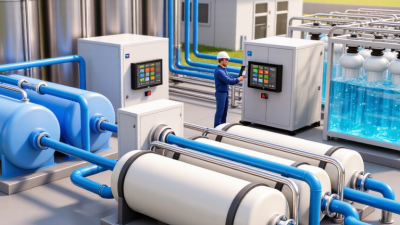
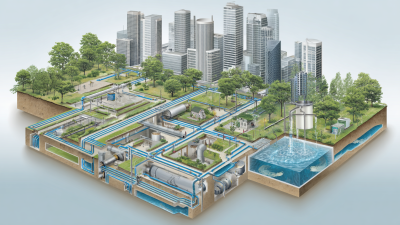
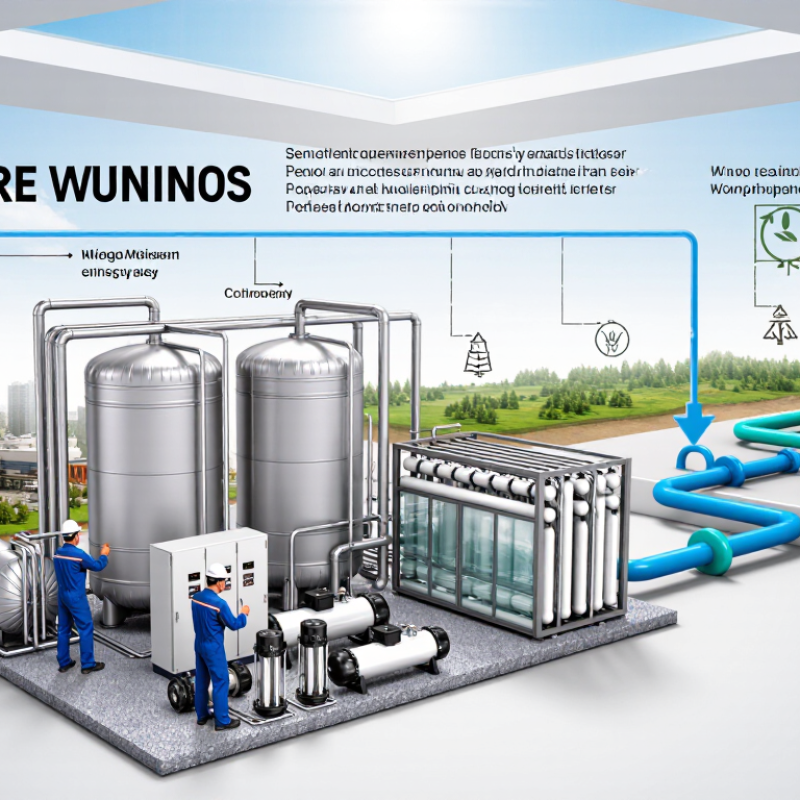
Treatment usually begins with screens that catch rags, plastics, and other debris. Settling tanks then remove heavier solids. Microorganisms can break down dissolved organic matter in biological treatment tanks. Fine filters or membranes reduce smaller particles, while disinfection helps control pathogens. Operators check measurements such as turbidity, flow, and disinfectant levels. The process is not a single machine. It is a sequence, and a fault in one stage can affect the final water.
The finished water may support irrigation, toilet flushing, cooling towers, or selected manufacturing processes. Reuse should match the treatment quality. No system is magic. Pipes must stay separate from drinking-water lines, and routine sampling matters. Even a clear sample can hide a problem, so monitoring needs to be consistent. In practice, maintenance is less glamorous than new equipment, but clogged screens and worn seals can quietly reduce performance.
Treatment typically progresses from primary settling to secondary biological treatment, which removes more organic matter and suspended solids. Bars show approximate removal ranges for conventional municipal wastewater treatment; actual results vary with influent quality and system design.
China’s water reclamation industry is moving beyond basic wastewater treatment toward planned reuse. The National Development and Reform Commission and the Ministry of Housing and Urban-Rural Development set a 2025 target: reclaimed water should make up at least 25% of water use in cities above prefecture level. This target appears in the 14th Five-Year Plan for Urban Sewage Treatment and Resource Utilization (2021). It signals a shift toward treating municipal wastewater as a local resource, especially where freshwater supplies face pressure.
In practice, reclaimed water can serve industrial cooling, street cleaning, and urban landscaping. Advanced treatment may combine filtration, disinfection, and other processes, depending on the incoming wastewater and its intended use. A plant can produce compliant water, yet nearby users may lack the pipes or steady demand to take it. Targets are not outcomes. The plan’s percentage is useful, but it does not show operating costs, system uptime, or seasonal changes in water quality. Those details matter when assessing whether a reclamation project can perform reliably beyond the treatment plant.
China’s water reclamation manufacturers should be compared by verified performance, not brochure claims. UN-Water’s 2024 SDG 6.3.1 Progress Report estimates that 42% of household wastewater worldwide was not safely treated in 2022. This global figure is not a measure of China’s market, but it highlights why dependable treatment and reuse matter. Ask each supplier for test results using water similar to yours, including seasonal changes in salinity, suspended solids, and organic load.
Compare treated-water quality against your intended use, then check recovery rate, energy use per cubic metre, chemical demand, and sludge output. Request operating records from installations with comparable flow and feedwater. A clear warranty should define performance limits, exclusions, and response times. Ask who supplies replacement membranes and how often cleaning is expected. One uncomfortable detail: a high recovery rate may look attractive while increasing fouling or maintenance. I would not judge a system from a short demonstration alone; a site-specific pilot can expose problems that polished samples miss.
Tips: Put the same feedwater data and output targets in every request for quotation. Ask for raw monitoring records, not only summary charts. Check whether operators can access alarms, spare parts, and practical training.
A practical comparison checklist for evaluating suppliers without implying a manufacturer ranking.
| No. | Comparison Dimension | What to Compare | Useful Technical Reference | Evidence to Request |
|---|---|---|---|---|
| 1 | Process Configuration | Whether the proposed train matches the source water and intended reuse, such as MBR, UF followed by RO, or another treatment combination. | UF membranes commonly have nominal pore sizes around 0.01–0.1 μm. RO is used when dissolved-salt reduction is required. | Process flow diagram, design basis, and explanation of pretreatment and residuals handling. |
| 2 | Design Capacity and Flexibility | Rated average and peak flow, operating hours, seasonal variation, and provision for future expansion. | Capacity should be stated in m³/day and supported by assumptions for peak factors and available operating time. | Hydraulic calculations, equipment schedules, and turndown or modular expansion details. |
| 3 | Water Recovery | The share of feedwater converted to product water, including the quantity and disposal route for concentrate and other residual streams. | RO recovery is feedwater- and design-dependent; roughly 50–85% is a broad reference range for many applications, not a guaranteed project value. | A water balance showing feed, product, backwash, sludge, and concentrate flows at design conditions. |
| 4 | Product-Water Quality | Guaranteed effluent limits matched to the intended use, such as cooling, process water, irrigation, or toilet flushing. | There is no single universal reuse specification. Applicable limits depend on the end use and local regulations; RO performance also depends on feedwater and operating conditions. | A parameter-by-parameter guarantee, test methods, sampling frequency, and the applicable standard or permit. |
| 5 | Membrane Design and Maintenance | Membrane type, design flux, cleaning method, replacement interval assumptions, and availability of compatible replacement elements. | For submerged MBR systems, design flux is commonly selected within a project-specific range; feed characteristics and fouling control strongly affect it. | Membrane datasheets, cleaning procedures, expected consumables, and a lifecycle replacement-cost estimate. |
| 6 | Energy and Operating Costs | Electricity use, chemicals, labor, membrane replacement, sludge handling, and any concentrate management costs. | Energy consumption should be compared at the same feedwater quality, flow, treatment target, and operating boundary. | A stated kWh/m³ basis, equipment load list, chemical-use assumptions, and a transparent operating-cost model. |
| 7 | Footprint and Installation | Equipment layout, access for maintenance, civil-work requirements, indoor or outdoor installation, and noise or odor controls where relevant. | Required footprint is site- and process-specific; compare complete layouts rather than equipment dimensions alone. | General arrangement drawings, foundation loads, utility connections, and installation scope boundaries. |
| 8 | Automation and Monitoring | Control-system functions, alarms, remote access, data logging, and integration with the buyer’s existing SCADA or control platform. | Monitoring points should reflect the process, commonly including flow, pressure, turbidity, and relevant water-quality indicators. | I/O list, control narrative, alarm matrix, communications protocol, and cybersecurity or remote-access policy. |
| 9 | Compliance and Testing | Applicable discharge or reuse requirements, electrical and safety provisions, commissioning tests, and performance acceptance conditions. | Applicable requirements depend on the project location, reuse category, and permit conditions. | Compliance matrix, inspection records, commissioning protocol, and agreed acceptance-test criteria. |
| 10 | Service, Warranty, and References | Warranty scope, response arrangements, spare-parts availability, operator training, and experience with comparable feedwater and reuse applications. | Service response times and warranty terms are contractual items; they should be compared directly rather than assumed. | Written warranty, service-level terms, spare-parts list, training plan, and verifiable project references. |
Note: Technical ranges above are general reference points, not guarantees or claims about any specific supplier. Final design values should be confirmed through feedwater testing, project requirements, and applicable local standards.
China’s water reclamation manufacturers serve municipal, industrial, and commercial projects, but their strengths vary. These ten capability-led profiles offer a practical way to compare suppliers without treating them as a ranking. Verify each claim against project records and technical documents.
One manufacturer may specialize in municipal reuse, designing treatment trains for stable output and changing inflows. Another may focus on industrial cooling water, where scaling control and dependable daily operation matter. A membrane-focused producer typically emphasizes filtration performance, cleaning procedures, and membrane replacement intervals. A modular-system builder may suit sites with limited space, though transport and expansion constraints deserve close review. An engineering-led supplier may coordinate design, installation, and commissioning. Ask for operating data, not only equipment lists.
Other profiles include suppliers focused on monitoring instruments, wastewater from food processing, high-salinity streams, long-term maintenance, or integrated project delivery. These are useful distinctions, not proof of quality. Request references for comparable feedwater, plus test results showing flow, recovery rate, and treated-water quality. Look closely at the service plan, too. A polished proposal can still leave practical gaps, such as unclear spare-parts lead times or limited operator training. The best fit depends on site conditions, discharge goals, and the people who will run the system.
Water reclamation systems serve very different needs. A hotel may reuse treated water for toilet flushing and landscape irrigation, while a factory may need process water or cooling-tower makeup. The intended use sets the treatment target. There is no perfect fit.
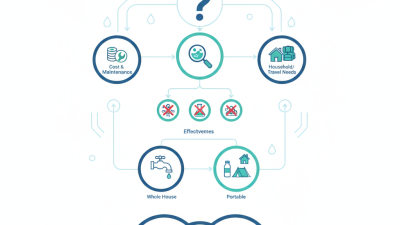
Selection begins with a clear picture of the incoming water. Record daily flow, peak demand, and changes in quality across seasons or production shifts. Test for suspended solids, organic matter, salts, and microbial contamination. Then match treatment steps to the risks: biological treatment can reduce organic pollution, while membranes or disinfection may be needed for more demanding reuse. These choices depend on measured results, not equipment descriptions alone.
Space, energy use, operator skills, and maintenance access matter too. A system that fits neatly on a drawing may be difficult to service beside a crowded pump room. Ask how often filters need cleaning, where residuals go, and whether spare parts are readily available. Pilot testing can reveal fouling or fluctuating performance before full installation, though it adds time and cost. Even good designs need routine monitoring; otherwise, a small change in feedwater can quietly reduce treated-water quality.