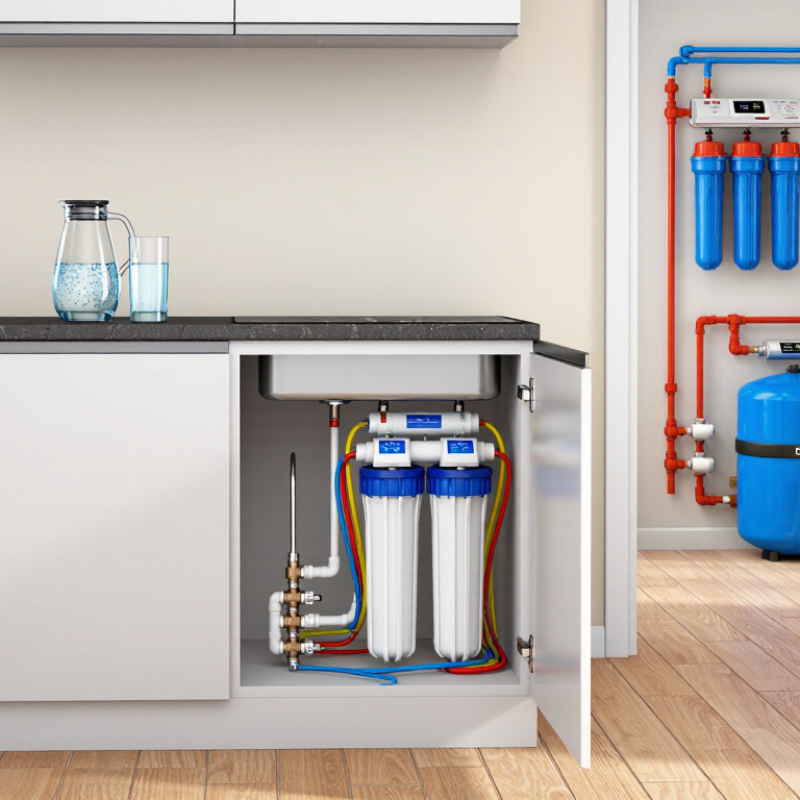
Choosing among water solutions systems in 2026 means looking beyond polished product photos and broad performance claims. The right option depends on your water source, household use, budget, and local conditions. A compact under-sink filter may suit a city apartment, while a whole-house system may better address sediment or hardness across several taps.
Some systems focus on drinking-water filtration. Others combine treatment stages or manage water throughout a property. The details matter: filter type, replacement interval, flow rate, installation needs, and independent test data can affect everyday results. That matters.
In 2026, compare systems by matching their stated capabilities to a recent water-quality report, where available. Check whether test methods and certifications are clearly identified, and confirm that replacement filters are accessible and reasonably priced. A salesperson’s promise is not a substitute for evidence. Look for practical details, too: space beneath the sink, pressure changes during a shower, and the cost of routine servicing.
This guide examines common system types and the trade-offs behind them. It considers performance, upkeep, installation, and value rather than treating one product as best for every home. The comparison has limits; water conditions vary, and published results may not reflect your tap. That is worth remembering. Use the findings as a starting point, then verify the details that matter for your own water and household.
Choosing a water system in 2026 should begin with the source, not a product list. Municipal supplies, private wells, and rainwater storage carry different risks.
The WHO/UNICEF Joint Monitoring Programme’s 2023 report found that 2.2 billion people lacked safely managed drinking water in 2022.
Source: Progress on Household Drinking Water, Sanitation and Hygiene, 2000–2022.
That global figure is a reminder, not a household diagnosis. Start with a test.
For private wells, the U.S. EPA recommends annual testing for coliform bacteria, nitrates, total dissolved solids, and pH. Local hazards may call for additional tests. Compare lab results with your utility’s water-quality report, then choose treatment for a measured issue.
Sediment filters capture particles. Activated carbon can reduce some tastes and odors. Reverse osmosis targets several dissolved substances, but produces reject water and needs maintenance. UV disinfection works best with clear water and reliable power.
No single unit handles everything. It is easy to overbuy filtration; extra stages can mean extra upkeep without a clear benefit.
Tips
Keep dated test results and filter-change records. Retest after repairs, flooding, or a noticeable change in taste or smell. A system is only as dependable as its maintenance.
What Are the Best Water Solutions Systems in 2026? Comparing Drinking Water Filtration and Purification Technologies starts with one practical question: what is in your water?
A carbon filter can improve taste and reduce certain chemicals, while a sediment filter catches particles such as rust. Neither removes every possible contaminant. That matters. Reverse osmosis can reduce many dissolved substances, but it uses water and needs regular upkeep. Ultraviolet treatment can inactivate microbes, yet it does not remove metals or chemicals. Distillation also reduces many contaminants, though it can be slow and energy-intensive. “Purified” is not a single technology or a guarantee of suitability.
A cloudy glass, a chlorine smell, and a lab result point to different problems. Check a local water report or arrange testing when the source is uncertain; taste and smell cannot reliably reveal many hazards. Then match the treatment to the results, rather than buying the most complex system by default. Look for independent certification against relevant contaminant-reduction standards, and check which specific substances the certification covers. Filters also have limits. A cartridge left unchanged too long may perform poorly, and replacement costs can be easy to overlook. It is tempting to expect one device to solve everything. Often, the better choice is a targeted system with clear maintenance instructions.
What Are the Best Water Solutions Systems in 2026?
The best system depends on where water problems begin. A whole-house filter treats water as it enters the home, which can help with sediment, chlorine taste, or scale when the equipment matches the issue. It also treats water used for showers and laundry. But it may cost more to install and maintain. A point-of-use system, fitted under a kitchen sink or on a countertop, targets drinking and cooking water. It can be practical when only one tap needs attention. Check that its certification covers the specific contaminant you want reduced; “better taste” is not a complete performance measure.
Well water calls for testing before equipment selection. A certified laboratory can check for bacteria, nitrates, metals, and other local concerns. Results guide whether treatment needs filtration, disinfection, or both. Retest when conditions change, such as after flooding, repairs, or a noticeable shift in color or odor. A single filter rarely solves every well-water concern. Not always.
Tips: Keep a dated copy of test results and maintenance records. Check filter replacement intervals, flow rates, and total annual costs before buying. If a result is unclear, ask a qualified water professional to explain the treatment options. It is easy to overbuy equipment; I would rather see a system matched to evidence than a complicated setup chosen by guesswork.
| System Type | Primary Purpose | Best Suited For | What It Can Address | Key Advantages | Important Limitations | Maintenance and Testing |
|---|---|---|---|---|---|---|
| Whole-house sediment filtration | Filters incoming water at the point where it enters the home. | Homes with visible sediment or particles, when testing or inspection indicates filtration is appropriate. | Sand, rust particles, and other suspended sediment, depending on the filter’s rating and condition. | Provides filtered water to multiple fixtures and can help protect downstream plumbing and equipment from particles. | Does not, by itself, remove dissolved minerals, most chemicals, or microorganisms. | Inspect pressure and flow; replace or clean the filter according to its instructions and the amount of sediment present. |
| Whole-house activated-carbon filtration | Treats water supplied to most or all household outlets. | Homes seeking to reduce chlorine taste and odor or other specifically listed substances in the incoming supply. | Chlorine and certain organic compounds, depending on the media, contact time, and system-specific test data. | Can improve water taste and odor throughout the home; treatment capacity is available at multiple taps. | Performance varies by contaminant and system. It is not a general-purpose disinfectant and may not reduce dissolved salts or hardness. | Replace or regenerate media as directed. Check that the system’s independently verified claims match the contaminants of concern. |
| Water softener | Reduces hardness by exchanging calcium and magnesium ions, commonly using ion-exchange resin. | Homes with confirmed hard water and problems such as scale buildup or reduced soap lather. | Hardness minerals; it is not designed to remove all contaminants. | Can reduce scale formation in plumbing and appliances and improve soap performance. | Does not disinfect water or provide broad contaminant removal. Conventional ion-exchange units add sodium or potassium to softened water. | Replenish salt or regenerant as required; check settings and hardness. Consider a separate drinking-water treatment if needed. |
| Point-of-use activated-carbon filter | Treats water at a single tap, commonly a kitchen drinking-water faucet. | Households targeting taste, odor, or particular listed contaminants at one drinking-water outlet. | May reduce chlorine taste and odor and certain other substances when the specific filter is tested and certified for them. | Usually treats only the water used for drinking and cooking, making it a focused option with no whole-house treatment requirement. | Does not soften all household water or remove every contaminant. A filter’s appearance or carbon content alone does not establish performance. | Replace cartridges on schedule and follow the rated capacity; delayed replacement can reduce performance. |
| Point-of-use reverse osmosis (RO) | Uses a semipermeable membrane, typically with pre- and post-filtration, at a drinking-water tap. | People who want to reduce total dissolved solids or specific contaminants for which the complete system has verified reduction claims. | Can reduce many dissolved substances, but the amount varies by system and contaminant. Check the system’s certified performance data. | Provides treated water at a selected tap and can address a broader range of dissolved substances than a basic carbon filter. | Produces reject water, needs space and pressure, and does not treat every household outlet. No single RO claim guarantees removal of all contaminants. | Replace pre- and post-filters and the membrane according to instructions; sanitize and maintain the storage tank and faucet as directed. |
| Well-water treatment system designed after testing | Combines treatment stages selected for the results of a private-well water test. | Homes using private wells, especially where water chemistry, microorganisms, or nuisance conditions are unknown or have changed. | Depending on test results and system design, treatment may target bacteria, nitrate, arsenic, iron, manganese, hardness, or hydrogen sulfide. | Can be tailored to the well and household rather than relying on a one-size-fits-all filter. | There is no universal well-water unit. The wrong treatment may not address the hazard; some treatment stages require pretreatment or disinfection. | Test private-well water through a qualified laboratory at least annually for coliform bacteria, nitrate, and other locally recommended concerns; retest after changes or contamination events. Maintain each treatment stage. |
| Ultraviolet (UV) disinfection | Uses ultraviolet light to inactivate susceptible microorganisms as water passes through the treatment chamber. | Water supplies where microbial disinfection is required, often as part of a properly designed private-well treatment train. | Can inactivate many bacteria, viruses, and protozoa when the unit is properly sized and operated. | Adds no disinfectant chemicals to the water and can provide treatment at the point of entry. | Does not remove chemicals, metals, or sediment. Clear water and suitable flow are important; UV systems generally do not leave a disinfectant residual in plumbing. | Clean the quartz sleeve and replace the lamp on the manufacturer’s schedule; keep alarms operational and follow required pretreatment guidance. |
The best water solution in 2026 depends on who uses the water, where it comes from, and what testing reveals. A household with sediment, chlorine taste, or hard water may need different treatment at the tap or across the whole home. A small under-sink filter can improve drinking water without treating every shower. Whole-home systems can address broader needs, but they require space, upkeep, and a clear understanding of the incoming water. Test first. Guessing gets expensive.
Businesses face different demands. A café may need consistent water for beverages and equipment, while a workshop may need to manage scale or specific contaminants. Treatment can combine filtration, softening, or disinfection, depending on the source and intended use. Check flow rates during busy hours, not just average daily use. A system that works on paper may struggle when several taps run at once.
Communities often weigh centralized treatment against smaller systems serving individual buildings or neighborhoods. Central plants can support broad monitoring, while local systems may help remote areas or address a particular source problem. Both need trained operators, routine sampling, and a realistic maintenance budget. Replacement filters do not change themselves. Plans should also account for outages and changing water quality. Real sites are messier than diagrams, and that deserves attention before equipment is selected.
A practical starting point for choosing water-saving solutions: prioritize the uses that account for the largest share of household demand.
How to use this: Toilets, showers, and faucets represent the largest listed uses, so efficient fixtures can be a strong first step for homes. Businesses and communities should assess their own demand patterns before selecting efficiency, reuse, or treatment systems. Shares are typical U.S. household estimates and vary by household.
Source: U.S. EPA WaterSense, estimated shares of indoor household water use.
A reliable water system starts with a site assessment, not a product list. Check the water source, household demand, pipe condition, pressure, and space for safe drainage. For a private well, choose laboratory tests based on local geology; one basic test cannot detect every contaminant. Include accessible sampling taps and a bypass for servicing. Small details matter.
The World Health Organization’s 2022 drinking-water guidelines recommend managing risks from source to tap through water safety planning. In practice, set a baseline for relevant measures, such as pH, turbidity, disinfectant residual, or microbial indicators. Test more often after repairs, flooding, or changes in taste and smell. A calendar alone is not enough.
Maintenance should follow measured performance and system instructions. Log test results, filter changes, pressure readings, and leaks; rising pressure loss may signal a clogged filter. WHO and UNICEF reported that 2.2 billion people lacked safely managed drinking water in 2022, underscoring the importance of dependable monitoring. Still, readings can be missed, and a tidy log does not prove water is safe. Use qualified laboratories for tests that require them, and review results with a water professional.