Why Are Water System Supplies Essential for Global Buyers?
Reliable water system supplies are essential to global buyers because water infrastructure supports homes, hospitals, factories, farms, and emergency services. A failed valve, cracked pipe, or unsuitable filter can interrupt operations within hours. The impact may include production delays, unsafe water, costly repairs, and damaged public trust. Every component matters.
Experienced procurement teams assess more than price. They review material quality, pressure ratings, flow capacity, corrosion resistance, and expected service life. They also check supplier certifications, factory testing, traceability, and after-sales support. A stainless-steel fitting may perform well in a coastal plant, while a cheaper alternative could fail under salt exposure. These details shape responsible purchasing decisions.
Global projects add further challenges. Climate, local water chemistry, installation standards, shipping conditions, and maintenance skills can differ widely. Reputable suppliers provide clear technical documents, inspection records, and practical guidance for installation. They should explain limitations instead of promising perfect performance. That honesty matters.
Still, no supply chain is flawless. Forecasts can be wrong. Specifications may overlook seasonal demand or difficult site access. Buyers should therefore compare samples, verify independent test results, and consult qualified engineers before committing to large orders. Small checks prevent larger failures.
Water system supplies are not simply products in a catalog. They are long-term infrastructure decisions. Strong quality control, transparent communication, and evidence-based selection help global buyers protect reliability, safety, and investment. The best choice is rarely the cheapest one. It is the one that remains dependable when conditions become difficult.
Definition and Scope of Water System Supplies
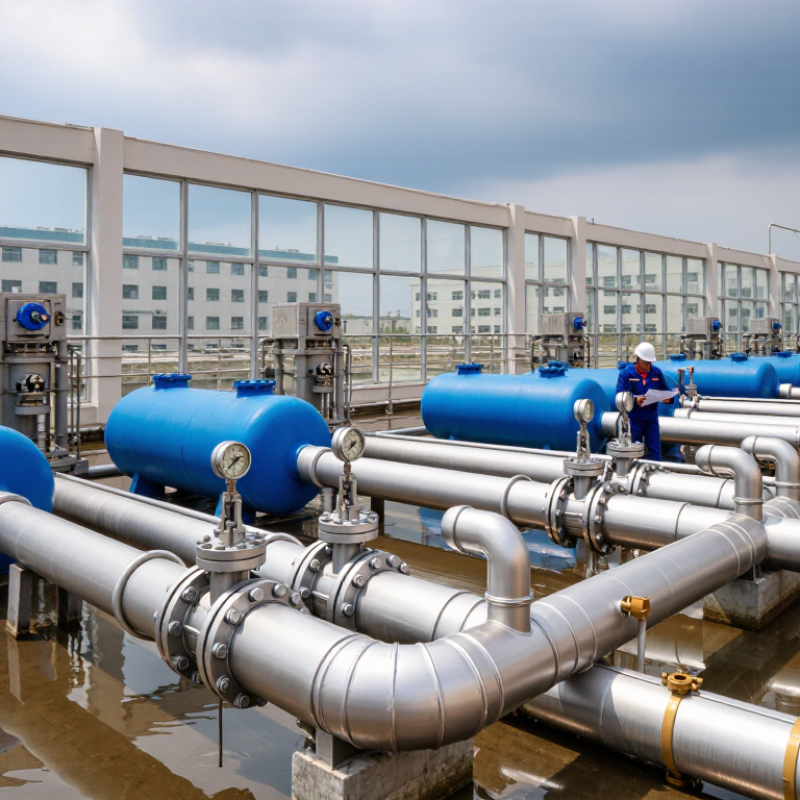
Water system supplies are the physical goods and supporting services used to move, treat, store, and monitor water. The category includes pumps, pipes, valves, tanks, filters, meters, sensors, dosing equipment, and replacement parts. It also covers installation guidance, testing documents, maintenance plans, and operator training. In practical procurement, a supply is useful only when its material, capacity, connection size, and operating conditions are clearly matched.
The scope reaches residential buildings, factories, farms, hospitals, hotels, and municipal networks. It may support drinking water, process water, irrigation, stormwater, or wastewater handling. Global buyers often need complete packages, not isolated components. A filtration unit, for example, may require housings, cartridges, pressure gauges, spare seals, and disposal instructions. These details affect shipping, installation time, operating cost, and system reliability.
The term is not perfectly standardized. That ambiguity creates errors. One supplier may define supplies as equipment only, while another includes engineering and after-sales support. Buyers should check flow rate, pressure range, fluid quality, climate exposure, certifications, documentation, and service availability. A catalog description can still hide important limitations. Clear technical drawings and factory test records reduce that risk. Local requirements also differ, so purchasing teams should verify applicable safety and water-quality standards before ordering. This step feels slow, but unclear specifications usually cost more later.
Why Are Water System Supplies Essential for Global Buyers? - Definition and Scope of Water System Supplies
| Supply Category | Definition and Scope | Typical Components | Primary Application | Key Buyer Requirement | Relevant Performance Indicator |
|---|---|---|---|---|---|
| Water Storage Supplies | Products used to collect, store, and protect water before distribution or treatment. | Storage tanks, cisterns, covers, level sensors, access ports, overflow fittings | Residential, commercial, agricultural, and emergency water storage | Material safety, structural strength, capacity, weather resistance, and cleanability | Nominal volume, leakage resistance, operating temperature, and service life |
| Pumping and Pressure-Control Supplies | Equipment that moves water and maintains the pressure required by a distribution network. | Pumps, motors, pressure tanks, pressure switches, check valves, control panels | Municipal distribution, buildings, irrigation, process water, and booster systems | Energy efficiency, stable operation, compatibility with local power supply, and maintainability | Flow rate, total head, motor power, efficiency, and maximum operating pressure |
| Water Treatment Supplies | Products that remove or reduce physical, chemical, or microbiological contaminants from water. | Filter housings, membranes, cartridges, media vessels, dosing equipment, ultraviolet units | Drinking water, wastewater reuse, industrial processing, and laboratory applications | Contaminant-removal capability, replacement availability, operating cost, and regulatory suitability | Particle size reduction, turbidity, flow capacity, recovery rate, and treated-water quality |
| Water Distribution Supplies | Components that convey treated or untreated water between sources, facilities, and points of use. | Pipes, fittings, couplings, manifolds, service connections, and flexible hoses | Municipal networks, buildings, irrigation systems, and industrial facilities | Pressure rating, dimensional compatibility, corrosion resistance, and installation method | Nominal diameter, pressure class, flow capacity, wall thickness, and joint integrity |
| Valves and Flow-Control Supplies | Devices used to start, stop, regulate, divert, or protect water flow within a system. | Ball valves, gate valves, butterfly valves, control valves, relief valves, actuators | Water treatment plants, pipelines, buildings, irrigation, and process systems | Leak-tight shutoff, pressure compatibility, material suitability, and service accessibility | Flow coefficient, pressure rating, temperature range, leakage class, and actuation time |
| Water Quality Monitoring Supplies | Instruments and accessories used to measure water conditions and verify system performance. | pH meters, conductivity sensors, turbidity meters, chlorine analyzers, flow meters | Treatment control, compliance monitoring, laboratories, utilities, and industrial operations | Measurement accuracy, calibration support, data compatibility, and environmental durability | Accuracy, measurement range, response time, detection limit, and calibration interval |
| Disinfection Supplies | Products used to inactivate or control microorganisms in water and distribution systems. | Ultraviolet systems, chlorination equipment, chemical dosing pumps, contact tanks | Potable water, wastewater treatment, swimming facilities, and process water | Validated treatment performance, safe handling, dose control, and monitoring capability | Disinfectant dose, ultraviolet intensity, contact time, residual level, and flow rate |
| Wastewater and Drainage Supplies | Equipment and components that collect, convey, treat, or discharge used water and stormwater. | Drainage pipes, screens, separators, pumps, aeration equipment, access covers | Sewage treatment, industrial effluent, building drainage, and stormwater management | Chemical resistance, solids handling, odor control, capacity, and environmental compliance | Hydraulic capacity, solids size, removal efficiency, retention time, and corrosion resistance |
| Installation and Maintenance Supplies | Supporting products required to install, inspect, repair, and extend the operating life of water systems. | Seals, gaskets, repair clamps, pipe tools, test equipment, replacement elements | Infrastructure construction, facility maintenance, emergency repair, and retrofit projects | Interchangeability, availability, ease of installation, safety, and total lifecycle cost | Repair time, service interval, compatibility range, downtime reduction, and replacement cost |
Related Posts
-
What is a Water Refining System and How Does It Work?
-

How to Choose the Best System Water Solutions in 2026?
-
How to Choose the Best Water Systems for Your Business Needs?
-
What is System Water and How Does it Impact Your Business?
-
What Are the Best Water Treatment Solutions from China?
-
How to Choose the Best Solutions for Water Purification?