| 1 |
Multimedia Filtration |
Municipal pretreatment, commercial buildings, hotels, irrigation, and industrial process water |
Suspended solids, turbidity, silt, and larger particulate matter |
ISO 9001 for quality management; local drinking-water regulations where potable use is intended; material-contact requirements such as NSF/ANSI/CAN 61 or equivalent where applicable |
Particle-removal test data, media specifications, pressure-drop curves, vessel material certificates, operating manual, and maintenance schedule |
Defined flow rate, filtration rating, backwash requirements, inlet-water limits, service life, spare-parts availability, and verified materials for water contact |
| 2 |
Activated Carbon Treatment |
Point-of-use systems, food and beverage production, hotels, and municipal polishing |
Chlorine, taste, odor, selected organic compounds, and some disinfection by-products |
NSF/ANSI/CAN 42 for aesthetic effects where applicable; NSF/ANSI/CAN 53 for specific health-related contaminant claims; local potable-water requirements |
Contaminant-specific performance claims, carbon type and iodine number, empty-bed contact time, replacement interval, microbiological-control instructions, and test reports |
Clear claim limitations, chlorine breakthrough data, flow and capacity ratings, food-contact declarations where relevant, and safe change-out procedures |
| 3 |
Reverse Osmosis System |
Drinking-water production, desalination pretreatment, laboratories, and industrial process water |
Dissolved salts, hardness, nitrate, heavy metals, and many dissolved contaminants |
NSF/ANSI/CAN 58 for residential reverse-osmosis systems where applicable; ISO 9001; applicable electrical and pressure-equipment requirements in the destination market |
Salt-rejection and recovery-rate test data, membrane specifications, feed-water limits, energy consumption, wastewater ratio, pressure-vessel documentation, and chemical-cleaning procedures |
Product-water quality target, design capacity, membrane life, pretreatment design, reject-water management, monitoring instruments, and total cost of ownership |
| 4 |
Ultraviolet Disinfection |
Drinking water, wastewater reuse, aquaculture, food processing, and decentralized systems |
Bacteria, viruses, and other microorganisms susceptible to UV exposure |
NSF/ANSI/CAN 55 for residential UV systems where applicable; validated UV dose requirements from the relevant authority; IEC 60335-1 or equivalent electrical safety requirements where applicable |
Validated UV-dose or biodosimetry report, reactor performance curve, lamp-life data, UV-intensity sensor details, alarm logic, and electrical safety documentation |
Minimum UV transmittance, maximum flow, turbidity limit, dose target, sensor calibration, lamp replacement process, and fail-safe operation during low dose |
| 5 |
Seawater or Brackish-Water Desalination |
Coastal communities, islands, remote sites, emergency supply, and industrial facilities |
High salinity, dissolved minerals, pathogens, and variable source-water quality |
ISO 9001; ISO 14001 is relevant to environmental management; destination-country drinking-water rules; applicable electrical, pressure, and marine installation requirements |
Source-water analysis, product-water guarantee, energy-use data, recovery rate, corrosion-resistance specifications, pretreatment design, brine-discharge plan, and commissioning protocol |
Seasonal feed-water conditions, energy source, treated-water remineralization, brine permitting, remote-site logistics, operator training, and long-term membrane support |
| 6 |
Iron and Manganese Removal |
Groundwater treatment, rural drinking-water systems, cooling water, and industrial utilities |
Dissolved iron, manganese, staining, metallic taste, and particulate deposits |
Local drinking-water limits; NSF/ANSI/CAN 61 or equivalent material-contact requirements where applicable; ISO 9001 |
Pilot-test results, oxidation and filtration chemistry, influent and effluent limits, media safety data, backwash-water requirements, and laboratory analysis |
Source-water pH, alkalinity, iron and manganese concentration, flow profile, treatment chemical requirements, sludge handling, and verified outlet targets |
| 7 |
Arsenic, Fluoride, and Nitrate Treatment |
Groundwater, rural utilities, community drinking-water systems, and food-production areas |
Naturally occurring arsenic, fluoride, nitrate, and other site-specific dissolved contaminants |
Applicable national drinking-water limits; contaminant-specific performance certification such as NSF/ANSI/CAN 53 or 58 where relevant to the selected technology; laboratory validation |
Independent contaminant-removal test results, breakthrough curves, media or membrane safety data, regeneration or disposal instructions, and source-water qualification criteria |
Contaminant concentration range, required treated-water limit, treatment capacity, residual-management plan, monitoring frequency, and replacement-media traceability |
| 8 |
PFAS and Emerging-Contaminant Treatment |
Municipal drinking water, industrial sites, groundwater remediation, and high-risk source waters |
Selected per- and polyfluoroalkyl substances and other persistent organic contaminants |
Applicable national PFAS limits or advisories; NSF/ANSI 53 or 58 may apply to certified point-of-use or reverse-osmosis claims; ISO/IEC 17025 laboratory testing is recommended |
Compound-specific test panel, detection limits, influent and effluent concentrations, media capacity, breakthrough data, spent-media disposal plan, and chain-of-custody records |
No generic “PFAS removal” claim without compound-level evidence; buyers should require defined operating conditions, validated capacity, sampling procedures, and regulatory interpretation |
| 9 |
Wastewater Treatment and Water Reuse |
Industrial reuse, municipal reuse, irrigation, cooling towers, and non-potable building applications |
Organic load, suspended solids, nutrients, pathogens, and reuse-related health risks |
ISO 30500 for non-sewered sanitation systems where applicable; ISO 16075 for treated wastewater use in irrigation; local reuse permits and microbial-quality regulations |
Mass-balance calculations, influent and effluent laboratory data, pathogen-reduction validation, process-control plan, sludge-disposal method, and reuse-risk assessment |
End-use classification, required chemical and microbiological limits, peak-load capacity, odor control, operator qualifications, monitoring plan, and permit responsibilities |
| 10 |
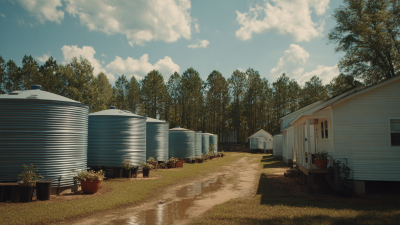
Rainwater Harvesting and Smart Water Monitoring |
Buildings, agriculture, emergency reserves, industrial utilities, and decentralized communities |
Variable source quality, roof debris, microbial contamination, leakage, and inefficient consumption |
Local plumbing and rainwater-use regulations; ISO 24513 principles for drinking-water and wastewater service management; IEC 62443 may be relevant to industrial control cybersecurity |
Water-balance model, tank sizing calculations, first-flush design, sensor calibration records, cybersecurity controls, electrical documentation, and commissioning report |
Clearly separated potable and non-potable pipework, overflow and mosquito control, automated diversion logic, data ownership, alarm thresholds, remote-access policy, and local installation compliance |