China Top Water Treatment Solutions for Global Buyers

China’s water-treatment sector offers global buyers more than equipment. It brings together membrane systems, filtration, disinfection, monitoring, and engineering support. The right solutions to water challenges depend on local conditions, not just a product catalog. A coastal factory may need reliable desalination. A food processor may prioritize consistent process-water quality. A rural utility may need simple maintenance and dependable spare parts.

Peter Gleick, a water-resource expert, has stated: “Water is a human right.” That principle gives procurement a wider lens. Buyers should examine performance data, operator training, service response, and the quality of replacement components. A polished specification sheet is useful. It is not enough. Ask how a system performs when feedwater changes, energy costs rise, or a sensor fails.

Details matter. A pilot test can reveal scaling on a membrane, a pressure drop across a filter, or a maintenance task that staff cannot easily perform. These small findings can prevent costly surprises. Still, supplier claims deserve careful review. Not every impressive capacity figure reflects real operating conditions. And no single Chinese solution fits every site.

This guide will help global buyers compare technologies, assess manufacturers, and prepare practical questions for supplier discussions. It will also consider documentation, commissioning, and after-sales support. One gap remains easy to overlook: local teams need a voice in system design. Their day-to-day experience may expose problems that a remote proposal misses. Start with the water itself, then judge the equipment against the work it must do.
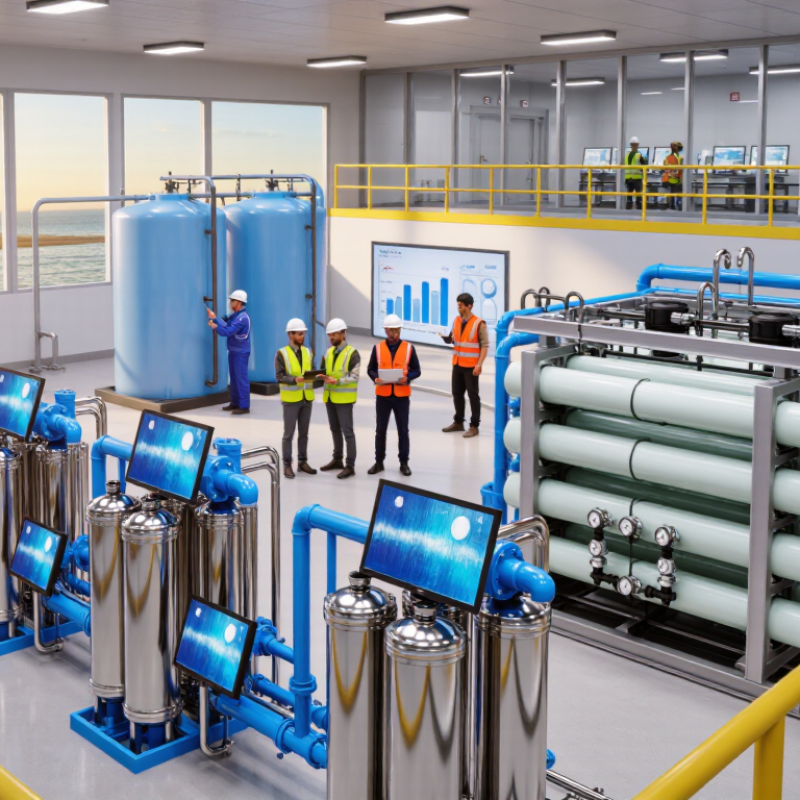
China Top Water Treatment Solutions for Global Buyers

China’s Water Treatment Industry: Scope and Capabilities

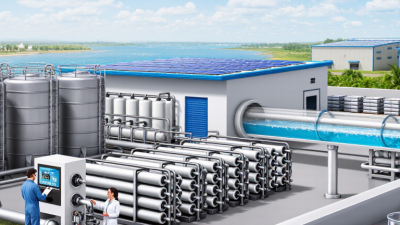
China’s water treatment industry covers a broad range of needs, from municipal drinking water and wastewater plants to industrial process systems. Suppliers and engineering teams can support filtration, membrane separation, disinfection, sludge handling, and water reuse. The right combination depends on source-water quality, flow rate, discharge requirements, and the intended use of treated water. Details matter.

Manufacturing capabilities often include pumps, tanks, membrane assemblies, control panels, and packaged treatment units. Some projects require a compact containerized system; others need equipment integrated into an existing facility. Engineers may use water analysis and pilot testing to assess performance before full installation. A clear process design helps buyers compare capacity, energy demand, maintenance access, and expected operating costs.

China’s industry also serves overseas projects through equipment supply, technical documentation, and installation support. However, capability varies between providers, and a polished specification does not guarantee stable results in the field. Buyers should review relevant project records, request component and operating data, and confirm who will handle commissioning and after-sales service. Water conditions can change seasonally. Even good designs sometimes need adjustment after startup, a practical point that deserves more attention in procurement.

China’s Water Treatment Industry: Scope and Capabilities

Municipal wastewater treatment coverage in China, 2018–2022

China has continued to expand wastewater collection and treatment infrastructure. The treatment coverage rate increased in both urban and county-level areas from 2018 to 2022, reflecting broader capacity for municipal wastewater treatment, network construction, sludge management, and water reuse projects.

Source: China Ministry of Housing and Urban-Rural Development, annual urban and rural construction statistical bulletins. Values represent reported wastewater treatment rates.

Core Technologies Used in Chinese Water Treatment Solutions

Chinese water treatment solutions often combine several processes rather than relying on one device. Ultrafiltration membranes remove suspended particles and many microorganisms, producing clear water before later treatment stages. Reverse osmosis can reduce dissolved salts, but it needs careful pretreatment. Otherwise, scaling and membrane fouling may shorten service life.

Biological treatment uses microorganisms to break down organic pollution in wastewater. Aeration tanks need steady oxygen levels; operators check bubbles, flow, and sludge condition during routine inspections. For industrial water with difficult-to-degrade contaminants, advanced oxidation can help break down remaining compounds. It is not a universal fix. Testing the actual water is essential.

Disinfection may use ultraviolet light or controlled chemical dosing, depending on water quality and operating needs. Sensors can track flow, pressure, and key water indicators, while automated controls adjust pumps and dosing. Data helps, but only when sensors are calibrated and staff understand unusual readings. A dashboard cannot replace a site visit. The right process depends on the source water, required output, energy costs, and maintenance skills. Small treatment plants may need simpler systems, even when more advanced equipment looks attractive.

Solutions for Municipal, Industrial, and Residential Needs

China Top Water Treatment Solutions for Global Buyers
Solutions for Municipal, Industrial, and Residential Needs

Water treatment needs vary with local sources, operating conditions, and water quality targets. Municipal systems may combine screening, coagulation, filtration, and disinfection to serve large communities. A muddy river after heavy rain calls for different monitoring than a steady groundwater supply. Operators need reliable sampling and regular checks, not just installed equipment.

Industrial facilities often tailor treatment to process water, cooling loops, or wastewater reuse. Membranes, softening, and advanced oxidation can help, but each choice depends on feed-water analysis and maintenance capacity. A filtration unit can underperform when pretreatment is overlooked. That detail is easy to miss.

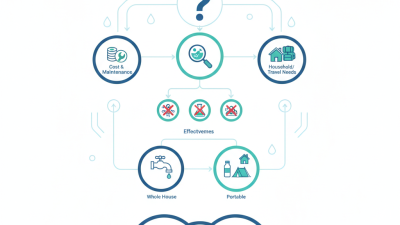
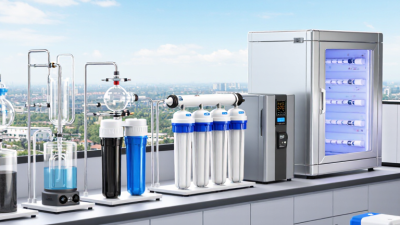
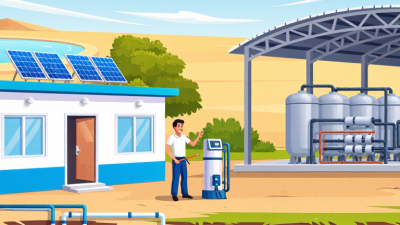
Residential solutions range from sediment and carbon filters to reverse osmosis systems. The right setup depends on contaminants identified through testing, household demand, and replacement schedules. Taste alone is not proof of safety. Buyers should review performance data, service access, and consumable costs before choosing equipment. Even a well-designed system needs consistent upkeep.

China Top Water Treatment Solutions for Global Buyers - Solutions for Municipal, Industrial, and Residential Needs
Application Typical Source Water Challenge Common Treatment Process Key Design Considerations Typical Treated-Water Use
Municipal surface-water treatment Suspended solids, turbidity, natural organic matter, microorganisms, and seasonal changes in raw-water quality. Screening and intake protection; coagulation and flocculation; sedimentation or clarification; rapid filtration; disinfection. Ultrafiltration may be used as a membrane filtration step. Jar testing helps select coagulant dose and operating conditions. Filtration and disinfection must be designed for the source-water quality and applicable local drinking-water requirements. Low turbidity supports effective disinfection. Public drinking-water supply and, where applicable, treated water for municipal facilities.
Groundwater treatment Depending on the aquifer: iron, manganese, hardness, dissolved salts, arsenic, or hydrogen sulfide. Aeration or chemical oxidation followed by filtration for iron and manganese; softening for hardness; contaminant-specific adsorption, ion exchange, or membrane treatment where required; final disinfection as appropriate. Test the water before selecting a process. The treatment train should target confirmed contaminants and account for pH, alkalinity, competing ions, and residuals management. Community water systems, rural supplies, and private wells after treatment and verification against local standards.
Industrial process-water treatment Variable suspended solids, dissolved minerals, hardness, silica, organics, and process-specific contaminants. Media or cartridge filtration; activated carbon where suitable; ultrafiltration or reverse osmosis for dissolved-solids reduction; ion exchange or electrodeionization for additional demineralization. Required water quality depends on the industrial process. Membrane recovery, scaling risk, pretreatment, concentrate disposal, and cleaning requirements should be evaluated during design. Manufacturing process water, rinsing, and other industrial uses with defined quality requirements.
Boiler and cooling-system makeup water Hardness and dissolved minerals can contribute to scale; dissolved gases and suspended matter may also affect system operation. For boiler makeup: softening or reverse osmosis, followed by demineralization or polishing as required. For cooling makeup: filtration and, where needed, softening or reverse osmosis. Boiler pressure, metallurgy, operating conditions, and the equipment manufacturer’s water-quality limits determine the required treatment. Cooling-tower cycles of concentration and blowdown management also affect design. Boiler feedwater preparation and cooling-tower makeup.
Municipal wastewater reclamation Organic matter, suspended solids, nutrients, microorganisms, and, in some cases, dissolved salts or trace contaminants. Primary treatment followed by biological treatment and clarification or membrane bioreactor treatment; additional filtration and disinfection. Reverse osmosis may be added when lower dissolved-solids levels are required. Reuse standards vary by jurisdiction and end use. Pathogen reduction, monitoring, treatment reliability, and management of residuals or membrane concentrate are important design factors. Applications may include industrial reuse, irrigation, or other non-potable uses permitted by local regulations.
Residential point-of-use and point-of-entry treatment Local issues such as taste and odor, particulates, hardness, or specific contaminants identified by water testing. Point-of-use systems may use sediment and activated-carbon filtration, with reverse osmosis where appropriate. Point-of-entry systems may use sediment filtration, activated carbon, or water softening, depending on the need. Select treatment based on a reliable water test and the target contaminant. Replace cartridges and maintain the system according to its instructions; treatment effectiveness is system- and contaminant-specific. Point-of-use: drinking and cooking water. Point-of-entry: treatment for water entering a home or building.

Design note: These are common treatment approaches, not fixed performance guarantees. Final process selection, capacity, water quality, and compliance requirements depend on source-water analysis, intended use, site conditions, and applicable local regulations. For drinking-water systems, the World Health Organization recommends that E. coli or thermotolerant coliform bacteria not be detectable in any 100 mL sample.

How Global Buyers Assess Suppliers and System Performance

Global buyers should assess water-treatment suppliers through verified operating evidence, not brochure claims. The WHO/UNICEF Joint Monitoring Programme reported that 2.2 billion people lacked safely managed drinking water in 2022. This gap highlights the need for reliable systems, especially where trained operators and spare parts are scarce. Ask suppliers for site-specific references, commissioning records, and water-quality results from comparable conditions. Request the test method, sampling date, and laboratory details. A polished dashboard is not enough.

System performance depends on the incoming water, daily demand, and local operating capacity. The UN World Water Development Report 2024 notes that agriculture accounts for about 70% of global freshwater withdrawals. That figure varies by region, but it shows why reuse and demand reduction matter.

Compare recovery rate, energy use per cubic metre, chemical consumption, and downtime under stated feed-water conditions. Numbers need context. A high recovery rate may increase scaling risk when source water is challenging. Ask for maintenance intervals and operator training plans, not only design capacity. Supplier data can be incomplete; buyers should verify key claims through independent sampling and a clearly defined performance test.

Export Standards, Project Delivery, and After-Sales Support

China Top Water Treatment Solutions for Global Buyers

Export readiness

Export readiness begins with documents that match the actual equipment. Buyers should request material certificates, factory test records, wiring diagrams, and operating manuals in the project language. Confirm applicable destination-market requirements before shipment; a certificate alone does not prove the system suits local water chemistry. Small details matter. A mislabeled valve can delay commissioning.

Delivery & performance

Delivery planning should connect process design to site conditions. UNESCO’s United Nations World Water Development Report 2024 estimates that agriculture accounts for about 70% of global freshwater withdrawals. That pressure makes efficient treatment and reuse increasingly important, but performance depends on feedwater quality, operator skills, and energy supply.

Specify acceptance tests for flow, treated-water quality, and power use. Include realistic sampling points. Field conditions can still surprise everyone.

After-sales support

After-sales support needs named response channels, spare-parts lists, and remote troubleshooting procedures. The WHO/UNICEF Joint Monitoring Programme reported that 2.2 billion people lacked safely managed drinking water in 2022, underscoring the consequences of unreliable service.

Request a clear warranty scope, training records, and maintenance intervals before handover. Ask who pays for travel and replacement parts. This is often overlooked. Even good projects can stumble when manuals arrive late or local teams receive too little practice.

Skip to content