2026 Top Water Reclamation Systems for Global Buyers
Choosing the right water reclamation systems in 2026 requires more than comparing equipment prices. Global buyers need dependable treatment, measurable performance, and practical maintenance plans.
Peter Gleick, co-founder of the Pacific Institute, has said, “The world’s water crisis is not a crisis of scarcity, but a crisis of management.” That observation remains highly relevant. Modern reclamation systems can treat municipal wastewater, industrial process water, and commercial effluent for carefully controlled reuse. Their value depends on the application, not impressive specifications alone.
This guide examines leading solutions for international purchasers. It considers membrane bioreactors, ultrafiltration, reverse osmosis, ultraviolet disinfection, ozone, and intelligent monitoring. It also reviews energy demand, recovery rates, operator training, spare-part access, and installation conditions. A system designed for a coastal factory may perform poorly in a remote inland facility. Water chemistry matters. So does climate.
The best system is not always the most advanced one. Sometimes, simpler equipment offers stronger reliability and easier servicing. That point is easy to overlook. Buyers should request pilot testing, verified water-quality data, lifecycle costs, and references from comparable sites. Supplier claims deserve careful review.
No shortlist is perfect. Performance can change with influent quality, seasonal temperatures, and inconsistent maintenance. Global buyers should therefore assess each option against local regulations, reuse goals, available skills, and long-term operating budgets. A thoughtful decision can reduce freshwater demand while protecting public health, production continuity, and environmental performance.
Water Reclamation Systems: Definition, Purpose, and Core Technologies
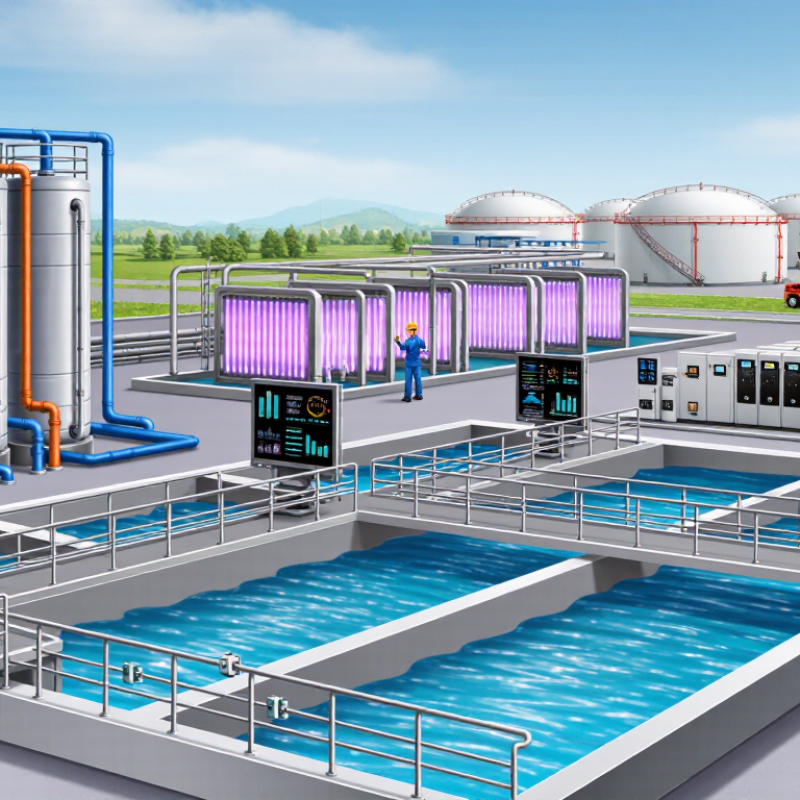
Water reclamation systems treat used water for a controlled second life. They may support irrigation, cooling, industrial processing, toilet flushing, or indirect potable reuse. The purpose is not merely disposal. It is recovering water, reducing freshwater withdrawals, and strengthening drought resilience. UNESCO’s 2024 World Water Development Report estimates that agriculture accounts for about 70% of global freshwater withdrawals. That figure makes reuse a practical infrastructure decision, not a fashionable option.
A typical treatment train begins with screening, grit removal, equalization, and biological treatment. Membrane bioreactors can improve solids separation and reduce footprint. Ultrafiltration removes fine particles and many microorganisms. Reverse osmosis reduces dissolved salts and trace contaminants. Ultraviolet treatment, advanced oxidation, and activated carbon provide additional protection. Each barrier has a specific job. Online sensors track turbidity, conductivity, pressure, and disinfectant performance. UN-Water’s 2017 World Water Development Report estimated that over 80% of global wastewater enters the environment without treatment.
Performance depends on the intended end use. A system for cooling water may need different controls than one for drinking-water augmentation. Buyers should examine energy demand, concentrate handling, maintenance access, operator training, and independent validation. Local regulations also matter greatly. A technically impressive design can still fail through weak monitoring. That is an uncomfortable lesson. Some projects also overestimate membrane life or underestimate seasonal variation. Better pilot testing, transparent sampling, and documented response procedures can expose those weaknesses before full-scale construction.
2026 Top Water Reclamation Systems for Global Buyers
Water Reclamation Systems: Definition, Purpose, and Core Technologies
| System / Technology | Primary Purpose | Typical Feed Water | Main Contaminants Removed | Typical Recovery | Indicative Energy Demand | Typical Product Water Uses | Key Procurement Considerations |
|---|---|---|---|---|---|---|---|
| Ultrafiltration (UF) | Particle and pathogen barrier used as pretreatment or final polishing | Surface water, tertiary wastewater, industrial process water | Suspended solids, turbidity, bacteria, protozoa, colloids and some viruses | Approximately 90–98% | Approximately 0.05–0.30 kWh/m³ | Toilet flushing, cooling, irrigation, industrial reuse and membrane pretreatment | Membrane pore size, backwash frequency, chemical cleaning, feed variability and automation |
| Microfiltration (MF) | Coarse membrane separation for solids and microbial reduction | Relatively clear surface water, industrial wastewater and secondary effluent | Suspended solids, algae, larger bacteria and some protozoa | Approximately 90–99% | Approximately 0.03–0.20 kWh/m³ | Irrigation, cooling water and pretreatment before tighter separation | Solids loading, pretreatment needs, membrane fouling and required microbial performance |
| Membrane Bioreactor (MBR) | Biological treatment combined with membrane separation for compact reclamation | Municipal wastewater and biodegradable industrial wastewater | Biodegradable organics, suspended solids, ammonia and many microorganisms | Approximately 90–98% | Approximately 0.4–1.2 kWh/m³ | Landscape irrigation, industrial reuse, cooling and advanced treatment feed | Aeration power, sludge management, nutrient limits, membrane cleaning and operator expertise |
| Brackish-Water Reverse Osmosis (BWRO) | Dissolved-salt removal from moderately saline water | Brackish groundwater, treated wastewater and industrial process water | Dissolved salts, hardness, nitrate, fluoride, metals and many dissolved organics | Approximately 70–90% | Approximately 0.5–1.5 kWh/m³ | Potable-water production, boiler feed, process water and high-quality irrigation | Feed salinity, pressure, antiscalant program, concentrate disposal and remineralization |
| Seawater Reverse Osmosis (SWRO) | Desalination and reclamation of seawater or high-salinity water | Seawater and highly saline industrial streams | Dissolved salts, chloride, sulfate, hardness, metals and many dissolved contaminants | Approximately 35–50% | Approximately 2.5–4.5 kWh/m³ with energy recovery | Municipal drinking water, industrial supply and blending water | Intake design, pretreatment, energy recovery, brine management and corrosion control |
| Electrodialysis Reversal (EDR) | Electrically driven removal of ions from low-to-moderate salinity water | Brackish groundwater, industrial reuse water and selected wastewater streams | Ionic salts, hardness, nitrate and selected charged contaminants | Approximately 80–95% | Approximately 0.5–2.0 kWh/m³, depending on salinity and removal target | Potable water, industrial process water and agricultural reuse | Water chemistry, organic fouling, selective ion removal, electrical supply and concentrate handling |
| Ion Exchange | Selective removal or exchange of dissolved ions | Pretreated groundwater, boiler feed and industrial process water | Hardness ions, nitrate, ammonium and selected dissolved ionic contaminants | Usually 90% or higher, depending on regeneration frequency | Low electrical demand; regeneration chemicals are the main operating input | Demineralized water, boiler feed and targeted contaminant polishing | Resin selectivity, regeneration chemicals, wastewater disposal and influent pretreatment |
| Advanced Oxidation Process (AOP) | Destruction or transformation of trace organic contaminants | Treated municipal effluent and industrial wastewater after solids removal | Pharmaceutical residues, pesticides, taste-and-odor compounds and other refractory organics | Not normally expressed as water recovery; integrated systems commonly achieve 85–98% | Approximately 0.1–1.0 kWh/m³, depending on oxidant and contaminant load | Indirect potable reuse barriers, industrial reuse and high-quality process water | Oxidant dose, UV transmittance, by-product control, contact time and downstream polishing |
| Ultraviolet (UV) Disinfection | Rapid inactivation of microorganisms without adding a persistent disinfectant | Low-turbidity tertiary effluent and filtered process water | Bacteria, viruses, protozoa and other UV-sensitive microorganisms | Approximately 95–99.9% of water is retained, depending on system configuration | Approximately 0.02–0.15 kWh/m³ | Irrigation, cooling, industrial reuse and final disinfection | UV dose, turbidity, UV transmittance, lamp maintenance and validated monitoring |
| Granular Activated Carbon (GAC) | Adsorptive removal and polishing of organic contaminants | Treated wastewater, surface water and industrial process water | Taste and odor compounds, residual disinfectants, many organic chemicals and some micropollutants | Typically 95–99% water retained | Low pumping energy; thermal reactivation or media replacement is required | Potable-water polishing, industrial reuse and protection of downstream membranes | Adsorption capacity, empty-bed contact time, competing organics and media replacement plan |
| Thermal Evaporation / Crystallization | Concentrate reduction and near-zero-liquid-discharge treatment | High-salinity brine, industrial wastewater and reverse-osmosis concentrate | Dissolved salts, heavy metals and non-volatile contaminants; volatile compounds need separate control | Approximately 95–99.9% water recovery in integrated systems | High energy demand; commonly about 10–25 kWh/m³ electrical equivalent, depending on design | Industrial process reuse, salt recovery and zero-liquid-discharge applications | Heat availability, scaling, corrosion, crystallizer maintenance, solids disposal and lifecycle cost |
Related Posts
-
How to Choose the Right Water Solutions System?
-
10 Best Water Recycling Systems for Global Buyers
-
China Best Purification Systems Suppliers for Global Buyers
-
Top 10 Water Reclamation Systems Manufacturers in China
-
How to Choose the Best Water Recycling Systems?
-
What Are the Best Water Treatment Solutions from China?