What Are the Top Types of Pump Systems?
Choosing the right pump systems begins with understanding the duty, not simply comparing product labels. Flow rate, pressure, fluid temperature, solids, control range, and maintenance access all shape the correct design. A pump that performs well on a test bench may struggle when connected to undersized pipes, sharp elbows, or a fluctuating process.
The U.S. Department of Energy reports that pumping systems can represent 25% to 50% of industrial facility electricity use. That figure makes system selection a financial decision, not just an engineering detail. The International Energy Agency also identifies motor-driven systems as major global electricity users, reinforcing the value of efficient pumps, motors, controls, and pipework.
Dr. Lev Nelik, a recognized pump engineer and author, has emphasized a practical principle: “The pump is only as good as the system it serves.” This idea deserves attention. Centrifugal pumps suit many high-flow applications, while positive displacement pumps offer more controlled delivery for viscous fluids. Submersible, diaphragm, axial-flow, and multistage designs each solve different operating problems.
There is no universal winner.
This guide examines the top types of pump systems, their operating strengths, common limitations, and suitable applications. It also considers energy use, cavitation risk, reliability, and lifecycle cost. Some selections will look efficient on paper but disappoint in the field. Real installations are messier. Operator habits, neglected filters, and changing fluid conditions can quietly undermine a perfect specification.
What Is a Pump System and How Does It Work?
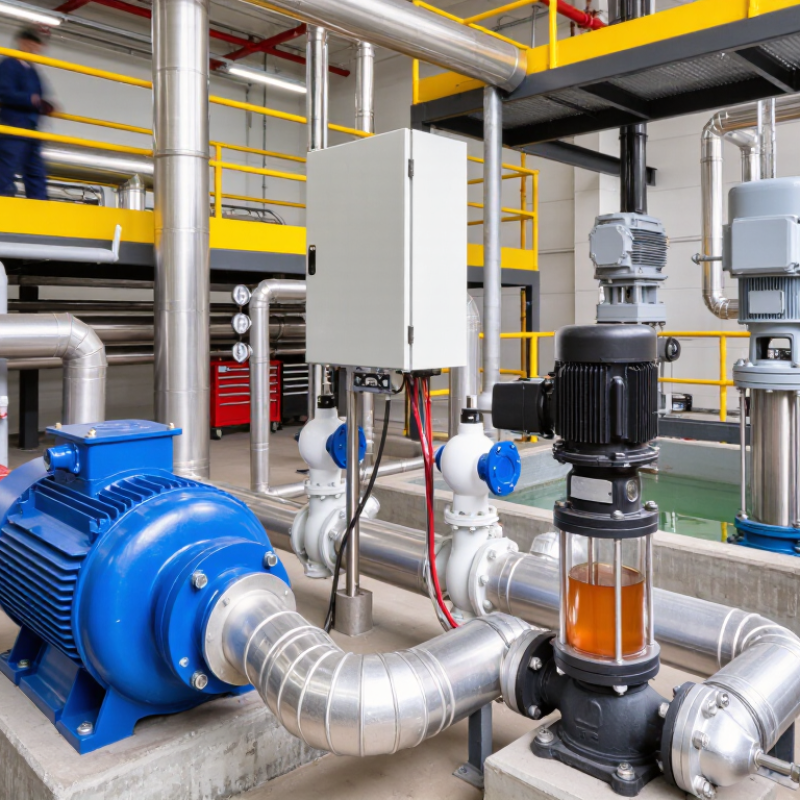
A pump system moves liquid by converting mechanical energy into pressure and flow. Its core parts include the pump, motor, pipes, valves, controls, and storage equipment. The motor turns the impeller or internal displacement mechanism. The pump then raises liquid pressure and pushes it through the system. Simple in theory. Troublesome in practice.
Centrifugal pumps suit high-flow, low-to-medium pressure duties, such as cooling water and process circulation. Positive displacement pumps deliver measured volumes at higher pressures. Diaphragm pumps handle difficult fluids and careful dosing. Submersible pumps operate inside tanks, wells, or drainage pits. Each type responds differently to viscosity, temperature, solids, and changing demand. Choosing by flow rate alone is a common mistake.
The U.S. Department of Energy’s Improving Pumping System Performance sourcebook recommends evaluating the entire system, not only the pump. Its assessments show that optimization can sometimes reduce pumping energy by 20–50%, depending on operating conditions. The International Energy Agency reports that electric motor systems consume about half of global electricity, with pumps forming a significant share. That makes control strategy important. Variable-speed drives can reduce throttling losses when demand changes. Yet they are not automatically efficient. Poor sizing, clogged filters, air leaks, or oversized motors can erase expected gains. Field measurements often reveal this uncomfortable gap. A pressure gauge, flow meter, and operating log can expose it.
What Are the Main Types of Pump Systems?
Pump systems are usually grouped by how they move fluid: dynamic pumps and positive displacement pumps. This distinction guides equipment selection, but it is not the whole decision. Centrifugal pumps use rotating impellers to increase fluid velocity and pressure. They suit water circulation, irrigation, cooling loops, and many continuous-flow applications. Their performance changes with flow resistance. A blocked filter can reduce delivery noticeably. Keep that in mind.
Axial-flow and mixed-flow pumps are dynamic variations. Axial models move large volumes at low pressure, while mixed-flow designs balance volume and lift. On-site testing often reveals differences that a catalog curve cannot show.
Positive displacement pumps capture a fixed volume and push it through the discharge line. Gear, screw, piston, and diaphragm pumps belong to this group. They work well with viscous liquids, metering duties, and applications requiring steady pressure. Relief protection is essential because a closed discharge can create dangerous pressure quickly. Diaphragm pumps can also handle fluids containing suspended solids, depending on material compatibility.
Submersible pumps form another practical category, defined by installation rather than operating principle. They sit inside the fluid, reducing suction problems and noise, but seals and cables need regular inspection. Choosing a pump only by flow rate is a common mistake. Fluid temperature, viscosity, pipe length, elevation, solids, and control method all matter. I have seen systems underperform because the pump was correct, but the piping was not.
How Do Positive Displacement Pumps Operate?
What Are the Top Types of Pump Systems? How Do Positive Displacement Pumps Operate?
Positive displacement pumps move fluid by trapping a fixed volume and forcing it through the outlet. Each cycle delivers nearly the same volume, even when discharge pressure changes. Common designs include gear, screw, vane, piston, and diaphragm pumps. The U.S. Department of Energy’s Improving Pumping System Performance sourcebook identifies positive displacement pumps as suitable for viscous fluids, metering, and high-pressure service. Flow depends mainly on speed and displacement.
The operating sequence is simple but precise. An inlet chamber opens as internal parts separate, creating lower pressure. Fluid enters and fills the cavity. Rotation or reciprocation then closes the inlet path. The trapped fluid moves toward the discharge port. Pressure rises when downstream resistance appears. Relief protection is essential. A blocked discharge can create dangerous pressure quickly, unlike many centrifugal systems that rely more heavily on flow conditions.
Field assessments show why selection needs care. Hydraulic Institute guidance stresses matching pump capacity, system pressure, fluid properties, and control method. The DOE sourcebook reports that pumping systems can represent 25% to 50% of industrial electricity use in some facilities. Positive displacement pumps may reduce wasted flow during dosing, but they can consume excessive energy when oversized. Real installations are rarely perfect. Seal wear, pulsation, poor suction piping, and inaccurate flow estimates still cause failures. A thoughtful review should question the original design assumptions.
Top Types of Pump Systems and Their Typical Pressure Capability
Positive displacement pumps trap a fixed volume of liquid and mechanically force it from the inlet to the outlet on each cycle. Rotary gear, twin-screw, diaphragm, and piston/plunger pumps are commonly used when accurate flow control or higher discharge pressure is required. The pressure ranges shown are representative operating ranges and vary with pump design, speed, fluid properties, and system conditions.
How Should You Choose the Right Pump System?
Choosing a pump system starts with the actual duty, not a product label.
Centrifugal pumps handle steady water flow efficiently.
Positive displacement pumps suit thicker fluids and precise dosing.
Submersible pumps work well in tanks, wells, and flooded pits.
Diaphragm pumps can manage air, solids, and chemically aggressive fluids.
Measure the required flow rate and total dynamic head at the same operating point.
Check fluid temperature, viscosity, acidity, and suspended solids.
A pump moving clean water may fail quickly with sand-filled wastewater.
Include pipe length, bends, valves, elevation, and suction conditions in the calculation.
Ignoring these details can create cavitation, vibration, or weak discharge.
Operating patterns matter too.
A system running twelve hours daily needs different efficiency targets than an emergency drainage pump.
Review motor controls, standby capacity, seal materials, access for maintenance, and spare-part availability.
In field assessments, I have seen oversized pumps waste energy through throttled valves.
Smaller units can also disappoint when demand rises.
A spreadsheet helps, but site measurements remain essential.
Record the tank level, pressure, flow, and start frequency during normal operation.
Then compare those readings with the manufacturer’s performance curve and the pump’s allowable suction conditions.