
What Are the Top Paper Coating Machine Types in 2026?
Choosing the right Paper Coating Machine in 2026 requires more than comparing production speed. It demands a clear understanding of coating chemistry, paper grades, energy use, and maintenance conditions. Modern mills commonly evaluate blade coaters, rod coaters, air-knife coaters, curtain coaters, and size-press systems. Each type creates a different balance between coverage, smoothness, drying demand, and operating stability. Blade coaters remain strong choices for controlled surface profiles and high-quality printing papers. Rod coaters offer flexible coat-weight control for specialty grades and smaller production runs. Air-knife systems can handle lightweight coatings, although air pressure settings require careful monitoring. Curtain coaters attract attention because they support uniform application and reduced contact with the paper web. They are promising, but not perfect.
This guide examines the leading machine types through practical performance criteria. These include coating accuracy, web speed, substrate handling, drying efficiency, operator safety, and total ownership cost. A machine may look efficient in a supplier demonstration. Real mill conditions can reveal different results. Dust, moisture variation, worn blades, and unstable viscosity often change performance. Small details matter. For example, a damaged doctor blade can leave visible streaks across a freshly coated reel. Experienced engineers therefore assess pilot-trial data, service access, spare-part availability, and long-term process records. No ranking is absolute. The best Paper Coating Machine depends on the product target, plant layout, coating formulation, and available technical skills. Some assumptions may fail under changing market demands. Readers should verify specifications with qualified manufacturers and independent process specialists before making a capital decision.
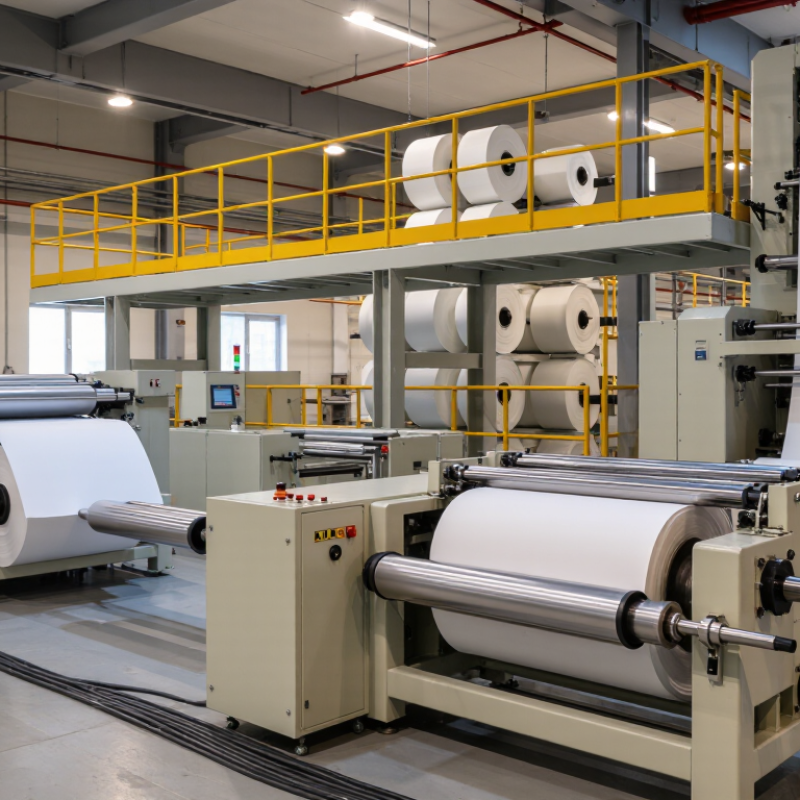
Paper Coating Machines: Purpose, Structure, and Main Classification
What Are the Top Paper Coating Machine Types in 2026?
Paper coating machines add a controlled layer of pigment, binder, or functional chemistry to a moving paper web. This improves smoothness, brightness, print quality, moisture resistance, or barrier performance. FAO’s 2024 Statistical Yearbook recorded roughly 423 million tonnes of global paper and paperboard production in 2022. That scale keeps coating efficiency important.
The main classification follows coating method and machine structure. Blade coaters use a metering blade to create a smooth, uniform surface. They remain common for coated printing grades. Rod coaters use a grooved rod, offering practical control at moderate coat weights. Air-knife coaters use an air jet to remove excess coating and suit lightweight papers. Curtain coaters release a continuous liquid sheet, supporting contactless application and fast grade changes. Film press coaters transfer coating through a nip, reducing liquid demand and machine footprint. In 2026, hybrid lines may combine film, blade, and curtain stations. The boundary is not always neat.
Tips: Match the coater with coating solids, target coat weight, web speed, and drying capacity. Smithers’ coated-paper market analysis highlights continued pressure for lighter grades and improved functionality. Therefore, test pilot-scale rheology before purchasing equipment. A technically impressive machine can still waste energy when its dryer is undersized. Check tension control, nozzle cleanliness, edge quality, and inspection data. Small defects become visible under bright packaging light.
What Are the Top Paper Coating Machine Types in 2026? - Paper Coating Machines: Purpose, Structure, and Main Classification
| Machine Type | Primary Coating Principle | Typical Application | Indicative Coat Weight | Typical Coating Solids | Key Advantages | Main Limitations |
|---|---|---|---|---|---|---|
| Blade Coater | A flexible or rigid blade meters excess coating after application to the paper web. | High-quality coated printing papers, magazine grades, art papers, and board. | Approximately 5–20 g/m² per side | Usually about 55–70% | Excellent coat-weight control, smooth surfaces, and good optical properties. | Sensitive to surface defects, web breaks, blade wear, and coating streaks. |
| Air-Knife Coater | A high-velocity air jet removes excess coating and controls the final layer thickness. | Lightweight coated paper, packaging paper, specialty papers, and relatively rough substrates. | Approximately 3–15 g/m² per side | Commonly about 35–55% | Non-contact metering, tolerance for uneven surfaces, and flexible coat-weight adjustment. | Air turbulence can affect cross-machine uniformity; high air use may increase operating costs. |
| Metering-Rod Coater | A grooved or smooth rod meters coating applied by a roll, fountain, or transfer system. | Fine papers, label stock, thermal papers, release liners, and specialty coatings. | Approximately 1–12 g/m² per side | Often about 30–60% | Compact design, relatively low coating volume, and good suitability for thin functional layers. | Rod wear, vibration, and coating rheology can influence streak formation and profile quality. |
| Gravure Coater | Engraved cells on a rotating cylinder carry a controlled amount of coating to the paper web. | Very thin functional coatings, barrier papers, decorative papers, and specialty printing materials. | Approximately 0.5–8 g/m² per side | Commonly about 20–50% | Accurate thin-film application, repeatable transfer, and compatibility with low-viscosity coatings. | Cylinder preparation is specialized; cell patterns may create visible coating texture. |
| Curtain Coater | A free-falling curtain of coating contacts and covers the moving paper web without direct metering contact. | Premium coated paper, paperboard, barrier layers, and multi-layer functional coatings. | Approximately 5–30 g/m² per side | Usually about 45–70% | Contact-free application, potential for simultaneous multi-layer coating, and reduced mechanical marking. | Requires precise curtain stability, suitable viscosity, and careful control of edge effects. |
| Size Press | The paper web passes through a nip where starch or functional treatment is transferred and pressed into the sheet. | Uncoated printing paper, writing paper, packaging grades, and strength-enhancing treatments. | Approximately 0.5–4 g/m² per side dry solids | Often about 8–20% | Improves surface strength, printability, stiffness, and resistance to picking. | Lower solids and higher water load can increase drying demand and sheet distortion. |
| Film-Press Coater | A measured film is formed on one or both applicator rolls and transferred to the moving paper web. | Pre-coating, pigment sizing, packaging grades, publication papers, and lightweight coated products. | Approximately 1–10 g/m² per side | Typically about 45–65% | Lower water application than a conventional size press and good suitability for high-speed operation. | Requires accurate film formation, roll-nip control, and coating rheology management. |
| Slot-Die Coater | A precision die deposits a controlled liquid layer through a narrow slot onto the web or a supported substrate. | Functional, barrier, recyclable packaging, specialty, and digitally controlled paper coatings. | Approximately 0.5–20 g/m² per side | Often about 20–70%, depending on formulation | Precise metering, strong potential for closed-loop control, and suitability for engineered coating layers. | Higher equipment precision and formulation control are needed; operating windows can be narrow. |