
Top Isolation Transformer Manufacturers Worldwide?

Choosing among the Top Isolation Transformer Manufacturers Worldwide requires more than comparing product prices. An Isolation Transformer can separate sensitive equipment from electrical noise, voltage disturbances, and certain grounding risks. Its value becomes visible in practical settings: a medical monitor operating quietly, a laboratory instrument avoiding unexpected resets, or a factory control panel maintaining stable signals.

Reliable manufacturers usually demonstrate engineering depth, documented testing, and consistent quality control. Their product ranges may include single-phase and three-phase transformers, shielded designs, medical-grade units, and custom solutions. Important details include insulation systems, temperature rise, efficiency, load capacity, sound levels, and short-circuit performance. Certification matters, but buyers should also examine test reports, factory capabilities, warranty terms, and technical support. A polished brochure is not enough.

Real-world experience often reveals the difference. A transformer may perform well in a clean laboratory but struggle in a dusty production area with frequent motor starts. Installation guidance, enclosure design, maintenance access, and delivery reliability deserve equal attention. No ranking is permanent. Market leadership can change as technology, regional demand, and manufacturing standards evolve. Some comparisons also rely on limited public information, which deserves honest acknowledgment. This guide examines respected global manufacturers through practical and professional criteria, rather than promotional claims alone. It aims to help engineers, procurement teams, and facility managers ask better questions before selecting an Isolation Transformer. The best choice is rarely the most famous name. It is the supplier that matches verified performance with the application’s real operating conditions.
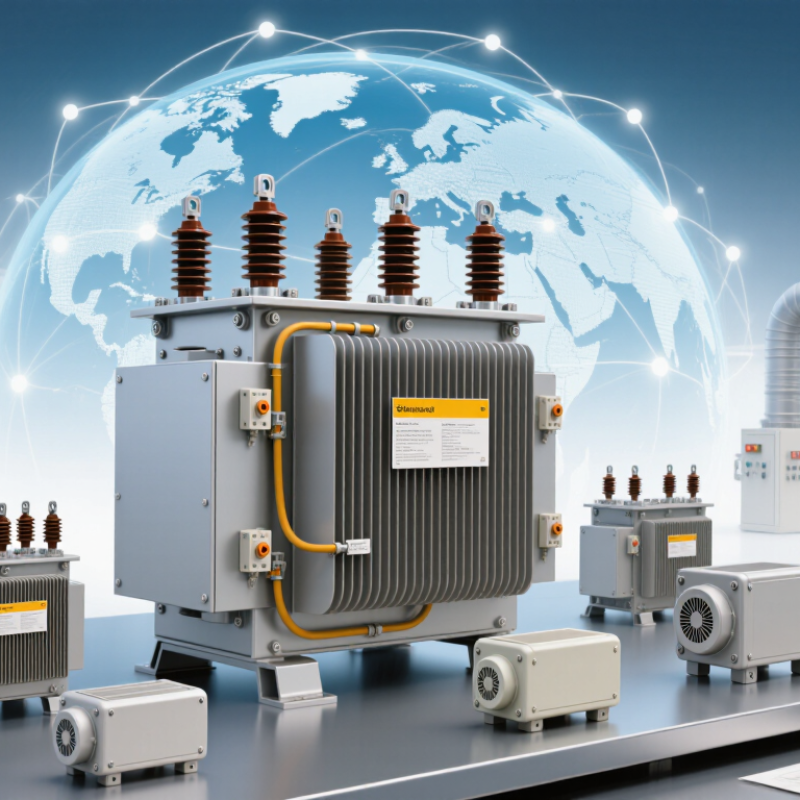
Top Isolation Transformer Manufacturers Worldwide?

What Isolation Transformers Do: 1:1 Ratio, 50/60 Hz, and Galvanic Safety

Top Isolation Transformer Manufacturers Worldwide?

An isolation transformer usually uses a 1:1 turns ratio, so the output voltage closely follows the input voltage. Its main purpose is separation, not voltage reduction. The primary and secondary windings transfer energy magnetically without a direct conductive path. This galvanic isolation can reduce shock risks from upstream faults and limit unwanted ground-loop currents. It does not replace protective grounding, fuses, or qualified installation.

Most models operate at 50 or 60 Hz, matching common power systems worldwide. However, frequency compatibility matters. A transformer designed for 60 Hz may behave differently on a 50 Hz supply, especially under continuous load. Experienced engineers check rated VA, inrush current, insulation class, temperature rise, leakage current, and test documentation. A quiet enclosure is useful near sensitive equipment, but noise does not prove electrical safety. The label alone can mislead.

Tips: Confirm the real load, not just its normal wattage. Motors, medical devices, and switch-mode supplies may draw sharp starting currents. Ask manufacturers for routine-test records, dielectric-strength results, wiring diagrams, and applicable certifications. Compare thermal performance at full load. I would also inspect terminal spacing and enclosure quality, because small construction details often reveal larger design weaknesses. A 1:1 transformer can improve isolation, but it cannot correct poor system grounding or careless maintenance.

Industry Standards and Ratings: IEC 61558, IEEE C57.12.01, and kVA

Isolation transformer selection starts with standards, not catalog size. IEC 61558 addresses electrical safety for transformers, reactors, and power supply units. Depending on the product part, it defines insulation coordination, protection against electric shock, temperature limits, and dielectric test expectations. These requirements affect winding construction, barriers, terminals, and enclosure design. A compact unit may appear suitable, yet poor clearances can create serious reliability concerns.

IEEE C57.12.01 provides general requirements for dry-type distribution and power transformers. Engineers commonly review insulation systems, temperature rise, sound levels, efficiency, and short-circuit strength against this framework. Factory documentation should identify routine tests, applied-voltage tests, induced-voltage tests, and measured losses. These records support credible comparisons between manufacturers worldwide. Still, compliance is not a performance guarantee. Test conditions can differ.

kVA rating must match the real electrical duty. Calculate the expected load, voltage, phase arrangement, and power factor before choosing capacity. Add reasonable growth allowance, but avoid excessive oversizing. Oversizing can increase purchase cost and reduce efficiency under light load. Motor starting currents, nonlinear loads, and harmonic heating also deserve attention. A transformer rated at 100 kVA may struggle with a frequent inrush event. Site temperature and ventilation can reduce usable capacity. An independent engineer should verify the selection against both standards and installation conditions. The final decision may still require revision after field measurements.

Top Global Manufacturers: ABB, Siemens, Schneider, Eaton, and HPS

Top isolation transformer manufacturers worldwideare often compared through five established global suppliers with strong industrial networks. They serve factories, hospitals, data centers, and renewable energy projects. Their product ranges commonly cover dry-type and oil-filled Isolation Transformers. Selection depends on voltage, load profile, insulation class, and installation conditions.

Experienced buyers examine more than rated power. They check short-circuit strength, temperature rise, acoustic performance, and routine test records. A reliable manufacturer should provide traceable materials, documented factory testing, and clear maintenance guidance. Local service capacity also matters. A delayed replacement part can stop an entire production line.

Field experience shows that site details frequently change the final choice. Dust, humidity, altitude, and limited ventilation can affect transformer life. A compact unit may fit the room but create excessive heat. No supplier is perfect. Some specifications remain difficult to compare across regions. Buyers should request efficiency data, warranty terms, protection recommendations, and verified references from similar facilities. A practical inspection often reveals more than a polished brochure.

How Manufacturers Compare: Efficiency, Regulation, Noise, and Temperature Rise

Top Isolation Transformer Manufacturers Worldwide?

When comparing isolation transformer manufacturers, efficiency is only one part of the decision. A well-designed unit should maintain strong efficiency at the expected operating load, not only at full capacity. Regulation matters too. Excessive voltage drop can affect sensitive controls and shorten equipment life. Ask for tested efficiency curves, regulation data, insulation ratings, and production quality records. Compliance with relevant IEC, UL, or regional standards also supports safer installation and easier certification.

Noise and temperature rise often reveal differences between similar-looking products. Core vibration, winding movement, and enclosure design can change the sound level in a control room. Temperature rise deserves equal attention. A transformer running hot may have limited service life, especially in dusty or poorly ventilated spaces. Field checks should include measured sound levels, thermal scans, and load tests. No datasheet tells the whole story. Small oversights happen.

Tips: Compare tested results under matching conditions. Check ambient temperature, frequency, load percentage, and installation position. Request factory inspection records and clear warranty terms. Review maintenance access before purchase. A quiet transformer may still run warm. Efficiency claims can also vary with measurement methods. Ask precise questions, and keep the answers documented.

Top Isolation Transformer Manufacturers Worldwide? - How Manufacturers Compare: Efficiency, Regulation, Noise, and Temperature Rise
Transformer Design Category Typical Applications Efficiency at Rated Load Voltage Regulation
(No-Load to Full-Load)
Typical Audible Noise Typical Temperature Rise Common Regulatory and Safety References Key Engineering Considerations
Standard Dry-Type Isolation Transformer Industrial control panels, commercial equipment, general-purpose power isolation 95%–98.5% 3%–8% 40–55 dBA at 1 m 80–115 K IEC 61558-1; IEC 61558-2-4; applicable national electrical codes Cost-effective and widely available. Performance depends strongly on kVA rating, winding design, core material, and enclosure ventilation.
Low-Loss Laminated-Core Isolation Transformer Continuous-duty industrial systems, energy-conscious commercial installations, power-quality equipment 97%–99.2% 2%–5% 35–50 dBA at 1 m 80–105 K IEC 61558-1; IEC 61558-2-4; regional efficiency and installation requirements where applicable Uses improved magnetic steel, optimized flux density, and reduced winding resistance to lower no-load and load losses.
Toroidal Isolation Transformer Audio systems, laboratory instruments, sensitive electronics, compact equipment 96%–99.3% 2%–5% 25–40 dBA at 1 m 50–90 K IEC 61558-1; IEC 61558-2-4; enclosure and insulation requirements for the end product Compact and generally quiet because of the continuous core geometry; inrush current and mechanical mounting require careful design.
Shielded Isolation Transformer Data centers, instrumentation, automation systems, facilities with common-mode noise concerns 95%–98.8% 3%–7% 35–55 dBA at 1 m 80–115 K IEC 61558-1; IEC 61558-2-4; EMC and grounding requirements for the complete installation Electrostatic shielding can reduce capacitive noise transfer. Shield termination, grounding, and system topology are essential to actual performance.
Medical-Grade Isolation Transformer Medical locations, patient-care equipment, operating-room power systems, clinical instrumentation 94%–98.5% 3%–7% 30–50 dBA at 1 m 50–80 K IEC 61558-1; IEC 61558-2-15; IEC 60601-1 requirements may apply to the complete medical electrical system Emphasizes leakage-current control, reinforced insulation, monitoring compatibility, low noise, and installation-specific medical requirements.
K-Factor or Nonlinear-Load Isolation Transformer UPS-supported loads, variable-frequency drives, switching power supplies, office and IT equipment 95%–98.5% 3%–8% 40–60 dBA at 1 m 80–125 K IEC 61558-1; IEC 61558-2-4; harmonic-loading and installation requirements must be evaluated Designed to tolerate harmonic currents and additional heating. Actual sizing should consider crest factor, harmonic spectrum, and neutral loading.
Encapsulated or Resin-Cast Isolation Transformer Humid, dusty, corrosive, or vibration-prone industrial environments 95%–98.5% 3%–8% 40–60 dBA at 1 m 80–120 K IEC 61558-1; IEC 61558-2-4; ingress-protection rating depends on the enclosure and complete assembly Encapsulation improves environmental protection and mechanical robustness, but heat dissipation and serviceability must be considered.
High-Efficiency Three-Phase Isolation Transformer Manufacturing plants, motor control systems, renewable-energy interfaces, large commercial loads 97%–99.5% 2%–6% 45–65 dBA at 1 m 80–115 K IEC 61558-1; IEC 61558-2-4; local three-phase installation, grounding, and protection rules Provides efficient three-phase isolation at medium and high power levels. Phase balance, fault protection, ventilation, and harmonics affect field performance.
Note: Values shown are representative industry ranges for comparable isolation-transformer designs, not performance claims for any specific manufacturer or brand. Efficiency, noise, regulation, and temperature rise vary with rated power, frequency, ambient temperature, load profile, enclosure, installation method, and test standard.

Where They Are Used: Medical, Data Centers, Renewable Energy, and Industry

Isolation transformers support safer, cleaner power in environments where small electrical faults can become serious. In hospitals, they separate sensitive circuits in operating rooms and intensive care areas. Medical systems need low leakage current, steady voltage, and continuous insulation monitoring. Engineers also check heat, noise, grounding, and maintenance access. A transformer that passes a factory test may still perform poorly in a crowded clinical room.

Data centers use isolation transformers to reduce electrical noise and protect servers, storage systems, and networking equipment. Their design must suit high load density, cooling limits, and backup power systems. Facility teams examine short-circuit strength, efficiency, harmonic performance, and monitoring options. Space is often tighter than expected. That detail matters.

Renewable energy sites place different demands on transformers. Solar farms and wind facilities can experience variable output, long cable runs, and frequent power conversion. Isolation helps separate inverters from downstream equipment and can reduce disturbance across the site. At industrial plants, transformers serve welding lines, automation cabinets, motors, and control systems. Engineers review duty cycles, dust, moisture, vibration, and fault conditions before selecting a supplier.

Reliable manufacturers usually provide traceable test records, clear thermal data, and application-specific engineering support. Regional standards and installation practices also influence the correct design. Price alone can mislead. A cheaper unit may create higher losses, louder operation, or difficult maintenance later. Even experienced teams should question assumptions, especially when load growth was estimated rather than measured.

Skip to content