
Top 10 Indoor Lift Manufacturers for Global Buyers

Choosing an Indoor Lift manufacturer is not just a matter of comparing brochure prices. Buyers must match the lift to the building, its users, and the space available. A narrow stairwell, a low ceiling, or a wheelchair turning area can change the specification. Small details matter.

Elevator pioneer Elisha Graves Otis demonstrated the value of a safety brake in 1854 and called out, “All safe, gentlemen!” His words remain a useful reminder: reliability deserves attention alongside appearance and convenience. This guide to the Top 10 Indoor Lift Manufacturers for Global Buyers considers practical factors such as platform size, rated load, travel height, controls, installation requirements, and after-sales support. Buyers should also check which service technicians and replacement parts are available in their region. A polished product page cannot confirm that.

The comparison is intended to help readers ask better questions, not promise a universal winner. Requirements vary between private homes, residential buildings, and public spaces. Local building conditions and applicable standards also differ, so specifications should be confirmed with qualified professionals before purchase. Fit varies. Energy use, noise, maintenance intervals, and accessibility features deserve direct discussion with each supplier. Some needs may conflict; a compact footprint can limit platform space. That trade-off is easy to overlook. The manufacturers in this overview offer a starting point for research, but product ranges and service coverage can change. Verify current details with the manufacturer and its local representative before making a decision.
Top 10 Indoor Lift Manufacturers for Global Buyers

What Defines an Indoor Lift and Where Is It Used?

An indoor lift is a vertical transport system installed within a building, moving people or goods between floors. It may be a conventional passenger elevator, a compact home lift, or a platform lift designed to help someone overcome a short change in level. The right type depends on the building, not just the number of floors. Space matters. A shaft, landing doors, structural support, power supply, and clear access all affect what can be installed. In an existing home, even a narrow hallway or a low ceiling can change the design.

Indoor lifts are used in houses, apartment buildings, hotels, offices, shops, and healthcare facilities. A homeowner might need a lift between the ground floor and a bedroom, while a clinic may use one to move visitors and equipment between levels. In a busy shop, floor area and passenger flow matter; in a private residence, quiet operation and simple controls may matter more. One detail is easy to miss: the lift itself is only part of the decision. Door width, rated capacity, travel distance, emergency procedures, and ongoing maintenance deserve careful review. A lift can look simple in a brochure; the building rarely is. Not always. Site conditions and local accessibility requirements vary, so a qualified assessment helps confirm whether a proposed solution is practical and safe.

How Indoor Lift Manufacturers Are Evaluated

Evaluating an indoor lift manufacturer starts with the building, not the brochure. Buyers should share clear details: floor count, shaft dimensions, expected traffic, door locations, and mobility needs. A useful technical proposal explains rated load, travel speed, stopping accuracy, power requirements, and site modifications. Details matter.

Safety evidence deserves close review. Ask for relevant test records, risk assessments, installation procedures, and maintenance intervals. Confirm that documents fit the project’s location and intended use. Inspect how component quality is controlled and completed units are checked. A factory visit or independent inspection may reveal gaps a sales presentation cannot. No single certificate tells the whole story.

Service capacity matters after handover. Check technician coverage, spare-part lead times, emergency response arrangements, warranty exclusions, and staff training. Request references for installations with similar traffic and constraints, then ask what went wrong and how it was fixed. A polished brochure may leave practical questions unanswered. Even a careful review can miss a site-specific issue, so revisit assumptions after a survey. Compare written commitments, not just meeting-room promises.

Top 10 Indoor Lift Manufacturers for Global Buyers

How Indoor Lift Manufacturers Are Evaluated

The chart shows an illustrative 100-point evaluation framework, not measured scores for specific manufacturers. Buyers can compare suppliers on safety and regulatory compliance, product suitability, installation, reliability, service, accessibility, and energy use. Confirm applicable local standards and project requirements when assessing suppliers.

Profiles of Ten Indoor Lift Manufacturers for Global Buyers

Indoor lift manufacturers differ in drive systems, cabin layouts, installation needs, and after-sales support. These ten profiles help global buyers compare residential and commercial options without relying on brochure claims alone. Look for clear specifications on rated load, travel height, door clearance, emergency lowering, and expected maintenance intervals. Ask how the lift performs in a real building, not just a showroom. Small details matter.

Energy use deserves attention. UNEP’s 2024 Global Status Report for Buildings and Construction estimates that buildings consume 32% of global energy and produce 34% of global CO₂ emissions. This is a sector-wide figure, not a lift-specific measure, but it supports checking standby power and drive efficiency. Compare test conditions, warranty terms, spare-parts availability, and service response times across all ten profiles. No shortlist is perfect; local installation experience can be harder to verify than product specifications.

Tips: Measure the doorway, shaft, and landing space before requesting quotes. Ask for a written site survey, energy data, and maintenance plan. Then check references from buildings with similar use and traffic.

Top 10 Indoor Lift Manufacturers for Global Buyers - Profiles of Ten Indoor Lift Manufacturers for Global Buyers

The profiles below describe common manufacturer specializations rather than ranking or identifying specific companies. Capacity, speed, travel, installation requirements, and available configurations vary by product model, local codes, and project conditions; confirm all specifications with the supplier.

Profile Typical Product Focus Common Building Fit Typical Configuration Options Buyer Considerations Useful Verification Documents
1. Full-line passenger lift specialist Passenger lifts for residential, commercial, and public buildings; commonly offers traction and machine-room-less configurations. Mid-rise and high-rise projects with regular passenger traffic. Multiple rated loads, speeds, floor counts, door layouts, and cabin finishes, selected according to the building design. Compare rated capacity, traffic-handling design, energy use, delivery schedule, and local service coverage. Technical data sheets, applicable conformity documents, installation plans, maintenance terms, and local references.
2. Low-rise residential lift specialist Compact passenger lifts designed for private homes, small residential buildings, and low-rise properties. New or existing buildings with limited shaft space and relatively short travel. Compact cabins, several entrance layouts, and options suited to available pit and overhead dimensions. Check required structural work, usable cabin dimensions, power supply, noise expectations, and emergency operation. Dimensioned layout drawings, building-work requirements, electrical data, safety documentation, and warranty details.
3. Home accessibility lift specialist Indoor platform lifts and other products intended to improve access between levels. Homes and small buildings where a conventional passenger lift may not be practical. Platform sizes, landing arrangements, travel limits, and control options vary by model and local regulations. Confirm whether the product meets the applicable accessibility and lift rules; assess user needs and evacuation arrangements. Product classification, installation drawings, operating instructions, safety certificates, and maintenance requirements.
4. Wheelchair-access lift specialist Platform lifts intended to carry a wheelchair user and, depending on the model, an attendant. Homes, clinics, community facilities, and buildings with a small number of levels. Vertical or inclined platform designs, with travel and platform dimensions dependent on the selected model. Check clear approach space, door or gate arrangement, platform capacity, controls, and compliance with local accessibility rules. Accessibility specifications, platform and landing drawings, safety documentation, and inspection requirements.
5. Hydraulic lift specialist Passenger or service lifts using a hydraulic drive system, often considered for low-rise applications. Low-rise buildings where the project layout and lift duty suit a hydraulic system. Configurations depend on rated load, travel, cylinder arrangement, machine location, and applicable code. Review energy use, heat management, equipment-room needs, oil-system maintenance, and environmental safeguards. Drive-system details, hydraulic schematics, maintenance schedule, fluid specifications, and conformity documents.
6. Machine-room-less lift specialist Passenger lifts designed to place key drive equipment within the shaft rather than in a separate machine room. Projects where floor area is limited and the building design supports the required shaft arrangement. Available capacities, speeds, and travel depend on the product range and building configuration. Confirm access for servicing and rescue, shaft tolerances, overhead and pit requirements, and local approval. General arrangement drawings, maintenance-access details, rescue procedures, and product compliance records.
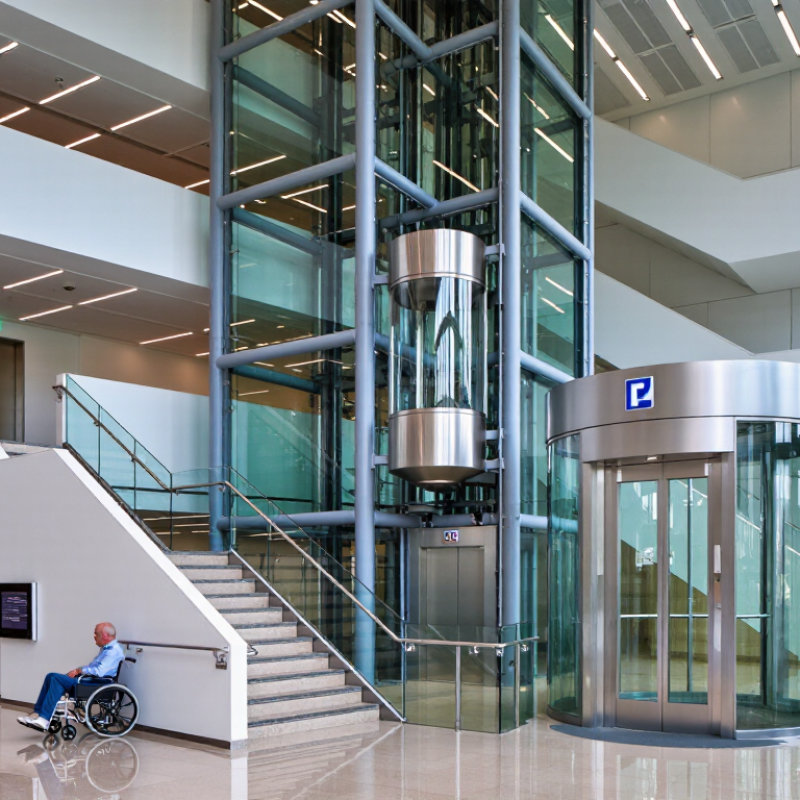
7. Panoramic and design-led lift specialist Passenger lifts featuring glazed cabins or shafts and customizable interior finishes. Hotels, retail spaces, public interiors, and buildings where the lift is a visible design feature. Glass and metal finishes, cabin lighting, entrance arrangements, and structural interfaces vary by project. Assess structural support, glazing safety, cleaning access, solar exposure where relevant, and finish durability. Structural interface drawings, glazing specifications, finish samples, cleaning guidance, and applicable safety documents.
8. Service and goods lift specialist Service lifts and goods lifts designed for equipment, supplies, or freight rather than general passenger use. Hotels, hospitals, restaurants, warehouses, and commercial back-of-house areas. Cabin dimensions, door types, rated loads, and loading arrangements are selected for the intended goods and route. Specify load dimensions and handling method; distinguish goods-only equipment from lifts approved to carry people. Rated-load information, cabin and door drawings, operating restrictions, loading instructions, and inspection records.
9. Modernization and replacement specialist Replacement or upgrade of lift controls, drives, doors, and other components in existing buildings. Occupied buildings where full lift replacement may be disruptive or constrained by the existing shaft. Scope can range from selected component upgrades to a full system replacement, subject to site conditions. Review compatibility with existing equipment, outage duration, safety upgrades, building interfaces, and spare-parts support. Site survey, scope of work, interface drawings, commissioning plan, risk assessment, and post-upgrade test records.
10. Regional project and service specialist Indoor lift supply, installation, or maintenance focused on a particular country or region. Projects where local code knowledge, on-site response, and long-term maintenance are key requirements. Product selection and available configurations depend on local approvals, supply arrangements, and service capability. Verify local authorization, technician availability, response commitments, spare-parts access, and lifecycle costs. Local registrations or approvals, service coverage details, maintenance contract, parts policy, and customer references.

How Regional Standards Shape Indoor Lift Choices

Regional standards can change an indoor lift from a straightforward purchase into a building-specific decision. Buyers should check local requirements for shaft dimensions, door widths, emergency communication, fire safety, and accessibility before comparing models. A lift that fits a plan on paper may still need changes to its landing or power supply. Small details matter.

Electrical standards also shape the options. Voltage, phase, and backup-power expectations can affect the drive system and installation work. In some regions, inspectors may require particular safety devices or documented maintenance procedures. Ask suppliers for technical drawings and compliance documents that match the destination market, not just a general product brochure. Keep the paperwork.

Accessibility rules deserve close attention in homes, clinics, and shared buildings. Clear door openings, control height, cabin space, and audible or visual signals can influence everyday use. Requirements may differ between regions and building types, so confirm them with a qualified local professional. A rushed assumption here is costly.

Climate and construction practices can matter, too. Humidity, dust, and available service support may affect material choices and long-term reliability. Standards are not the whole story; installation quality matters just as much. I would not treat a checklist as a substitute for a site survey, especially in older buildings where drawings can be wrong.

Factors to Consider When Selecting a Manufacturer

Selecting an indoor lift manufacturer starts with the building, not the brochure. Share the shaft dimensions, floor count, expected daily trips, and user needs. Then ask how the proposed lift fits those conditions. A detailed site assessment can reveal awkward door clearances or a low overhead space before installation begins. Small details matter.

Check the manufacturer’s engineering records, quality controls, and relevant product test documentation. Ask for clear specifications on rated load, travel speed, emergency communication, and backup operation. Requirements vary by project and location, so confirm applicable standards with qualified local professionals. Request references for installations with similar traffic and building layouts. A glossy catalogue is not enough. Also compare warranty terms, spare-parts availability, technician training, and response times after handover. A lift may operate for years, but service delays can still disrupt daily access. That part is easy to underestimate.

Discuss customization and delivery schedules in writing. Ask who coordinates measurements, installation, commissioning, and staff training. For international projects, clarify shipping responsibilities and the support available across time zones. Some answers may remain uncertain until a site survey; that is normal, but assumptions should be recorded. I would also ask what happens if a chosen component becomes unavailable. Manufacturers do not always make this process simple, and buyers should compare the practical details, not just the quoted price.

Article Source:

Skip to content