
Top 10 10t Trackless Vehicle Manufacturers Worldwide

Choosing the right 10t Trackless Vehicle is more complex than comparing payload figures. Factory floors reveal the difference. A vehicle may carry ten tonnes on paper, yet struggle on uneven concrete, tight corners, or dusty transfer routes. Battery chemistry, steering accuracy, braking distance, charging time, and maintenance access deserve equal attention.

Dr. Raffaello D’Andrea, a respected robotics researcher and automation entrepreneur, has said, “The future of robotics is about increasing human capability.” That principle fits heavy material transport. A dependable 10t Trackless Vehicle should reduce lifting risks, support repeatable movement, and cooperate safely with workers. It should not merely look advanced in a catalogue.

Performance matters more.

This introduction presents ten global manufacturers associated with heavy-duty trackless transport solutions. The comparison considers engineering experience, rated capacity, navigation systems, drive configuration, energy management, customization, after-sales support, and documented industrial applications. Evidence may include manufacturer specifications, technical publications, project records, and customer-facing data.

Still, no ranking is perfect. Some companies publish detailed test results, while others provide limited field information. Real performance can change with floor conditions, load distribution, climate, and operator training. That limitation deserves honesty.

Readers should examine turning radius, slope capability, emergency controls, wheel wear, and software integration before making a purchase. A lower upfront price may create higher downtime later. The strongest supplier is not always the most famous one. It is the manufacturer that can prove reliable movement under your actual production conditions.
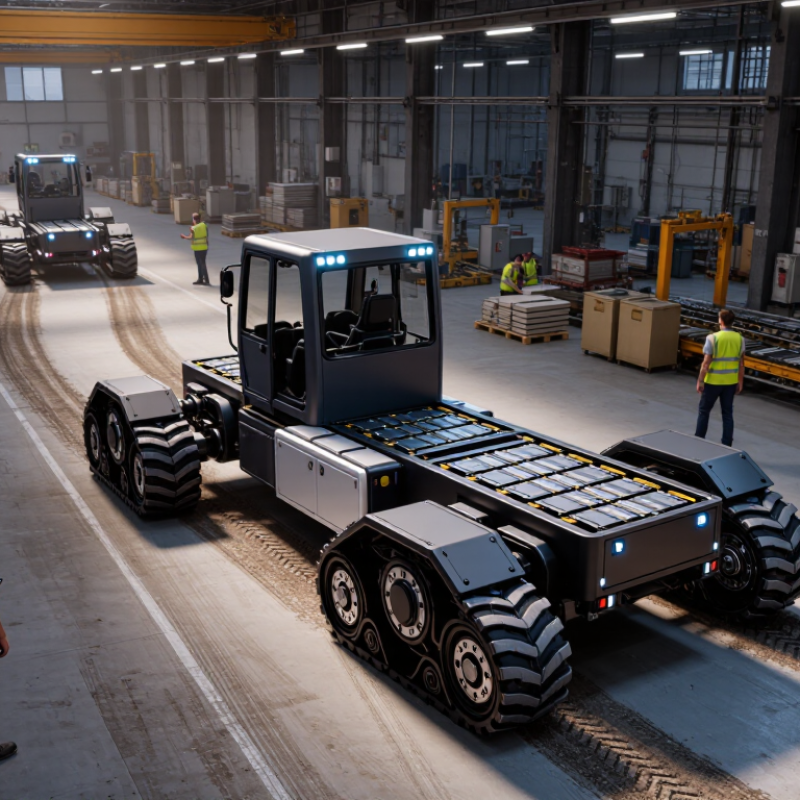
Top 10 10t Trackless Vehicle Manufacturers Worldwide

10-Ton Trackless Vehicles: Definition, Design, and Operating Principles

Top 10 10t Trackless Vehicle Manufacturers Worldwide

A 10-ton trackless vehicle is a floor-running transport platform designed to move loads up to 10,000 kilograms without rails. It usually uses electric traction, rubber tires, steerable axles, and a low deck. Guidance may combine magnetic markers, QR codes, laser scanning, or SLAM navigation. According to a 2024 MarketsandMarkets estimate, the global automated guided vehicle market could reach roughly USD 3.3 billion in 2024. That growth reflects demand for safer, more flexible internal transport.

The design begins with load distribution, not software. A steel frame must resist bending when coils, molds, or heavy pallets sit off-center. Drive motors need enough torque for ramps, uneven floors, and repeated starts. Battery capacity depends on payload, travel distance, charging time, and duty cycles. Sensors monitor people, obstacles, wheel slip, and docking position. ISO 3691-4:2023 provides useful safety guidance for driverless industrial trucks, although site-specific risk assessment remains essential.

In operation, the vehicle receives a transport order, checks its route, and travels at controlled speed. It slows before corners and stops when its safety field is interrupted. Field tests should measure braking distance, positioning accuracy, battery temperature, tire wear, and recovery after communication loss. A published capacity is not the full story. Real floors are rarely perfect. Some designs still require manual supervision during loading, maintenance, or unusual traffic conditions. That limitation deserves honest attention.

Criteria for Ranking the Top 10 Global Manufacturers

Ranking the top 10 global manufacturers of 10t trackless vehicles requires more than comparing brochure specifications. The evaluation should begin with verified load capacity, braking performance, turning radius, and battery endurance. Real operating evidence matters. A vehicle moving steel coils across a dusty factory floor faces different demands from one serving a clean warehouse. Manufacturers should provide documented field experience, tested duty cycles, and clear maintenance records. Independent inspection reports add credibility when available.

Safety and engineering depth deserve equal weight. Reviewers should examine obstacle detection, emergency stopping, route control, and protection against uneven surfaces. Compliance with recognized international safety standards strengthens a manufacturer’s authority, but certificates alone cannot prove daily reliability. After-sales support also affects the ranking. Response times, spare-parts access, operator training, and software updates can decide whether a vehicle remains productive after two years. Total ownership cost should include energy use, tire wear, downtime, and adaptation work. Not just purchase price.

A fair ranking should also measure customization without rewarding unnecessary complexity. Strong manufacturers explain design limits honestly and provide traceable test data. Some public information may remain incomplete. That weakness should be recorded, not quietly ignored. Regional service coverage can be difficult to compare because reporting methods differ. Therefore, each score should use consistent evidence, transparent weighting, and practical site feedback. Expert judgment still enters the process. It should be disclosed.

Profiles of the Ten Leading 10-Ton Trackless Vehicle Manufacturers

Top 10 10t Trackless Vehicle Manufacturers Worldwide

This profile examines ten leading manufacturers of 10-ton trackless vehicles through practical performance, engineering depth, and service reliability. One focuses on heavy-duty yard transport and reinforced steel frames. Another develops compact battery vehicles for warehouses with narrow turning areas. A third emphasizes modular platforms, allowing different cabins and cargo beds. A fourth is known for hydraulic lifting systems used near loading docks. One manufacturer prioritizes low-noise electric drives for indoor facilities. Another builds rugged vehicles for mining and construction support. A seventh concentrates on automated navigation and obstacle detection. An eighth combines custom chassis design with high ground clearance. A ninth highlights corrosion-resistant bodies for coastal and chemical environments. The tenth focuses on fleet monitoring, diagnostics, and operator training.

A dependable 10-ton vehicle should move steadily under real load, not only perform well in brochures. Inspect frame welds, axle clearance, braking response, and battery access. Ask for duty-cycle data from comparable sites. A vehicle carrying steel coils needs different protection from one moving pallets. Service reach matters too. Delayed parts can stop an entire shift. Some published range figures appear optimistic under cold weather, slopes, or repeated acceleration. That deserves careful questioning. Experience in similar operating conditions remains valuable, although no supplier is perfect.

Tips: Check turning radius with a full load. Request maintenance records from working fleets. Test visibility around the rear corners. Confirm charging time, spare-part availability, and emergency support before purchase. Small omissions become expensive.

Comparison of Vehicle Capacity, Power Systems, and Customization Options

Top 10 10t Trackless Vehicle Manufacturers Worldwide

The top ten 10-ton trackless vehicle manufacturers differ mainly in capacity, power systems, and customization depth. A practical comparison should begin with payload stability, not advertised maximum load. A fully loaded vehicle needs predictable braking, controlled acceleration, and reliable steering on uneven factory floors. Battery-electric systems usually reduce indoor emissions and operating noise. Diesel or hybrid systems may suit outdoor yards, steep ramps, or extended shifts. Charging time matters too. A vehicle that stops for hours can disrupt production.

Customization often separates experienced manufacturers from ordinary suppliers. Options may include adjustable platforms, hydraulic lifting decks, remote controls, guided navigation, reinforced frames, and weather protection. Wheel design should match concrete, asphalt, rails, or mixed surfaces. Control software also deserves inspection. It must handle emergency stops, obstacle detection, and precise low-speed movement. In field evaluations, small interface delays can become costly. Specifications can look impressive, yet real performance may change with temperature, load distribution, and floor conditions.

Tips: Request a loaded demonstration before purchasing. Measure turning space and charging access. Ask for maintenance records, battery-cycle data, and documented safety testing. Check whether custom parts can be serviced locally. One overlooked connector can delay an entire shift. A perfect ranking is impossible because operating sites differ. My own preference would change after testing noise, traction, and recovery behavior under actual workload.

Industries, Applications, and Global Market Distribution

A credible top-ten review of 10-ton trackless vehicle manufacturers should examine more than production volume. These rail-free transport platforms move steel coils, molds, machinery, and warehouse loads across prepared floors. In daily operations, buyers usually assess load stability, turning control, battery endurance, charging time, and emergency protection. Floor flatness matters more than many brochures admit. Small surface defects can increase wheel wear and steering corrections.

Industrial demand is strongest in metal processing, shipbuilding, heavy equipment, foundries, and large logistics centers. Some factories use these vehicles between machining cells, while others connect outdoor yards with assembly halls. Battery-powered models suit indoor routes with frequent stops. Hybrid or cable-assisted systems may fit longer shifts and heavier duty cycles. Operators also value remote control, obstacle detection, and clear maintenance access. Simple interfaces often outperform impressive but complicated software.

Asia remains a major manufacturing and deployment center, supported by dense industrial supply chains and large fabrication plants. Europe emphasizes energy efficiency, automation integration, and workplace safety. North American demand is linked to aerospace, machinery, steel, and warehouse modernization. Middle Eastern projects often involve oversized components and open-yard transport. Latin American adoption is growing, though service coverage can be uneven. Published global rankings remain imperfect because manufacturers report capacity differently, and regional integrators may assemble systems locally. Buyers should verify reference projects, spare-parts response, floor requirements, and real duty-cycle data before comparing the top ten.

Top 10 10t Trackless Vehicle Manufacturers Worldwide - Industries, Applications, and Global Market Distribution

Rank Anonymized Manufacturer Profile Primary Production Region Typical Rated Capacity Vehicle Configuration Main Industries Served Typical 10t Applications Control and Safety Features Global Market Distribution
1 Profile A: High-volume heavy-duty transfer vehicle supplier East Asia 5–500 t; 10 t models commonly available Battery-powered, four-wheel or multi-wheel steering, flat-deck platform Steel, shipbuilding, heavy machinery, rail equipment Moving dies, coils, fabricated structures, molds, and assemblies Wireless remote control, emergency stop, obstacle warning, hydraulic steering Asia-Pacific, Europe, Middle East, North America
2 Profile B: Modular AGV and industrial logistics specialist Western Europe 1–150 t; 10 t modular platforms widely supported Autonomous guided vehicle, omnidirectional drive, modular deck Automotive, aerospace, warehousing, general manufacturing Line-side delivery, assembly-line replenishment, indoor load transfer Laser or natural-feature navigation, fleet management, safety scanners Europe, North America, East Asia, selected Gulf markets
3 Profile C: Custom engineering and transfer-cart manufacturer Central Europe 2–300 t; engineered 10 t configurations Rail-guided and trackless variants, battery or cable-reel power Steel service centers, foundries, forging, machine building Transport of hot or cold metal loads, dies, tools, and production fixtures Programmable travel limits, load monitoring, anti-collision sensors European Union, United Kingdom, Turkey, North Africa
4 Profile D: Heavy-load electric transport platform producer East Asia 10–1,000 t; 10 t entry models available Electric transfer cart, steerable axles, steel or customized deck Shipyards, construction equipment, energy equipment, steel fabrication Moving frames, pressure vessels, structural components, and machinery Remote operation, battery management, audible alarms, overload protection China and wider Asia-Pacific, with export projects in Africa and South America
5 Profile E: In-plant material-handling automation integrator North America 1–100 t; 10 t vehicles configured for factories Autonomous or semi-autonomous, differential drive, low-profile deck Automotive, aerospace, defense, distribution centers Component delivery, work-in-process movement, pallet and fixture transport Fleet software, QR or reflector navigation, safety lidar, traffic control United States, Canada, Mexico, Europe, selected Asia-Pacific sites
6 Profile F: Rail and infrastructure equipment manufacturer Northern Europe 5–250 t; 10 t units used for factory logistics Battery-electric, articulated chassis, optional guided operation Railways, transit systems, engineering workshops, heavy maintenance Railcar parts, bogies, maintenance tooling, and infrastructure modules Redundant braking, remote diagnostics, speed control, configurable safety zones Europe, Scandinavia, North America, Australia
7 Profile G: Customized industrial vehicle engineering group Southern Europe 3–200 t; 10 t designs tailored to site conditions Four-wheel steering, electric traction, open or enclosed operator cabin Ceramics, machinery, ship components, industrial construction Outdoor yard transport, machine relocation, and production-area delivery Cameras, proximity sensors, manual override, weather-resistant controls Southern Europe, Latin America, North Africa, Middle East
8 Profile H: Warehouse and factory AGV platform supplier East Asia 0.5–50 t; 10 t heavy-duty platforms available Autonomous mobile robot, magnetic or SLAM navigation, modular payload deck Electronics, automotive, warehousing, battery manufacturing Pallet handling, battery-pack movement, rack replenishment, assembly logistics SLAM, fleet dispatching, safety laser scanners, automatic charging East and Southeast Asia, Europe, North America
9 Profile I: Energy and process-industry transport specialist Western Europe 5–400 t; 10 t compact heavy-load models Battery or hybrid drive, low-clearance chassis, precision steering Power generation, oil and gas, chemicals, industrial maintenance Transformers, tanks, pumps, heat exchangers, and maintenance modules Load sensors, controlled acceleration, emergency braking, industrial-rated enclosures Europe, Middle East, North America, Asia-Pacific energy projects
10 Profile J: Regional heavy-transport equipment manufacturer South Asia 5–100 t; 10 t battery and diesel-electric options Trackless transfer trolley, mechanical steering, custom platform body Steel, cement, general engineering, ports, fabrication yards Short-distance yard movement, raw-material handling, and equipment positioning Manual or remote control, hydraulic brakes, warning beacon, overload alarm South Asia, Southeast Asia, Africa, Middle East

Note: The profiles are anonymized. Capacity ranges, applications, control systems, and regional distribution represent commonly documented configurations in the global 10-ton trackless industrial vehicle market; actual specifications vary by project, operating environment, and regulatory requirements.

Skip to content