
7 Tips for Choosing Packaging Paper Bags

Choosing Packaging Paper Bags is not just a matter of picking a color or adding a logo. The right bag must suit the product, carrying conditions, and customer experience. Packaging educator Walter Soroka describes packaging as “a coordinated system of preparing goods for transport, warehousing, logistics, sale, and end use.” That wider view is useful here. A paper bag should look appealing, but it also needs to protect and carry its contents. Small details matter. A damp pastry box, a sharp bottle edge, or a heavy stack of books can reveal weaknesses quickly.

This guide introduces seven practical checks: paper grade, bag size, handle design, load capacity, printing, sustainability claims, and supplier testing. Look closely at the bag’s base and seams, not only its front panel. Ask for samples, then test them with products similar in weight and shape to yours. A bag that feels sturdy when empty may behave differently when filled. Paper alone is not the whole story. Coatings, inks, and construction can affect performance and disposal options, so review supplier specifications rather than relying on vague labels. These tips provide a starting point, not a substitute for testing your actual products. Trade-offs remain: a thicker bag may feel more durable, yet use more material. The best choice is usually the one that meets real handling needs without adding features customers will never notice.
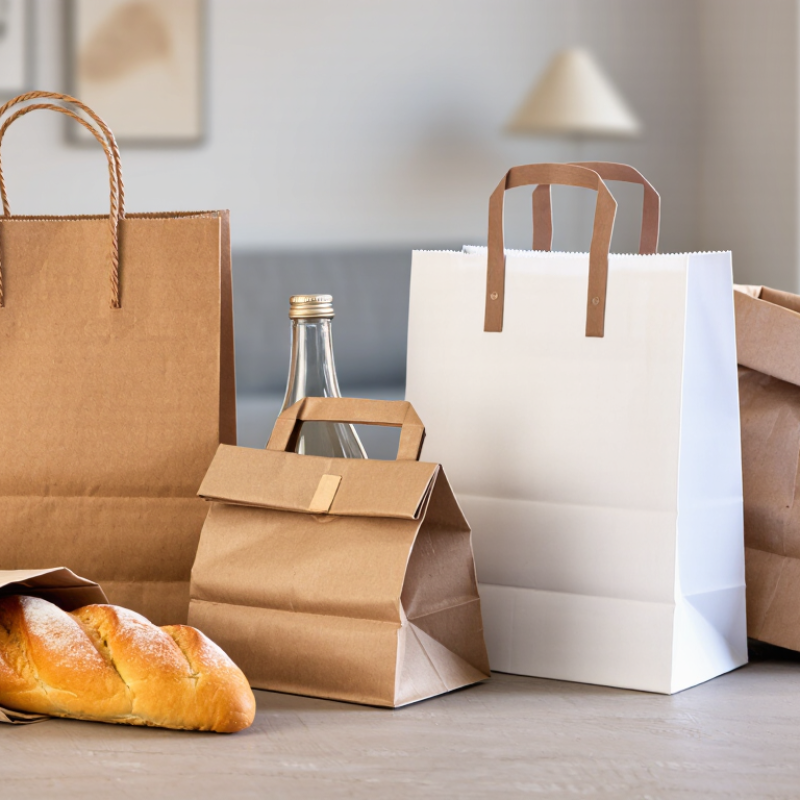
7 Tips for Choosing Packaging Paper Bags

What Packaging Paper Bags Are and Where They Are Used

Packaging paper bags are carriers made from paper sheets or rolls, folded and joined to form a base and side panels. Many use kraft paper for strength, with flat or twisted handles added for easier carrying. The design can be plain, printed, or coated, though coatings may affect recyclability. Small details matter. A wide gusset helps a bag hold a bakery box; a reinforced base supports heavier groceries. Common uses include food takeaway, retail purchases, gifts, and lightweight e-commerce orders. Paper can tear when wet, so it is not ideal for every product or delivery route.

The scale of packaging helps explain why bag choices deserve attention. Eurostat’s 2022 packaging waste data reports that paper and cardboard made up 40.8% of packaging waste generated in the EU. In the United States, the EPA’s 2018 recycling data puts the recycling rate for paper and paperboard containers and packaging at 80.9%. These figures describe broad material streams, not the outcome for every individual bag. Local collection rules, food residue, coatings, and sorting all matter. A paper bag can feel reassuringly simple, yet its environmental value depends on how it is made, used, and handled after use. Reuse helps, when practical.

How to Match Bag Size and Strength to the Product

A paper bag should fit the product closely, with room for easy packing but not a large empty pocket. Measure the item’s length, width, and height, then allow space for tissue, dividers, or handles. For a boxed candle, check that its corners do not press against the seams. For a stack of books, test the bag with the full load, not one book at a time. The U.S. EPA’s 2018 materials report recorded 82.2 million tons of containers and packaging in U.S. municipal waste, or 28.1% of the total. That figure covers many packaging types, but it is a useful reminder: excess material adds up.

Match strength to the product’s weight, shape, and handling conditions. Add the product and any inserts to estimate the total load, then check the handles, bottom fold, and side seams under that weight. Paper grammage alone does not guarantee strength; fiber quality, construction, and moisture also matter. TAPPI T 494 provides a standardized method for measuring paper tensile properties, while a filled-bag trial reveals weaknesses that a paper specification may miss. Test a sample on the actual packing line, and carry it briefly by the handles. That rule is imperfect. Still, it catches awkward fits and early seam failure before a large order is packed.

How to Choose Paper Type, Handles, and Bag Construction

Choosing bag paper starts with product weight and how the bag will be used. Lightweight kraft suits dry, modest loads, while heavier kraft or coated paper handles scuffs and light moisture better. Coating can affect recyclability, so check local collection guidance rather than assuming every paper bag is accepted. For food or cosmetics, choose paper and inks appropriate to the product and its contact conditions. Feel the difference.

Handle choice changes comfort and stress on the bag. Twisted-paper handles suit everyday shopping; flat handles sit neatly and can work well for lighter items. Rope handles feel comfortable under heavier loads, but need reinforced attachment points. Check the base. A folded, glued base and secure side seams help prevent splitting when the bag is lifted. Bag dimensions matter too: a narrow base may tip bottles, while a wider gusset can keep boxes upright. Ask for a sample, load it with the actual product, then inspect the handles, corners, and opening. A small weakness often appears there. Paper choice is a compromise, not a perfect checklist.

7 Tips for Choosing Packaging Paper Bags - How to Choose Paper Type, Handles, and Bag Construction

Tip What to Choose Useful Details Best Suited For What to Check
1 Match paper type to the job Kraft paper is commonly chosen for its natural appearance and general-purpose strength. White or coated paper provides a smoother surface for detailed printing. Recycled-content paper is another option; its appearance and performance vary by grade. Retail shopping, takeaway, gifts, and promotional packaging Consider the required print finish, appearance, contents, and whether recycled content or a particular paper specification is needed.
2 Select an appropriate paper weight Paper weight is often specified in grams per square metre (gsm). As a broad starting point, lighter bags may use roughly 70–100 gsm paper, while heavier-duty bags may use around 120 gsm or more. These are not guaranteed load ratings. Choosing a starting specification for samples and testing Bag size, paper grade, seam design, handle attachment, humidity, and load all affect performance. Test a finished bag with the intended contents.
3 Choose handles for comfort and load Twisted-paper handles offer a paper-based option for many retail bags. Flat-paper handles sit comfortably in the hand. Rope handles can provide a more substantial feel, while die-cut handles eliminate a separate handle but require a reinforced or suitably designed top. Retail bags, gift bags, and bags carried by hand Check handle strength, attachment area, grip comfort, and whether the handle material matches the intended bag design.
4 Use a base construction suited to the contents A flat-bottom or block-bottom bag can stand upright and accommodate boxed or bulky products. A simple flat bag may suit lightweight, flat items. A bottom insert can help spread weight across the base. Groceries, takeaway containers, books, and boxed goods Check that the base dimensions fit the product and that the bottom seams and any insert support the intended load.
5 Size the gusset and bag dimensions carefully Side gussets expand to provide more capacity; the bottom gusset or base depth determines how well the bag accommodates three-dimensional items. A closer fit can reduce excess material and help limit product movement. Products with varying widths or depths Measure the product, allow room for easy packing, and account for closures or protective packaging.
6 Consider coatings only when needed Coatings or laminations can improve surface durability and resistance to moisture or scuffing, but they may affect recyclability depending on the materials and local recycling facilities. Treated paper should not automatically be considered waterproof. Printed bags or applications involving light surface exposure Confirm the required level of protection and check local recycling guidance for the complete bag, including coatings, handles, and attachments.
7 Test the complete bag before ordering A finished sample brings together the paper, size, seams, base, handle, and printing. Testing with representative contents is more informative than relying on paper weight alone. New bag designs, heavy products, and repeat production Check loaded carrying, handle comfort, seam integrity, base stability, packing speed, and appearance under expected storage conditions.

How to Compare Printing Options and Environmental Claims

Printing can make a paper bag feel premium, but it also changes cost, lead time, and recyclability. Digital printing suits short runs and variable designs; flexography often makes more sense for larger orders. Ask suppliers to compare the same artwork, bag size, colors, and order quantity. Check a physical sample under store lighting. Small text can blur, and dark ink may look different on brown kraft paper. A tidy proof is not the whole story.

Environmental claims need equally close inspection. Ask for evidence of recycled-fiber content, responsible fiber sourcing, and the bag’s acceptance in local recycling systems. The U.S. Environmental Protection Agency’s Advancing Sustainable Materials Management: Facts and Figures 2018 report estimated a 68.2% recycling rate for paper and paperboard overall. That figure does not prove that every coated or laminated bag is recyclable. Ask what happens to its handles, inks, and finishes. “Eco-friendly” alone tells you very little. I would also question claims that lack a clear percentage, test method, or certification scope. Paper can be a sensible choice, but sourcing and disposal still matter.

7 Tips for Choosing Packaging Paper Bags: Compare Printing Options and Environmental Claims

How to read this: The FSC Recycled label criteria shown require 100% reclaimed material, with at least 70% post-consumer material. These figures describe fibre content, not the environmental impact of the whole bag or its printing. When comparing printing options, ask suppliers for the print process, ink specifications, and supporting documentation for any environmental claims.

Source: FSC, FSC label guidance. Requirements can depend on the applicable standard and product certification.

How to Evaluate Suppliers, Costs, and Quality Standards

A dependable paper-bag supplier should answer practical questions clearly. Ask for a specification sheet covering paper grade, weight, dimensions, handle type, and printing tolerance. Request a production sample, not just a polished showroom example. Check the seams by loading the bag with the weight it will actually carry. Look for loose handles, uneven folds, and ink that rubs off. Small details matter.

Ask what quality checks happen during production and how defects are recorded. For bags intended to hold food, request documentation showing which tests and standards apply to your intended market. Vague claims such as “eco-friendly” are not enough; ask what material or certification supports them. Compare quotes using the same bag size, paper weight, print coverage, order quantity, and delivery terms. Include setup fees, freight, and possible storage costs. Cheap unit pricing can hide a weak handle or inconsistent batches. Keep records, too.

Before placing a large order, ask about minimum quantities, lead times, and how changes are approved. A small pilot run can reveal whether the bags stack neatly, fit your products, and survive ordinary handling. It may feel like an extra step. Still, it is easier to catch a poor fit before thousands of bags arrive. Supplier promises matter, but samples and written specifications give you something concrete to check.

Skip to content