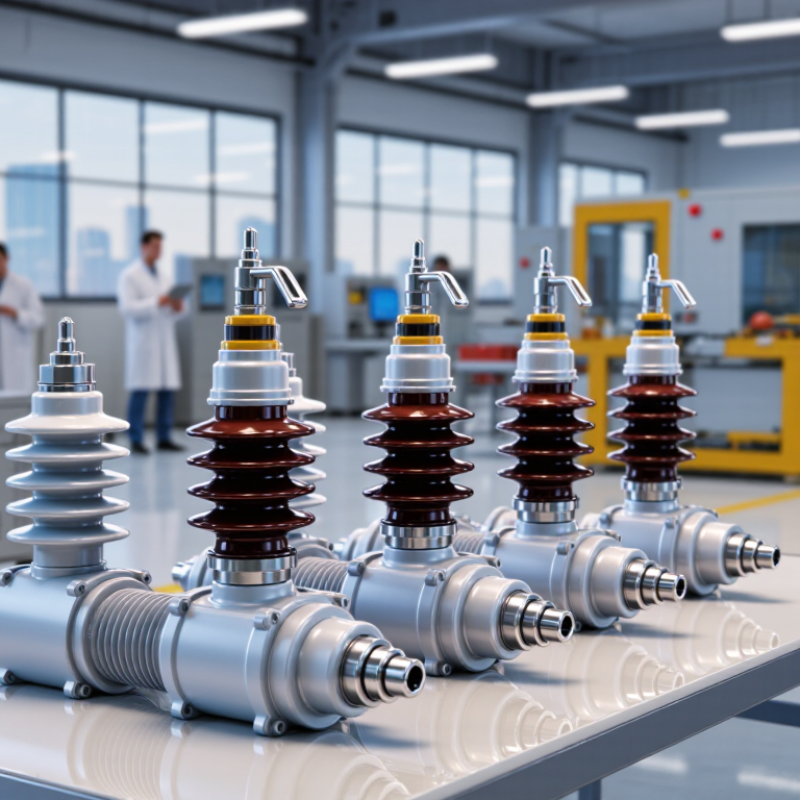
7 Lightning Arrester Buying Tips for Global Buyers

Buying a Lightning Arrester for international projects is not a simple product comparison. A device that performs well in one network may fail in another. System voltage, grounding design, pollution levels, lightning density, and installation altitude all influence the correct choice.

This guide shares seven practical buying tips for global buyers. It focuses on details that engineers and procurement teams often check too late. Review the continuous operating voltage, discharge current, energy capability, housing material, and protection class. Ask for routine test records, type-test evidence, and clear technical datasheets. Certification matters, but it should support engineering judgment, not replace it.

Look closely at the supplier’s manufacturing experience. Can the factory explain its ageing tests, sealing process, and quality controls? Request sample inspection photos, batch traceability, and realistic delivery terms. A strong supplier should also provide installation guidance and after-sales support across different time zones.

Small details matter.

Shipping conditions can damage packaging before installation. Poorly written specifications can create expensive misunderstandings. Even experienced buyers sometimes overlook spare parts or local service capability. That is worth reconsidering.

The following tips help create a more reliable purchasing process. They are not a substitute for site calculations or qualified electrical review. However, they can reduce avoidable risks, improve supplier communication, and support safer long-term performance in substations, distribution networks, and industrial facilities worldwide.

7 Lightning Arrester Buying Tips for Global Buyers

Define Lightning Arrester Types, Ratings, and Protection Requirements

7 Lightning Arrester Buying Tips for Global Buyers

Define the arrester before comparing prices. Type 1 arresters handle partial lightning current at service entrances. Type 2 devices protect distribution boards from residual surges. Type 3 units protect sensitive equipment near the load. Hybrid systems may combine these functions.

NOAA’s National Weather Service estimates about 25 million lightning flashes occur annually in the United States. Exposure is not theoretical. It changes by location, altitude, wiring length, and building design.

Buying tips: Check the continuous operating voltage, or Uc, before the maximum discharge current. Match the voltage protection level, Up, with the equipment’s impulse withstand rating. Confirm nominal discharge current, In, and maximum discharge current, Imax. Select the correct pole configuration and earthing arrangement. Ask for short-circuit withstand data. Verify thermal disconnector status indicators. Request test reports under IEC 61643-11 or the relevant regional standard. Do not trust “heavy-duty” wording alone. It says little.

Protection also depends on installation. IEEE Std C62.41.1 explains that surge severity varies across low-voltage systems. Keep connecting leads short and straight. A few extra bends can increase residual voltage. Place Type 2 protection inside the main distribution panel, not beside a distant machine. For long cable runs, add coordinated downstream protection.

Small detail. Big consequence. In practice, I have seen buyers specify Imax correctly but overlook Uc and backup-fuse coordination. That mistake deserves a second review.

Also verify temperature range, humidity limits, replacement signals, and enclosure compatibility before approval.

Match Arrester Performance to Voltage, Climate, and Installation Conditions

A lightning arrester should match the system voltage, not merely the voltage printed on a purchase request. Check the maximum continuous operating voltage and temporary overvoltage conditions. A 22 kV network may experience higher stress during faults. Ask for residual voltage data at the expected discharge current. Energy capability also matters near substations, transformers, and long overhead lines. Small details become expensive failures.

Climate changes arrester performance. In coastal areas, salt deposits can create surface leakage across the housing. Industrial dust and agricultural pollution can do the same. Select suitable creepage distance, sealing, and outdoor protection. Consider ultraviolet exposure, heavy rain, freezing temperatures, and high altitude. At altitude, reduced air density may affect external insulation clearances. Installation height deserves attention too. It is often overlooked.

Installation conditions are equally important. Keep connecting leads short and straight. Long, sharp bends can increase protective voltage during a surge. Confirm the grounding path is low impedance and mechanically secure. Check phase spacing, enclosure clearance, and access for inspection. I once focused too heavily on the arrester rating and ignored poor grounding. The device was correctly selected, but the protection was still weak. Request routine test records, inspection procedures, and clear application limits from the supplier. Field measurements may reveal assumptions that paperwork misses.

Evaluate Standards, Testing Records, and Product Certification

Lightning arresters deserve evidence, not attractive brochures. Vaisala’s 2023 Annual Lightning Report recorded more than 1.4 billion detected lightning events worldwide. For global buyers, this exposure makes standards and testing records essential. Check whether the arrester complies with IEC 60099-4 or IEEE C62.11. Confirm the exact product class, rated voltage, energy capability, and installation environment. A general certificate is not enough.

Tips: Request complete type-test and routine-test records. Look for residual voltage, leakage current, sealing, ageing, and impulse-current results. Each report should show the tested model, serial number, test date, laboratory, and acceptance criteria. The laboratory should hold ISO/IEC 17025 accreditation, with a scope covering the relevant tests. Missing traceability is a warning sign. Small gaps matter.

Certification also needs careful reading. Verify the certificate issuer, validity period, factory location, and covered product range. Compare the certificate directly with the nameplate and purchase specification. Some documents cover a product family, but not every voltage rating. NERC’s 2024 State of Reliability report continues to highlight equipment performance and protection-system issues as reliability concerns. That supports a practical rule: assess the test evidence, not merely the logo. In field procurement reviews, documentation often looks complete until one asks for raw test data. That weakness is easy to overlook. My own view is imperfect: even strong records cannot replace site-specific coordination studies, pollution assessment, and grounding checks.

7 Lightning Arrester Buying Tips for Global Buyers - Evaluate Standards, Testing Records, and Product Certification
No. Buying Tip What to Evaluate Required Data or Documents Relevant Standard or Test Basis Practical Buyer Check
1 Confirm the Applicable Standard Check whether the arrester is designed for the intended electrical system, installation category, and market. Standard edition Product datasheet Declaration of conformity IEC 60099-4 is widely used for metal-oxide surge arresters without gaps for AC power systems. IEEE C62.11 is commonly referenced for metal-oxide surge arresters used on AC power circuits. Ensure the quotation identifies the exact standard and edition. Do not accept a general statement such as “international standard” without a documented scope.
2 Match Voltage Ratings to the System Verify rated voltage, continuous operating voltage, system earthing, frequency, and temporary overvoltage conditions. Ur Uc or MCOV TOV curve System voltage The selected arrester must withstand the continuous phase-to-earth voltage and specified temporary overvoltages without unacceptable thermal stress. Compare Uc or MCOV with the highest continuous operating voltage at the installation point. Review the TOV withstand curve against the grid protection and fault-clearing time.
3 Review Discharge and Protection Performance Assess nominal discharge current, residual voltage, energy capability, and coordination with protected equipment insulation levels. 8/20 μs current rating Residual-voltage table Energy capability Line discharge class Residual voltage is normally specified at defined impulse currents and wave shapes. A lower value generally improves protection, provided the arrester remains suitable for the system duty. Compare residual voltage at the stated current with the equipment insulation level and required protection margin. Check that test conditions are clearly stated rather than relying on a single headline value.
4 Demand Complete Type-Test Records Confirm that the tested construction, electrical ratings, materials, and manufacturing design correspond to the offered product. Type-test report Test sample identification Photographs or drawings Test laboratory details IEC 60099-4 includes design tests, type tests, routine tests, and acceptance tests for applicable metal-oxide arresters. Check the report number, test date, tested model, rated values, test sequence, pass criteria, and issuing laboratory. A generic certificate without product identification is insufficient.
5 Verify Routine and Factory Test Controls Determine how every production unit is checked before shipment and how results are linked to the serial number or batch. Routine-test procedure Factory test report Serial-number traceability Inspection plan Routine testing is intended to identify defects in individual manufactured units. Typical checks may include reference voltage, leakage current, sealing, and other tests specified by the applicable product standard. Request sample routine-test records and define witness or hold points in the purchase inspection plan. Confirm that the shipped units can be traced to their test results.
6 Check Certification Scope and Laboratory Competence Distinguish between a product certificate, a management-system certificate, a laboratory report, and a supplier declaration. Certificate number Scope of certification Accreditation details Validity status ISO 9001 certification concerns an organization’s quality-management system; it does not by itself prove that a lightning arrester meets a product standard. Testing laboratories may demonstrate competence through ISO/IEC 17025 accreditation for relevant methods. Verify the certificate directly through the issuing body where possible. Confirm the exact product family, ratings, manufacturing location, standard, and validity period covered by the certificate.
7 Evaluate Installation, Environment, and Lifecycle Support Consider altitude, pollution, temperature, mechanical loads, enclosure material, sealing, disconnector behavior, and replacement support. Environmental limits Creepage distance Installation manual Warranty terms Spare-parts plan Application suitability depends on the installation environment and system conditions, not only on the arrester’s nominal voltage. Outdoor units require appropriate insulation, sealing, and mechanical design for the specified service conditions. Compare the product limits with site altitude, pollution level, ambient temperature, wind or mechanical loads, and mounting arrangement. Confirm maintenance instructions, failure indication, warranty coverage, and document retention.
Buyer note: Always evaluate the complete technical file, including the declared standard, ratings, test conditions, certification scope, and traceability documents. A certificate or test report should be reviewed together with the product datasheet and purchase specification.

Compare Supplier Quality, Customization, Pricing, and Total Ownership Cost

7 Lightning Arrester Buying Tips for Global Buyers

Compare Supplier Quality, Customization, Pricing, and Total Ownership Cost

When comparing suppliers, inspect more than a polished certificate. Ask for type-test reports, routine-test records, material traceability, and recent production samples. A dependable supplier should explain test conditions clearly, not hide behind broad claims. Factory audits can reveal storage problems, rushed assembly, or inconsistent sealing. I have seen attractive samples fail to represent regular production. That gap deserves attention.

Customization affects both protection and installation. Confirm the required system voltage, discharge class, housing material, creepage distance, terminal design, altitude, and pollution level. Request a technical drawing before approving the order. It prevents expensive changes after production begins. Also check whether customized parts receive the same testing as standard models. Sometimes, they do not. Pricing should include packaging, inspection, shipping terms, duties, documentation, warranty handling, and lead time. A low unit price may simply exclude important services.

Calculate total ownership cost over the expected service period. Include installation labor, replacement intervals, outage exposure, inspection access, and disposal requirements. Ask how the supplier handles failure analysis and replacement claims across borders. Reliable support needs named contacts and practical response times. Compare warranty conditions carefully; a long warranty means little without clear coverage. One spreadsheet mistake can distort the result, especially when currency changes or minimum order quantities are ignored. Use realistic operating data, then challenge your own assumptions before signing.

Verify Delivery Terms, Warranty Coverage, Maintenance, and After-Sales Support

Before buying a lightning arrester, confirm the delivery term in writing. UNCTAD’s Review of Maritime Transport reports that over 80% of global merchandise trade moves by sea. Therefore, clarify who pays freight, insurance, customs duties, and port charges. Ask for the exact Incoterms rule, shipping point, estimated lead time, and packing method. A sealed crate matters when equipment crosses humid ports. Small paperwork gaps can create expensive delays.

Warranty language deserves equal attention. IEC 62305 emphasizes coordinated lightning protection, correct installation, and inspection. A warranty should state coverage for defects, replacement procedures, response times, and exclusions. It should also explain whether surge damage requires installation records or test reports. Request the expected service life and maximum discharge-current data. Product labels alone are not enough.

Maintenance support can decide long-term value. The World Bank’s 2023 Logistics Performance Index measures shipment reliability, tracking, and logistics competence. Those same concerns apply after delivery. Confirm inspection intervals, spare-part availability, remote diagnosis, and technician training. Ask whether support continues in your operating country. Keep contact names and escalation steps in the contract. Do not assume a long warranty means fast service. In practice, buyers often overlook response time. That mistake is preventable. A final review with an electrical engineer can expose unclear ratings, unsuitable earthing, or missing test certificates.

7 Lightning Arrester Buying Tips for Global Buyers

A practical verification framework for reviewing delivery terms, warranty coverage, maintenance requirements, and after-sales support before placing an international order.

The chart summarizes seven core checks commonly used in cross-border electrical equipment procurement. Buyers should confirm that each requirement is documented in the quotation, technical specification, contract, and after-sales plan.

Skip to content