How to Choose the Best Purification Systems for Your Home?
Choosing the right purification systems for your home can be overwhelming. With so many options available, it’s crucial to understand your specific needs. Water quality and air health can significantly impact your daily life.
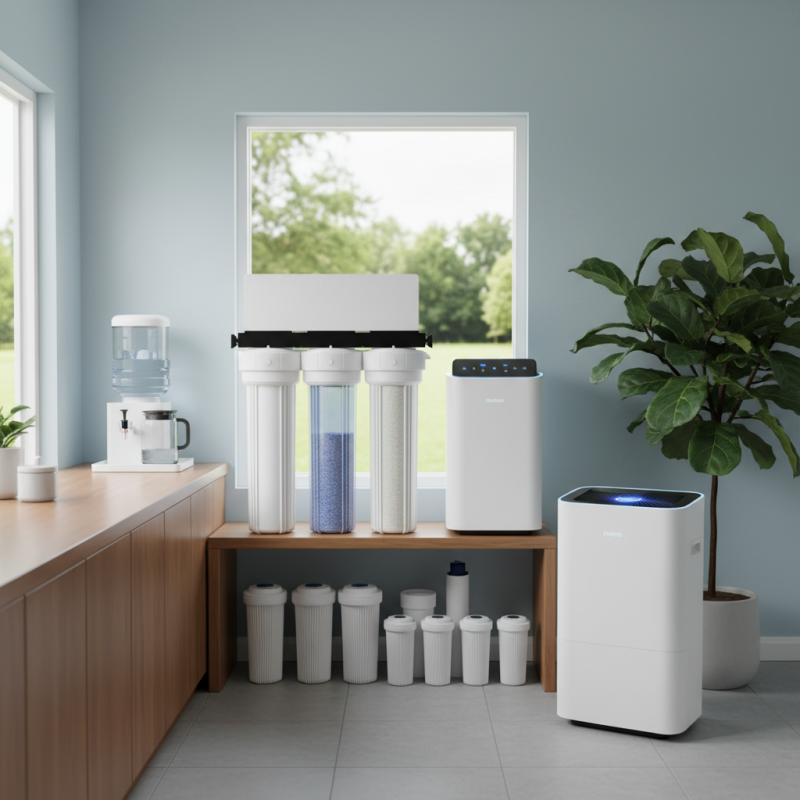
Purification systems vary in type and effectiveness. You might find filters, purifiers, or even whole-house systems designed to remove toxins. But not every system fits every home. Consider factors like your location, budget, and the contaminants you want to eliminate.
Reflect on your past experiences with these systems. Did they meet your expectations? Were there flaws in their performance? By understanding these issues, you can make a more informed choice. A thorough evaluation is needed. Think about what matters most for your well-being. The right purification systems can enhance your living environment significantly.
Understanding Your Water Quality: Testing for Contaminants in Home Water
Understanding your water quality is crucial for selecting the best purification systems. Start by testing for contaminants in your home water. You can purchase home testing kits easily. These kits usually analyze for bacteria, lead, chlorine, and other harmful substances.
Once you receive the results, you may feel a bit overwhelmed. Perhaps your water has higher levels of contaminants than expected. It’s important to reflect on what this means for your health and daily life. For instance, lead exposure can be serious, especially for children.
Consider the environment where you live. Urban areas might have different contaminants than rural ones. If you’re unsure how to interpret results, consulting a professional can help. Understanding your water quality is not just about numbers but also about safety and wellbeing. This reflection can guide your choice of purification systems effectively.
Types of Purification Systems: Overview of Filtration, Distillation, and Reverse Osmosis
When choosing a purification system, it’s essential to understand the different types available. Filtration systems are common. They use physical barriers to remove impurities. Many people find them convenient. However, filters need regular replacement. Dirty filters can lead to ineffective purification. This method doesn’t eliminate all contaminants, notably some microorganisms.
Distillation is another option. This process involves boiling water, then condensing the steam back into liquid. It effectively removes many impurities, heavy metals included. However, it can be slow and energy-intensive. Sometimes, distillation leaves behind certain volatile compounds. Users should consider their specific needs before opting for this method.
Reverse osmosis offers advanced purification. This system forces water through a semipermeable membrane. It effectively reduces a wide range of contaminants. But it can waste a lot of water in the process. Some users might find the mineral removal a drawback. Re-mineralization may be necessary to maintain balanced water. Each purification method has its strengths and weaknesses. Careful consideration of your water quality and lifestyle is crucial in making the best choice.
Comparison of Home Water Purification Systems
This bar chart illustrates the effectiveness of three common home water purification systems: Filtration, Distillation, and Reverse Osmosis. Each system is rated on a scale from 1 to 10, with Reverse Osmosis being the most effective method for purifying water. This information can help homeowners make informed choices about which purification system to choose based on their needs.
Evaluating Efficiency: Flow Rate and Contaminant Removal Standards in Systems
When choosing a purification system for your home, evaluating efficiency is crucial.
Flow rate indicates how much water the system can filter within a specific time.
A higher flow rate means you can access clean water quicker.
However, not all systems deliver high performance at increased speeds. Some may struggle with contaminant removal despite a flashy flow rate.
Contaminant removal standards can vary significantly. Look for systems that clearly state their capabilities.
NSF/ANSI certification is an excellent place to start.
It shows the system meets established standards. Some systems may effectively remove common contaminants, but not all heavy metals.
Be mindful of your local water supply.
Test results can reveal what contaminants you need to focus on.
Imagine buying a system only to find it doesn’t address your specific needs.
It's frustrating, right?
Researching and understanding your water quality is vital. While flow rate and contaminant removal are significant factors, consider your lifestyle.
You might need the system to handle heavy use during peak hours.
Balancing these considerations can lead to a more effective decision.
Cost-Effectiveness: Comparing Initial Investment and Long-Term Maintenance
When selecting purification systems for your home, cost-effectiveness is crucial. A recent industry report found that initial investment varies widely. Basic systems may start at $200, while advanced models can exceed $2,000. This disparity reflects different technologies and features. Homeowners often overlook the ongoing maintenance costs, which can add up over time.
Long-term maintenance includes filter replacements, which range from $20 to $150 each. Some systems require changes every six months, while others have annual replacements. According to a study, neglecting maintenance can lead to a 30% drop in system efficiency. This impacts both performance and safety. Homeowners should consider these factors carefully.
Furthermore, installation costs are often underestimated. Professional installation can add $100 to $300. DIY options seem appealing but may invite errors. Inadequate setups can compromise water quality. Balancing upfront expenses with ongoing upkeep is vital. Choosing a purification system demands thoughtful evaluation, not just immediate savings.
How to Choose the Best Purification Systems for Your Home? - Cost-Effectiveness: Comparing Initial Investment and Long-Term Maintenance
| Purification System Type |
Initial Investment ($) |
Annual Maintenance Cost ($) |
Filter Replacement Frequency (Months) |
Overall Cost over 5 Years ($) |
| Reverse Osmosis |
300 |
100 |
12 |
900 |
| Activated Carbon |
150 |
60 |
6 |
510 |
| Ultraviolet (UV) |
250 |
80 |
12 |
750 |
| Whole House System |
1000 |
150 |
24 |
2900 |
| Water Distillation |
350 |
50 |
12 |
800 |
Choosing the Right System: Matching Purification Methods to Household Needs
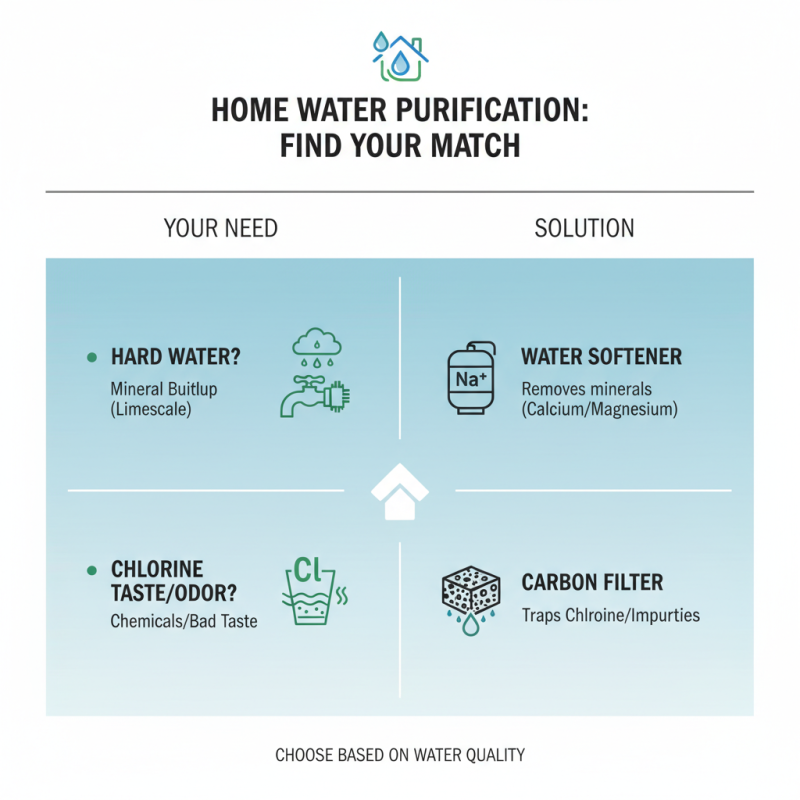
Choosing the right purification system for your home involves understanding your specific needs. Different households have different contamination issues. For example, if you live in an area with hard water, you may need a water softener. On the other hand, if your water has a chlorine taste, a carbon filter might be more effective.
Air quality is another factor to consider. Do you have allergies? An air purifier with a HEPA filter can reduce pollen and dust. However, not all systems handle odors well. Sometimes, a standalone odor filter is a good idea. Reflecting on your daily routines can help pinpoint what is necessary. For instance, if you have pets, you may need to clean more often.
Ultimately, it’s easy to overlook specific details. A system might seem effective on paper, but managing it can be a hassle. Regular filter changes are vital but often forgotten. Keeping track of maintenance schedules is essential for any purification system to function optimally. Being aware of these aspects ensures that you select the most suitable purification system for your household needs.