2026 Best Color-Coated Steel Sandwich Panel Suppliers?
Choosing the 2026 best Color-Coated Steel Sandwich Panel suppliers requires more than comparing prices. A panel may look flawless under showroom lights, yet fail expectations when exposed to humidity, wind, heat, or repeated handling. Reliable selection begins with measurable details: steel thickness, coating type, core density, thermal performance, fire classification, joint design, and production consistency.
Dr. Joseph Lstiburek, a respected building-science educator, states, “The building enclosure is a system.” That principle matters here. A sandwich panel connects the roof, walls, insulation, fasteners, seals, and interior environment. One weak interface can create condensation, air leakage, or premature corrosion. The strongest suppliers therefore provide verified technical data, batch traceability, clear installation guidance, and responsive engineering support. Certificates alone are not enough.
This guide examines suppliers through a practical 2026 lens. It considers manufacturing experience, quality-control procedures, customization capacity, delivery reliability, and after-sales service. Factory visits, sample inspections, and project references can reveal more than polished brochures. Small details matter. Check the panel edges. Check the coating uniformity. Ask how rejected panels are handled.
No ranking remains perfect forever. Raw-material costs change. Regional standards differ. Supplier performance can vary between projects. That uncertainty deserves attention, not concealment. The goal is not to name the cheapest manufacturer, but to identify dependable partners for cold rooms, warehouses, workshops, commercial buildings, and industrial facilities. Careful buyers should still verify current test reports and local compliance before signing a contract.
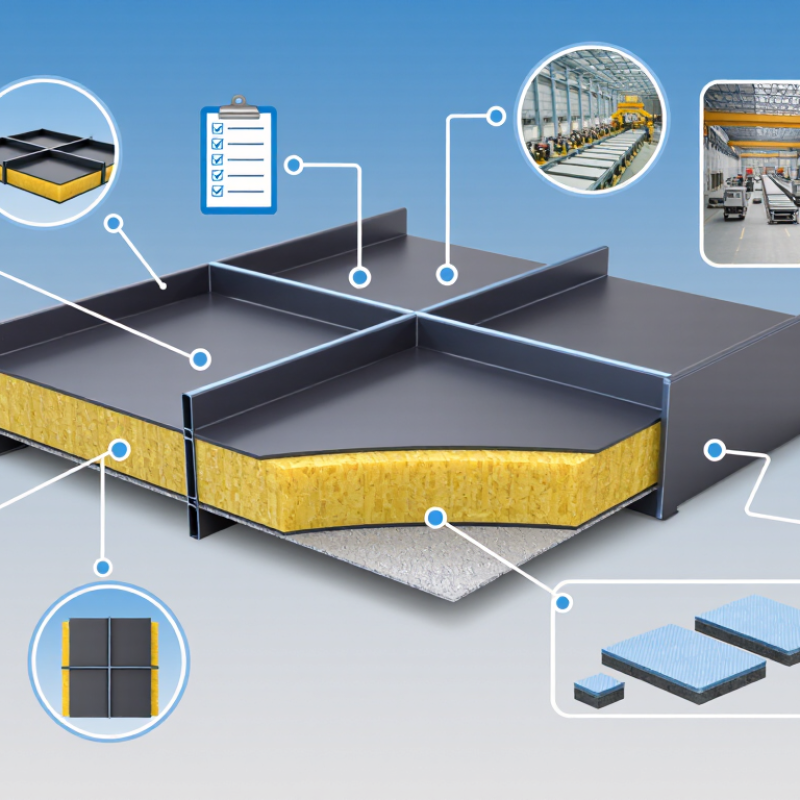
2026 Supplier Evaluation: ISO 9001, EN 14509, and ASTM Compliance
Choosing a color-coated steel sandwich panel supplier in 2026 requires more than comparing prices. ISO 9001 certification shows a controlled quality system, but it does not guarantee perfect panels. The ISO Survey 2023 recorded more than one million ISO 9001 certificates worldwide, making certificate verification essential. Check the certificate scope, expiry date, and audited production site.
EN 14509 compliance is more specific. It covers factory-made insulated panels, including thermal performance, structural behavior, fire characteristics, and production control. Ask for current test reports, declared thermal conductivity, core density, coating thickness, and joint details. ASTM evidence should match the project risk. ASTM E84 can support surface-burning evaluation, while ASTM E72 helps assess structural performance. One test cannot prove everything.
Look closely at factory records. Sample panels should show consistent coating color, flatness, foam adhesion, and steel thickness. The 2024 World Steel in Figures report placed global crude steel production near 1.9 billion tonnes in 2023, yet raw material scale says little about finished-panel reliability. That distinction matters.
Documents can be incomplete. I would treat vague reports as warning signs, not minor paperwork gaps. Supplier claims also need independent confirmation. Review calibration records, batch traceability, corrective-action logs, and third-party inspection results. A clean brochure is easy. Stable production is harder.
Panel Core Comparison: PIR λ≤0.023 W/m·K, Mineral Wool, and EPS
Choosing a color-coated steel sandwich panel supplier in 2026 requires more than comparing prices. The core determines thermal performance, fire behavior, weight, and installation risk. PIR with λ≤0.023 W/m·K provides strong insulation in a slim panel. It suits cold rooms, warehouses, and projects with limited wall thickness. Mineral wool offers non-combustible performance and better acoustic absorption, but it is heavier. EPS is lightweight and economical. Its insulation value is usually lower, so fire requirements need careful review. Field experience shows that a low declared λ does not guarantee a low energy bill. Joints, fasteners, and damaged coatings matter too.
Tips: Ask each supplier for tested thermal conductivity, fire classification, density, steel thickness, coating details, and production tolerances. Request recent project evidence, not only a brochure. Check whether panel edges remain clean after cutting. Small defects become water paths. Confirm technical support during installation. A reliable supplier should explain storage, lifting, joint sealing, and replacement procedures clearly. Vague answers deserve caution.
PIR is often practical where insulation thickness matters. Mineral wool deserves priority near stricter fire zones or noisy interiors. EPS can suit budget-sensitive, lower-risk applications, but its limitations should enter the design review. I would not select a core from λ alone. Real conditions are messier. Temperature, humidity, workmanship, and transport damage can change performance. An honest supplier should acknowledge these variables and provide traceable test documents. Local codes and qualified engineers must guide the final decision.
Fire and Structural Metrics: EI30–EI120 Ratings and Wind-Load Testing
For 2026, color-coated steel sandwich panel suppliers should be judged by verified fire and structural evidence, not appearance alone. The EI classification measures integrity and insulation during standardized fire exposure. EI30, EI60, and EI120 indicate 30, 60, and 120 minutes of resistance under EN 13501-2 procedures. However, ratings apply to tested assemblies, not loose panels. Core density, joints, sealants, fasteners, and penetrations can change performance.
The 2023 NFPA Fire Loss report recorded about 1.39 million fires in the United States and approximately 22.8 billion dollars in property damage. That figure makes documented fire testing more than a sales detail. Ask suppliers for full test reports, furnace curves, failure times, and installation limits. EN 1364 or EN 1365 evidence should match the intended wall or roof assembly. Some technical sheets remain vague. That deserves skepticism.
Wind performance needs equal attention. EN 1991-1-4 calculates wind actions using terrain, height, pressure coefficients, and local exposure. ASTM E330 testing can verify pressure resistance, deflection, and water penetration for assembled panels. Reviewers should compare tested pressure with the project design load, including corner zones and suction effects. A panel may pass a central-zone test yet fail at poorly fixed edges. Joint spacing, screw pull-out values, and washer compression should be visible in the supplier’s engineering file. Real projects are rarely perfect. That is why independent review still matters.
Supplier Shortlist: Capacity, Lead Times, Warranty, and Lifecycle Cost
Choosing the best 2026 supplier requires more than comparing panel prices. Request verified capacity by panel type, core material, thickness, and monthly output. A factory claiming high capacity should provide equipment details, production records, and recent project references. Ask how output changes during peak construction seasons. That detail matters.
For lead times, request a written schedule covering drawings, samples, production, inspection, packing, and delivery. Allow separate timelines for standard panels, custom colors, and unusual profiles. A reliable supplier reports delays early and explains recovery plans. Still, forecasts are imperfect. Weather, pigment availability, and vessel congestion can shift delivery by weeks. Check the current backlog before accepting an attractive date.
Warranty documents should define coating performance, color retention, insulation properties, and exclusions. Ask whether claims require site photos, batch records, or independent testing. A ten-year warranty may offer little protection when conditions are vague. Compare lifecycle cost, including installation, cleaning, energy use, repairs, replacement risk, and disposal. Cheaper core materials may create moisture or maintenance problems in unsuitable environments. My own shortlist would use a scoring sheet with documented evidence, then challenge its assumptions. The lowest quote can still become the most expensive decision.
The chart compares anonymized supplier profiles using representative industry benchmarks for annual coated-steel sandwich-panel capacity, standard lead time, warranty coverage, and lifecycle-cost index. A lower lifecycle-cost index indicates better combined material, maintenance, replacement, and installation economics. Values are indicative market benchmarks rather than company-specific data.